
Board Exams, Academic Pressure & ADHD
The Unmotivated Son: Why Teenage Boys Freeze Under Academic Pressure & Retreat into Gaming
He isn't lazy, and he doesn't lack ambition. Understand the hidden neurobiology of protective apathy and how to rebuild his academic drive without nagging.
The Mark-Focused Nagging Loop
Every nudge about the syllabus confirms his fear that he is already behind.
"Let's just do 20 minutes on one page. Then break."
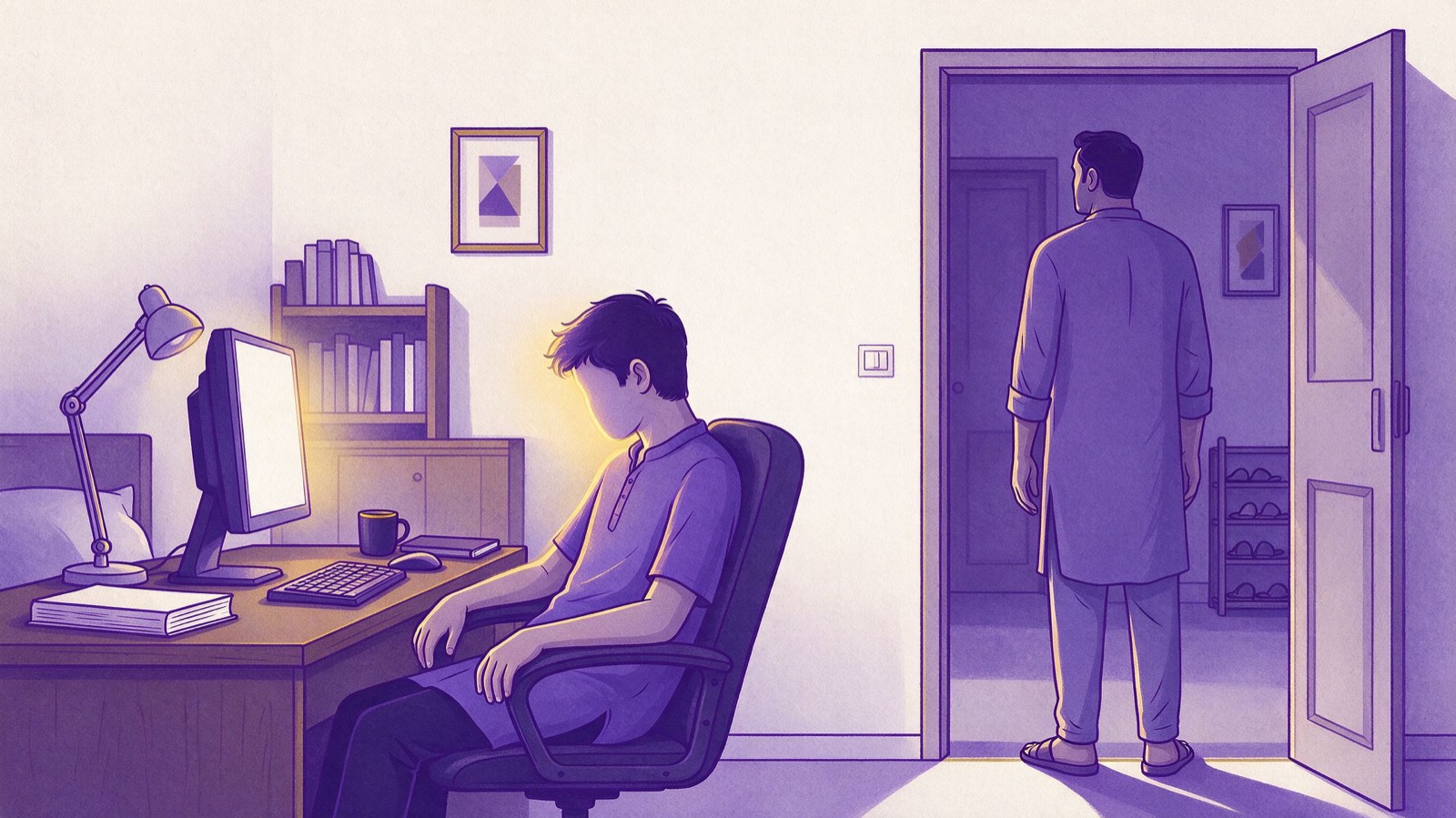
"It is 11:30 PM on a Sunday night. Board exams or competitive coaching tests are just 8 weeks away."
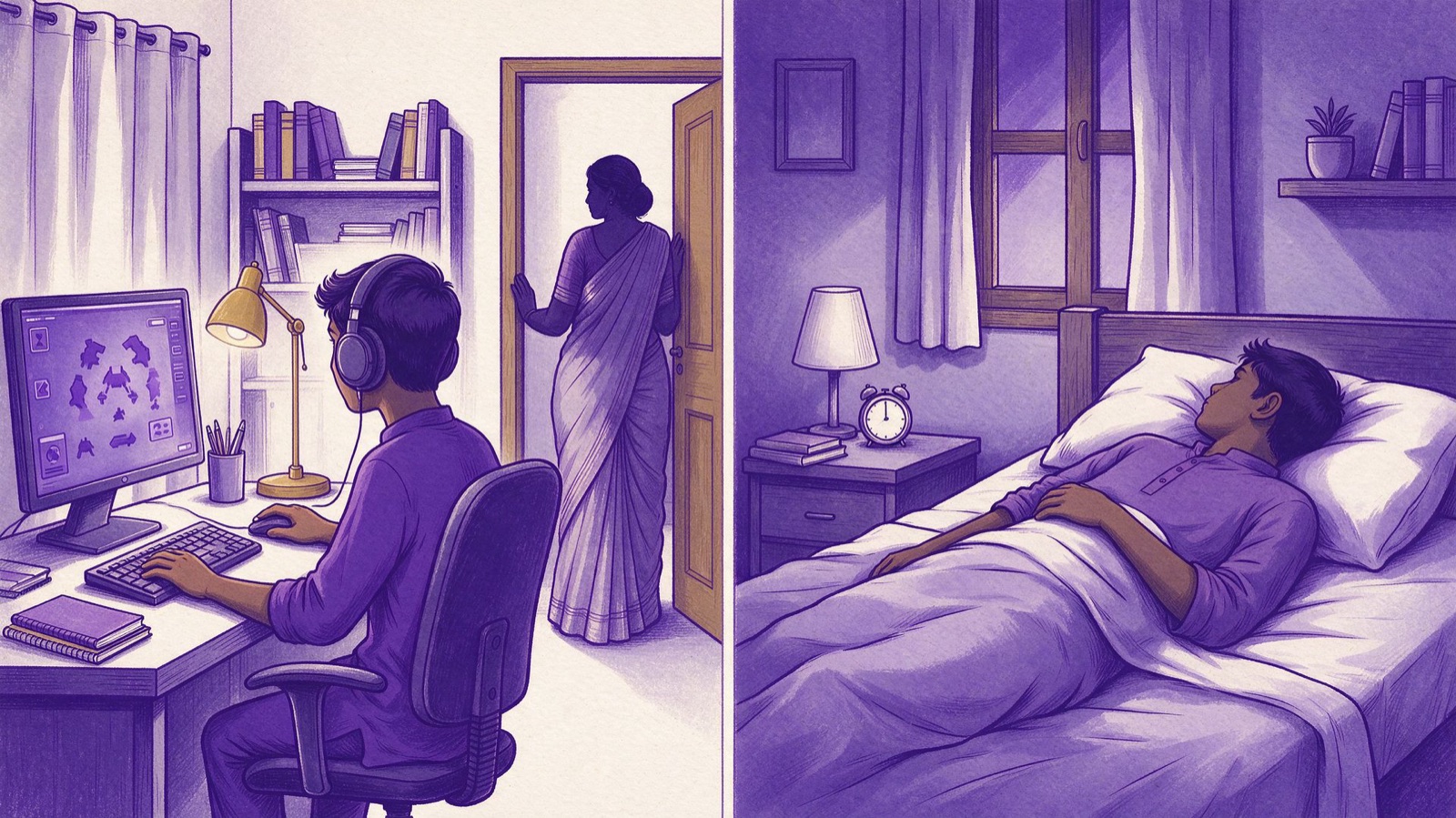
"You walk past his bedroom. The blue glow of a computer screen illuminates his face. His headset is on, his fingers are furiously clicking, and he is laughing with his friends on Discord while playing Valorant or Minecraft."
"Scattered on his desk are untouched sample papers, open textbooks with blank pages, and an uncompleted math assignment."
"When you ask him with rising panic: 'What are you doing?! Do you even care about your future?!', he rolls his eyes, sighs dramatically, and mumbles: 'Chill, mom. I'll do it later. College doesn't even matter anyway.'"
"Your stomach churns with terror: How can he be so careless? Has he lost all ambition? Is he going to ruin his life?"
Your son is not lazy, and he has not stopped caring about his future. What you are witnessing is a profound psychological defense mechanism called Protective Apathy.
What may be going on
These are possibilities to consider, not a diagnosis or certainty. Ask your teen what fits.
"'Chill, it doesn't matter anyway. I don't care about these exams.'"
One possibility: I care so intensely that the thought of trying my best and still failing terrifies me. If I pretend I don't care, then when I get a bad score, I can tell myself I only failed because I didn't try, not because I'm stupid.
"Spending 6 to 8 hours glued to video games while assignments pile up."
One possibility: In games, the rules are clear, the progress is measurable, and every victory gives my brain guaranteed dopamine. In school, I feel constantly inadequate, criticized, and confused about where to start.
"Promising 'I will start studying at 8:00 PM', and then procrastinating until midnight."
One possibility: Looking at the mountain of pending syllabus gives me visceral physical anxiety. Because my executive function cannot sequence 20 chapters, my brain chooses avoidance to escape the panic.
The Neurobiology of Protective Apathy & The Executive Function Gap
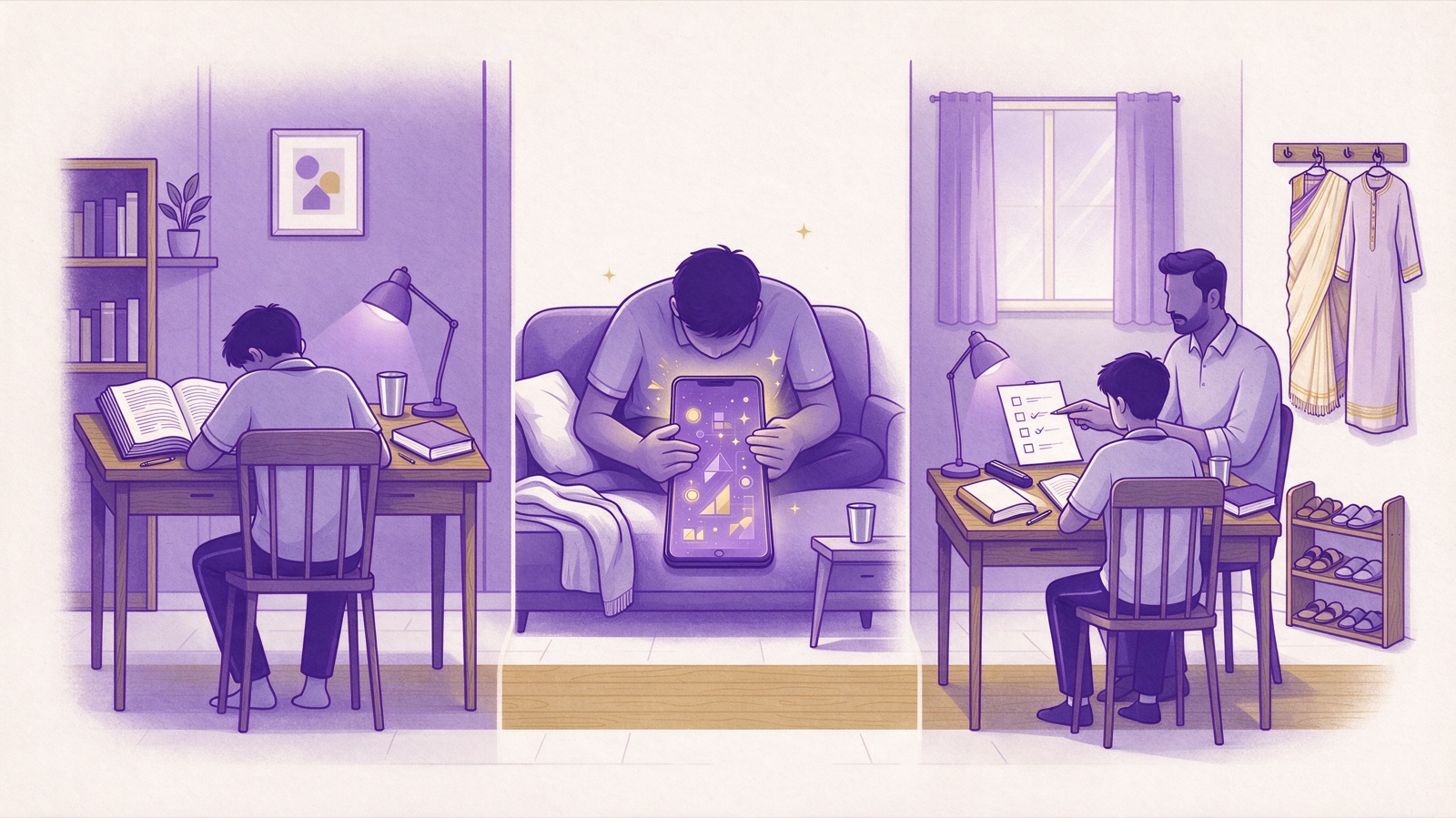
Teenage boys experience testosterone surges alongside a slower-maturing prefrontal cortex. In modern academic systems with high competitive pressure, the volume of unstructured study demands advanced executive function—sequencing, initiation, and working memory. When an adolescent boy feels that the gap between parental expectations and his current competence is insurmountable, his brain interprets the future as an existential threat. Rather than endure the humiliation of trying and falling short (violating Dignity), his psyche adopts 'protective apathy'. The subconscious message: 'I didn't fail; I chose not to play.'
Natural Instincts That Accidentally Make It Worse
Every caring parent falls into these traps out of love, fear, or exhaustion. Here is what happens inside their nervous system and how to shift:
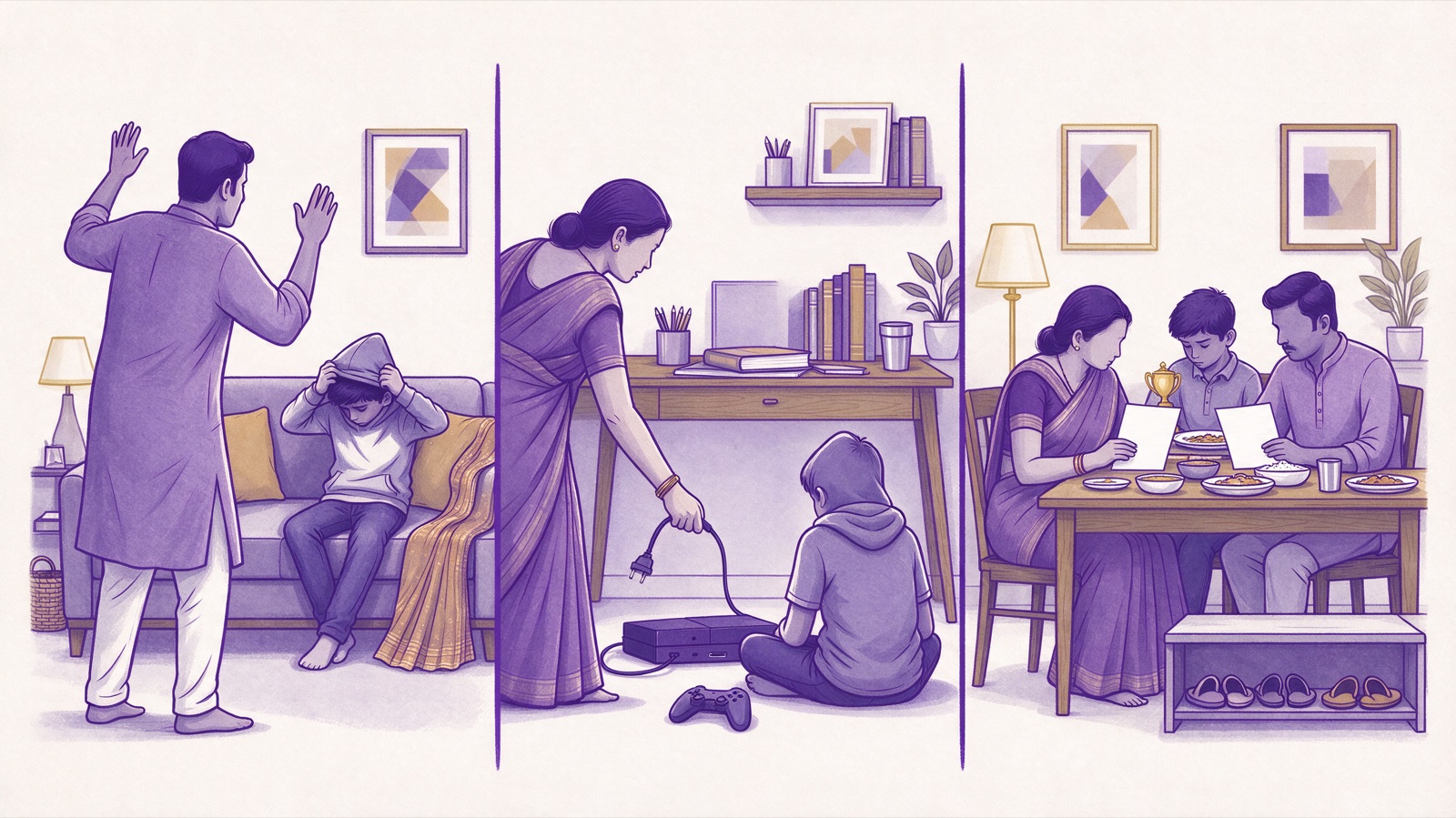
The Catastrophic Future Lecture
Painting worst-case scenarios about his future career, cutoffs, and unemployment.
Pushes his amygdala into chronic panic. A terrified brain cannot access the prefrontal cortex for complex math or physics.
Shrink the timeline from 'your next 10 years' to 'the next 25 minutes'.
The Nuclear Console Confiscation
Storming into the room and confiscating his gaming rig, phone, or power cables in anger.
Removes his only emotional regulation tool and social lifeline without providing an alternative. Results in silent hostility.
Build clear, collaborative digital guardrails during calm hours, not in the middle of a conflict.
Micromanaging Initiation
Nagging every 10 minutes: 'Have you sat down? Why are you still drinking water? Open your book!'
Turns studying into a compliance power struggle. He will resist studying simply to protect his autonomy.
Use body doubling and micro-scaffolding without judgment.
The 4-Step Agency Restoration Protocol
How to shift a frozen, gaming-addicted teenage boy from protective apathy into self-directed academic momentum.
Kill the Catastrophic Speech
Immediately cease all future-based moralizing lectures.
- For the next 7 days, eliminate words like: 'ruining your life', 'your future', and 'competition'.
- When the emotional temperature drops, his brain stops spending all its energy defending against your panic.
De-mystify the Mountain (The 20-Minute Micro-Chunk)
Break the paralyzing syllabus into ridiculously small steps.
- Do not ask him to 'study for 4 hours'. That triggers freeze mode.
- Say: 'Let's not do the whole chapter. Just pick 3 numericals from page 42. Set a timer for 20 minutes. After 20 minutes, take a break.'
- Success breeds dopamine. Once momentum starts, the initiation friction for the next step drops sharply.
Body Doubling without Surveillance
Provide non-invasive co-working presence.
- Adolescent boys study significantly better when another calm human is in the room doing quiet work.
- Sit at the dining table reading a book or working on your laptop while he studies across from you.
- Do not look at his notebook or check over his shoulder. Your calm presence acts as an anchor.
Separate His Worth from His Marks
Deliver the explicit safety statement he desperately needs to hear.
- He needs to know that his seat at the family dinner table is not dependent on his percentage.
- When he knows you will not reject him if he stumbles, the subconscious fear of trying evaporates.
What to Say Tonight: Word-for-Word Scripts
Save these to your phone or keep them in mind for your next interaction.
"'Hey, I can see how exhausted you are and how heavy this syllabus feels right now. Gaming makes sense when everything feels overwhelming. Let's wrap this match in 15 minutes, get your brain some sleep, and tomorrow morning I'll help you break the first chapter into 3 small bites.'"
Steady, quiet voice. Hands in pockets, no hands on hips. Side-by-side stance.
Validates why he is gaming (overwhelm, not malice) without letting him off the hook for sleep. Restores dignity and offers concrete scaffolding.
"'I hear you saying you don't care, but I know you. You have a sharp brain and you care deeply about doing well in life. It's just terrifying when there is so much pressure on you all at once. You don't have to carry this alone.'"
Warm, unhurried, grounded. Look at him with respect, not pity.
Refuses to buy into his protective armor. Directly speaks to Unconditional Regard and removes the shame of feeling inadequate.
"'Games are fun and you deserve downtime with your friends. But late-night screens are frying your sleep and making your mornings miserable. Let's agree on a 10:30 PM shutdown for Discord and PC on weekdays so your brain can actually recover.'"
Collaborative, calm matter-of-fact tone. Present it as brain biology, not punishment.
Frames the rule around biological recovery rather than a moral failure. Invites cooperation instead of rebellion.
Start one page, not the syllabus.
Steady, quiet voice
"Let's just do 20 minutes on one page. Then break."
Understanding the situation
Why Video Games Beat School for Teenage Boys
When you scream at him to get off the game, you are demanding that he leave an environment where he feels competent, powerful, and respected, and return to an environment where he feels confused, judged, and controlled.
How to Rebuild Real Drive
If you wait for an adolescent boy to 'feel like studying' before he begins, you will wait forever. His testosterone and dopamine systems require physical initiation to unlock focus.
By using Micro-Chunking (20-minute sprints) and Body Doubling, you lower the initiation barrier to zero. When he finishes 20 minutes and realizes the sky didn't fall, his dopamine spikes from real competence. That is how real drive is rebuilt.
All Situations in Board Exams, Academic Pressure & ADHD
The Perfectionist Spiral (Crying Over 93%)
Terrified of making any mistake, chronic self-criticism, and tying their entire self-worth to report cards.
The Exam Panic & Physical Nausea Spiral
Physical sickness on test mornings, spiraling future dread, and test-taking paralysis.
Failing Grades & Academic Surrender
When marks drop, confidence collapses into 'I don't care anyway', and they give up on studying.
ADHD, Executive Lag & The Scattered Backpack
Lost books, chronic dopamine hunting, and why conventional nagging about homework never works.
Sensory Overwhelm & Social Masking Burnout
Exhaustion after school, sensory meltdowns at home, and navigating high-pressure environments.
Board Exam Season Survival (Class 10 & 12)
Three months of mock-test weather: how to be the calm parent the exam hall never provides.
You do not have to solve everything tonight
Choose one practical action that feels manageable for your family.
Task Chunking Canvas: Break the Syllabus Into 20-Minute Bites
A printable 1-page scaffold to break academic paralysis into first-step actions without parental nagging.
Talk with someone about what is happening at home
If the same conflict keeps coming back or feels difficult to manage, book a conversation to discuss the support that may fit your family.
Cross-Chapter Recommended Guides
The Silent Teen: How to Open the Door When You Only Get One-Word Answers
When your teenager retreats behind closed doors and responds in grunts, interrogating them only pushes them further away. Understand the Sensory Sanctuary driver and the exact side-by-side script that breaks the silence.
The Defiant Teen: De-escalating Explosive Arguments Without Power Struggles
When your teenager detonates over simple household requests, engaging in a screaming match guarantees defeat. Discover the Autonomy driver, the Drop-the-Rope technique, and verbatim de-escalation scripts.
When Screen Time Leads to Arguments
If phone use is pushing bedtime later or requests to stop lead to arguments, start with a routine you can discuss and keep together.