
Silence, Grunts & The Closed Door
The Silent Teen: How to Open the Door When You Only Get One-Word Answers
Why 'Fine', 'Nothing', and slammed bedroom doors aren't personal rejection — the neurobiology of adolescent shutdown and the side-by-side script that creates safety.
The Airport Customs Interviewer
Rapid questions read as interrogation and deepens the shutdown.
"There's food on the counter. Zero questions."
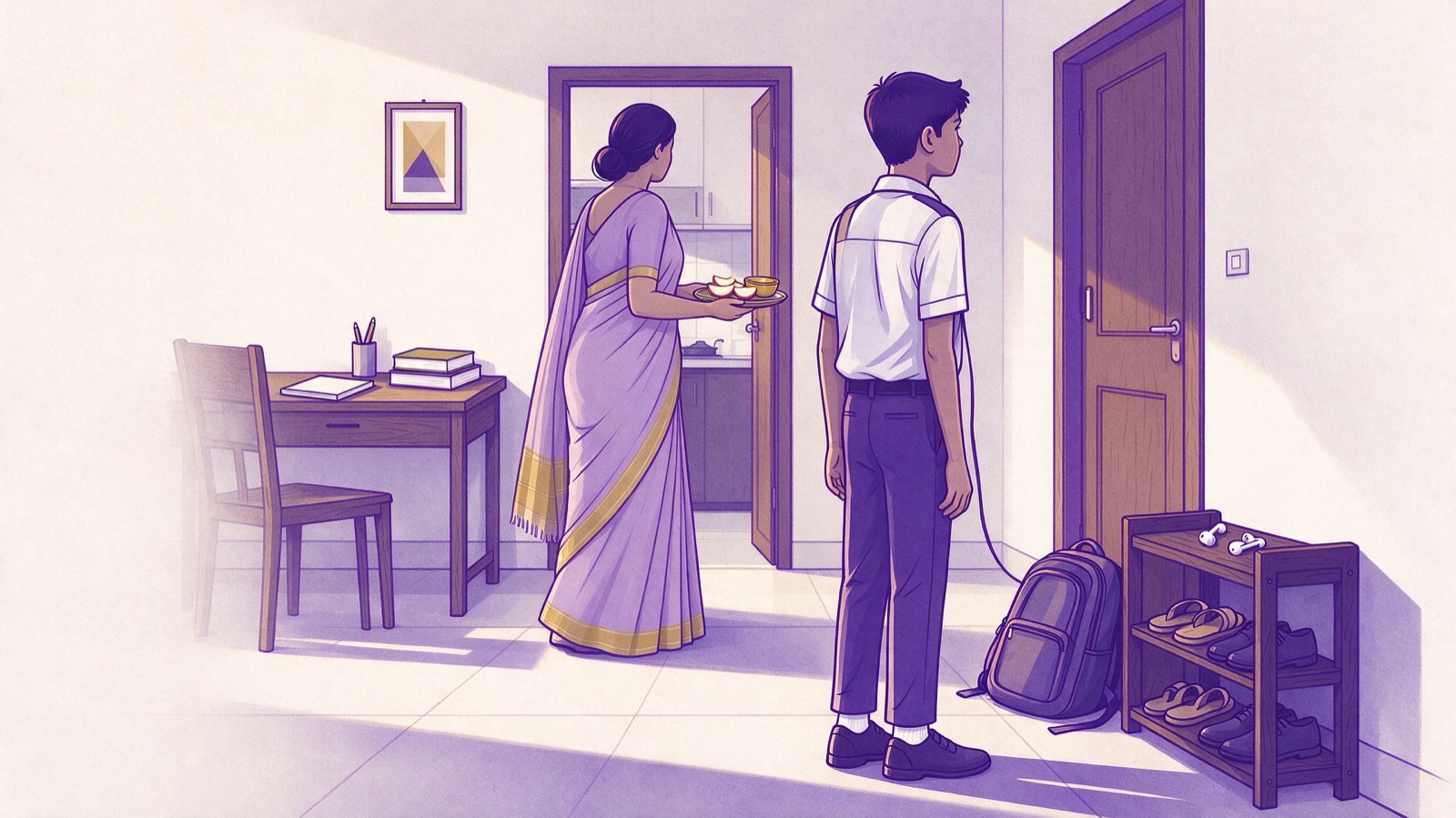
"It is 7:15 PM. They walk through the front door, drop their heavy school backpack with a thud, and kick off their shoes. You look at them with genuine care, hoping for a connection."
"'How was your day? Did you get the physics test back? Who did you sit with at lunch?'"
"They don't even meet your eye. They mutter a muffled 'Fine', grab an apple, walk straight to their bedroom, and the door clicks firmly shut behind them. For the rest of the evening, they might as well be on another planet."
"Your heart sinks. A mixture of hurt, anxiety, and frustration washes over you: Why are they shutting me out? What did I do wrong? How did my sweet child turn into a silent stranger?"
First, take a deep breath. You haven't lost your teenager, and they do not hate you. Their silence is not a declaration of war; it is an emergency defense mechanism.
What may be going on
These are possibilities to consider, not a diagnosis or certainty. Ask your teen what fits.
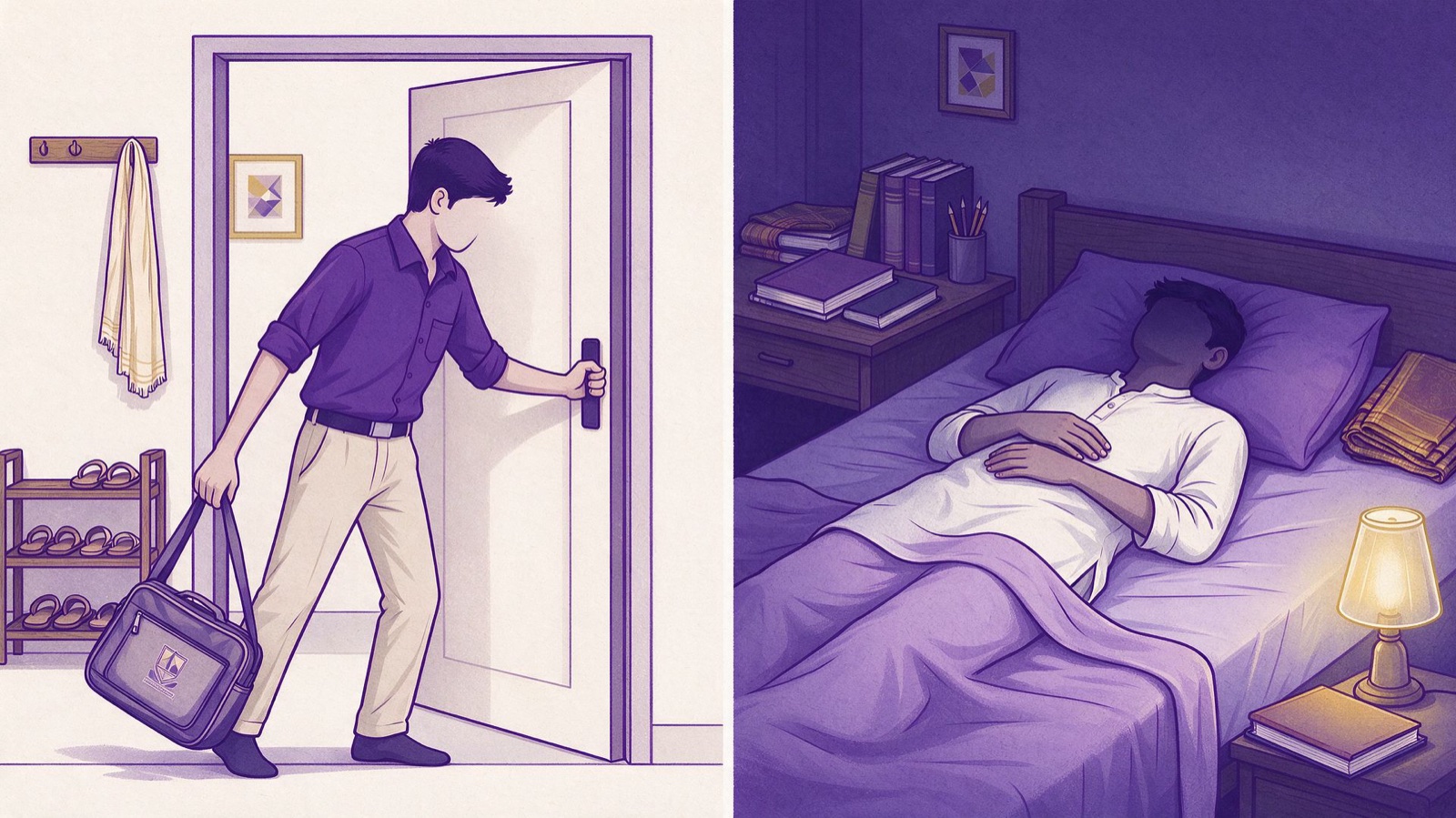
"'I'm fine. Leave me alone.' (Door locked shut)"
One possibility: My sensory and social battery is at zero. I have been masking, answering questions, and performing for 8 hours. Any adult voice right now feels like an overwhelming attack on my nervous system.
"Muffled grunts, head nods, or staring at shoes when you ask a question."
One possibility: If I tell you the truth, you will panic, give me a 20-minute lecture on time management, or try to solve it before I even finish my sentence. Silence is the only way I keep control.
"Complete silence in the car ride home while glued to their phone screen."
One possibility: The phone screen is familiar and predictable. Face-to-face eye contact demands energy I don't possess right now. I need silence next to you before I can speak with you.
The Neurobiology of Adolescent Shutdown (Dorsal Vagal Freeze)
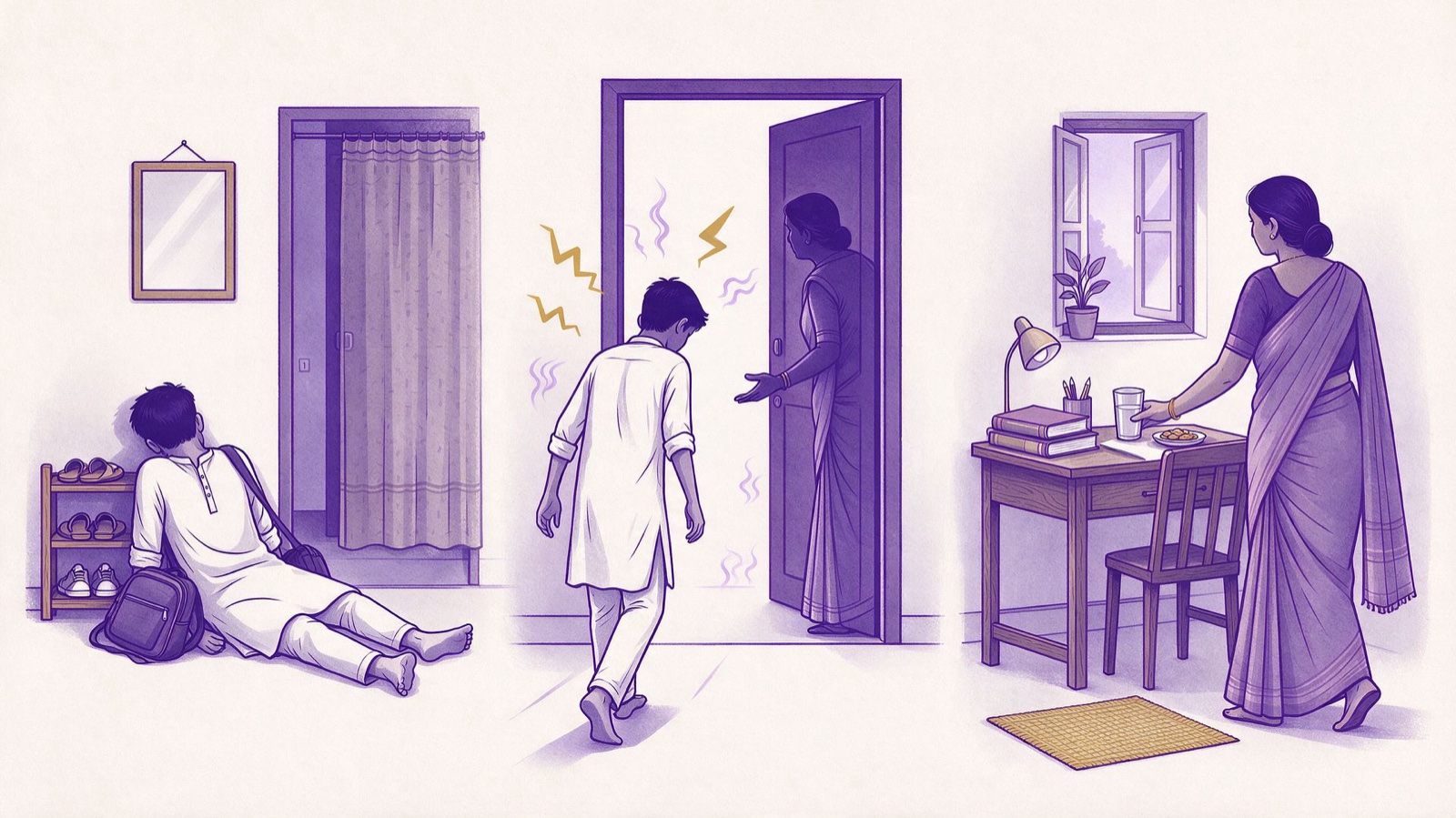
Between the ages of 11 and 18, the human brain undergoes massive synaptic pruning in the prefrontal cortex while the amygdala remains hyper-reactive. After a grueling school day of academic evaluation and peer comparison, a teenager's nervous system enters a state of sensory overload. When greeted with rapid questions, their brain registers high-demand cognitive processing. To preserve emotional equilibrium, their nervous system shifts into a protective 'freeze/shutdown' state (what polyvagal theory calls the dorsal vagal response). The closed door is a sensory sanctuary.
Natural Instincts That Accidentally Make It Worse
Every caring parent falls into these traps out of love, fear, or exhaustion. Here is what happens inside their nervous system and how to shift:
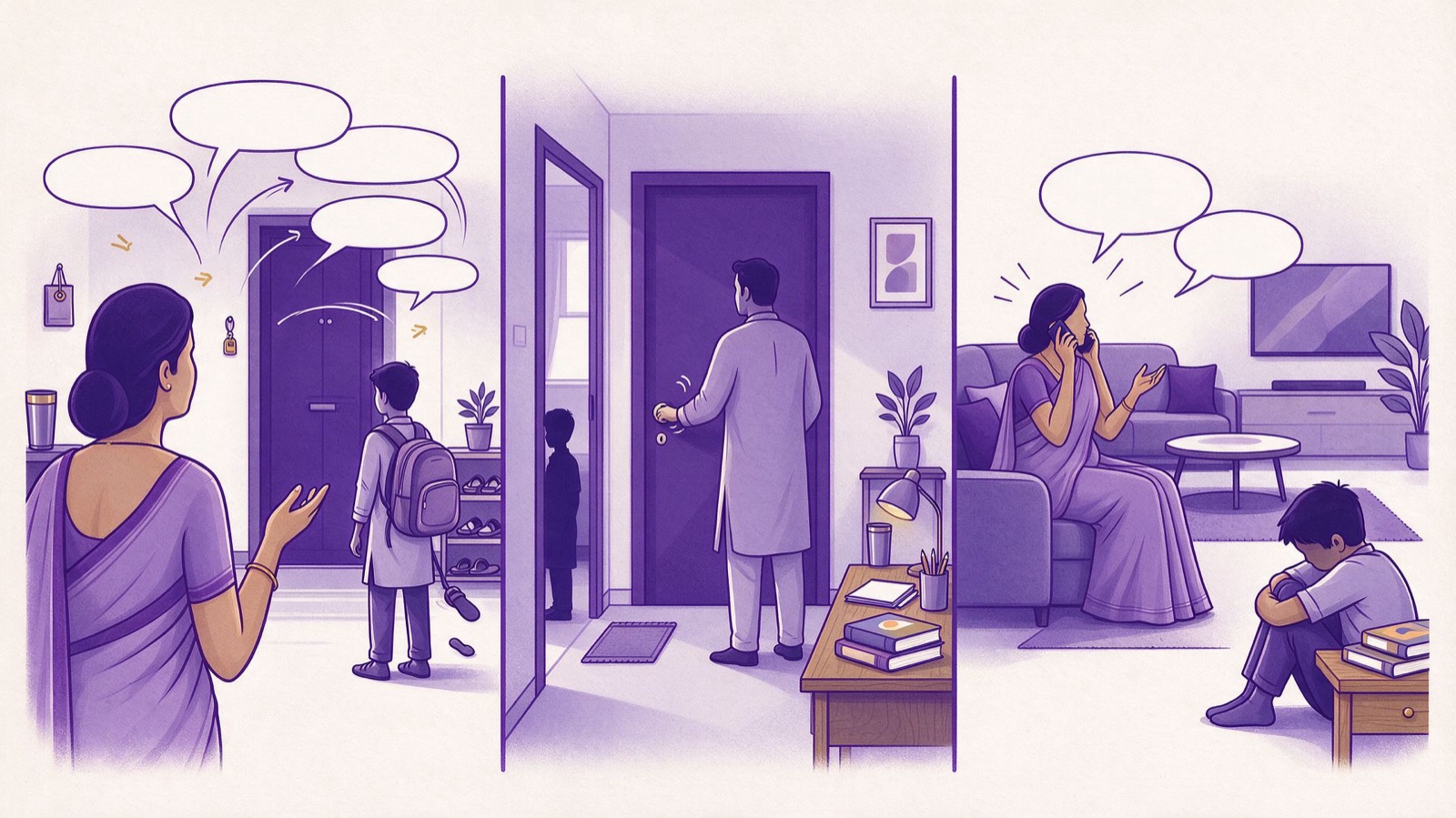
The Airport Customs Interviewer
Asking 6 questions in the first 90 seconds after they walk in the door.
Treats them like a suspect arriving at customs. Triggers immediate defensiveness and emotional retreat.
Offer a zero-demand greeting: warmth, food, and 45 minutes of complete silence.
The Premature Fixer
The moment they mention a small struggle ('Math was confusing'), you jump in with a schedule or lecture.
Teaches them that sharing a vulnerability results in adult homework. They vow never to mention it again.
Use silent stillness. Validate the feeling for 30 seconds before offering any solutions.
The Rejection Panic
Taking their silence personally and reacting with anger: 'After everything I do, you can't even say hello?!'
Transfers the parent's emotional insecurity onto the teen, making the environment emotionally volatile.
Hold a steady, unshakeable presence. Your emotional calm is the anchor they are testing.
The 4-Step Low-Demand Reconnect Protocol
Use this exact protocol over the next 48 hours to melt the ice without a single screaming match or awkward conversation.
The 45-Minute Decompression Buffer
Establish a non-negotiable arrival ritual with zero questions.
- When they enter the house, give a warm, genuine smile: 'Hey, good to see you. There's fresh food on the counter.'
- Do not ask about marks, homework, teachers, or friends.
- Let them retreat to their room without commentary for at least 45 minutes to discharge their school nervous system stress.
Shift to Side-by-Side Posture
Eliminate direct face-to-face confrontation.
- Adolescents perceive sustained direct eye contact from an authority figure as an evolutionary threat.
- Engage in side-by-side environments: driving in the car, chopping vegetables, walking the dog, or folding laundry.
- Hands busy, eyes forward. Side-by-side time measurably lowers the fight-or-flight load on both of you.
The Zero-Interrogation Bridge Script
Replace closed interrogations with low-stakes observational bridges.
- Never ask: 'How was your day?' (Invites a 1-word dead end).
- Say: 'Looks like you had a heavy schedule today. School felt relentless when I was your age.'
- Then stop speaking. Count to 10 in your head. Allow the silence to feel spacious rather than tense.
The Stillness Rule When They Finally Speak
Do not move, pounce, or overreact when words emerge.
- If they drop a small breadcrumb ('Rahul was being annoying today'), do NOT turn it into a 20-minute interrogation.
- Simply mirror: 'Ugh. Rahul? What happened?' and stay still.
- Treat their vulnerability like a shy animal coming out of the woods—if you move too fast, they dart back in.
What to Say Tonight: Word-for-Word Scripts
Save these to your phone or keep them in mind for your next interaction.
"'Hey, welcome home. Looks like a long day. Snacks are on the table—take all the time you need to chill.'"
Warm, light, non-expectant voice. Do not follow them to their room.
Disarms the expectation of being interrogated. Validates their fatigue and removes performance pressure.
"'You don't have to talk to me right now. Just glad to have you in the car with me. Let me know if you want to put on your music.'"
Calm, neutral, eyes on the road. Offer the aux cord or Bluetooth without passive aggression.
Gives explicit permission to be quiet, which paradoxically relaxes their defenses and makes them want to share.
"'You're right. I've been coming at you with too many questions because I care about you, but I hear you. I'm stepping back. I'm right here whenever you want to chat.'"
Completely grounded. No defensiveness, no tears, no sarcasm. Take immediate accountability.
Validates Dignity. Showing mature humility shocks the adolescent brain and de-escalates anger instantly.
Lower the demand. The connection restores itself.
Warm, light, non-expectant voice
"There's food on the counter. Zero questions."
Understanding the situation
Why the Adolescent Brain Shuts Down
Every single school day, your teen experiences dozens of micro-evaluations:
Did my peers laugh at my joke?
Did the teacher call me out in front of the batch?
Am I behind in competitive coaching?
By the time they step into the house, their cognitive bandwidth is entirely depleted. What parents mistake for disrespect or coldness is almost always systemic cognitive exhaustion.
When you ask them: "Did you finish the trigonometry worksheet?", you are asking an overloaded computer to render a 4K video while running 50 background applications. The computer freezes.
Holding the Center: Connect Before You Direct
When your teen goes quiet and you respond with anxiety, panic, or angry demands, you show them that your emotional stability is dependent on their mood. That terrifies a teenager. If the captain of the ship is panicking, the passenger feels unsafe.
By following the Low-Demand Reconnect Protocol, you signal to their nervous system:
Your home is a sanctuary where you do not have to perform.
My love and respect for you do not depend on you entertaining me.
I am sturdy enough to handle your silence without breaking.
All Situations in Silence, Grunts & The Closed Door
The Closed Bedroom Door (One-Word Grunts)
Coming home from school, heading straight to their room, and answering only in 'fine' or 'nothing'.
The Sudden Push-Away & Emotional Cold Shoulder
When a once-affectionate teen suddenly pulls away, cringes at hugs, and treats your presence like an intrusion.
The Isolated Teen (No Friends & Weekend Loneliness)
Spending entire weekends alone in their room, excluded by peer groups, and struggling with school dread.
You do not have to solve everything tonight
Choose one practical action that feels manageable for your family.
Emotional Validation: Scripts for the Shut-Down Teen
Printable validation scripts to keep on your phone or fridge when your teen shuts down.
Talk with someone about what is happening at home
If the same conflict keeps coming back or feels difficult to manage, book a conversation to discuss the support that may fit your family.