
Midnight Gaming, Phones & Sleep Battles
When Screen Time Leads to Arguments
Agree on phone use, bedtime, and clear limits without turning every evening into a power struggle.
Taking the phone during an argument
Taking the phone in the middle of an argument can make it harder to agree on a lasting routine.
"Let us agree on a time to put our phones away tonight and try the same routine together."
"It is late on a school night. Your teenager is in bed, still watching short videos and replying to messages."
"You are worried because school starts in the morning, and this has happened several nights this week."
"You ask them to put the phone away. They say they are still talking with friends, and the conversation becomes tense."
"You both leave the conversation frustrated. You want to protect their sleep and keep talking without another argument."

Phone use can meet different needs, from staying in touch with friends to taking a break from stress. A calm conversation can help you understand what is happening in your home.
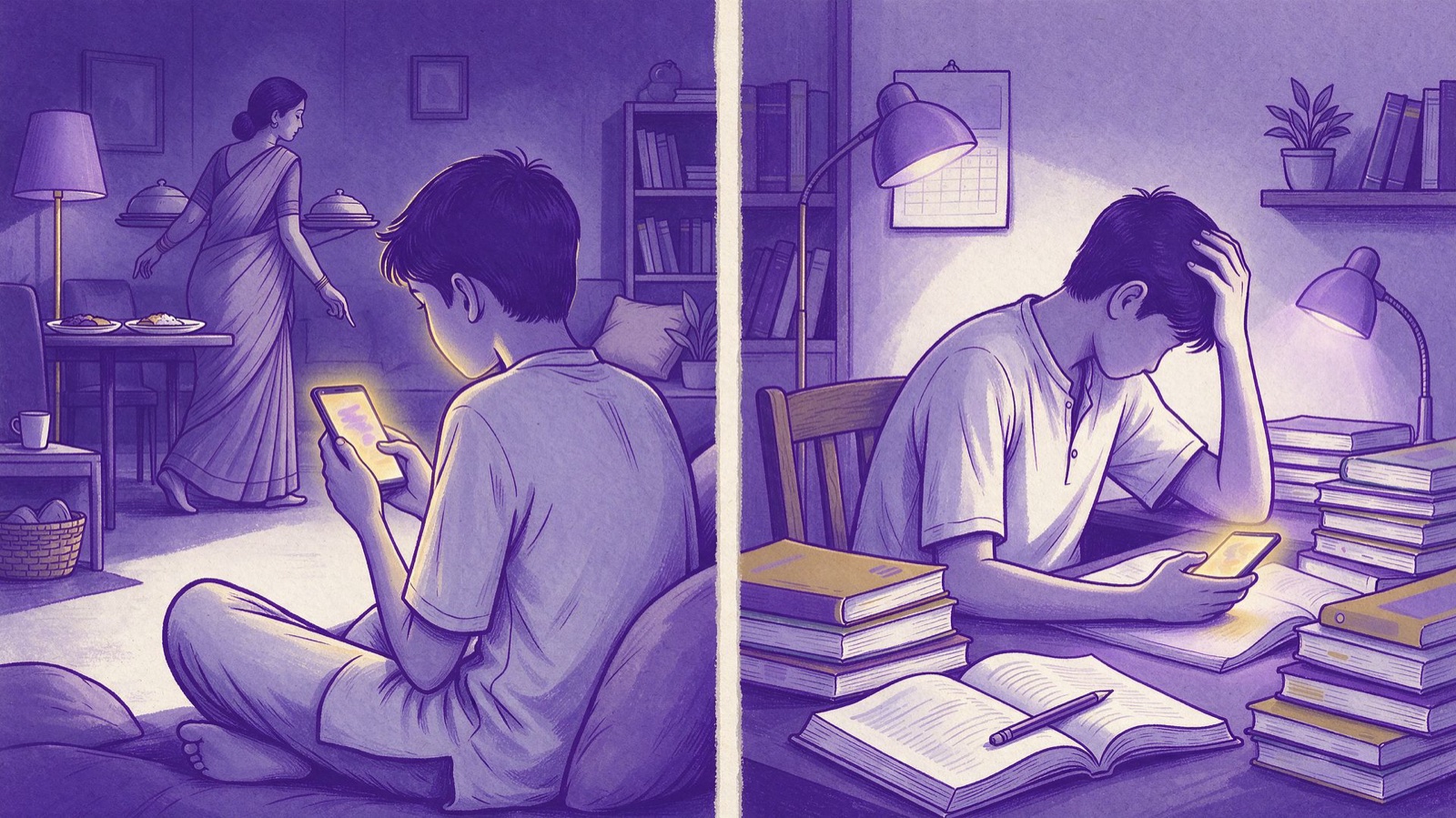
What may be going on
These are possibilities to consider, not a diagnosis or certainty. Ask your teen what fits.
"'All my friends are on group chat right now! If I log off, I miss everything!'"
One possibility: They may be worried about missing a conversation, a plan, or a joke among friends.
"'I'm just listening to music while studying, leave me alone!'"
One possibility: They may have opened the phone for schoolwork and found it difficult to return to the task after a notification or message.
"Irritable grunts when asked to stop a video or conversation."
One possibility: They may feel interrupted or frustrated when asked to stop in the middle of a video or conversation.
Screen habits, sleep, and family routines
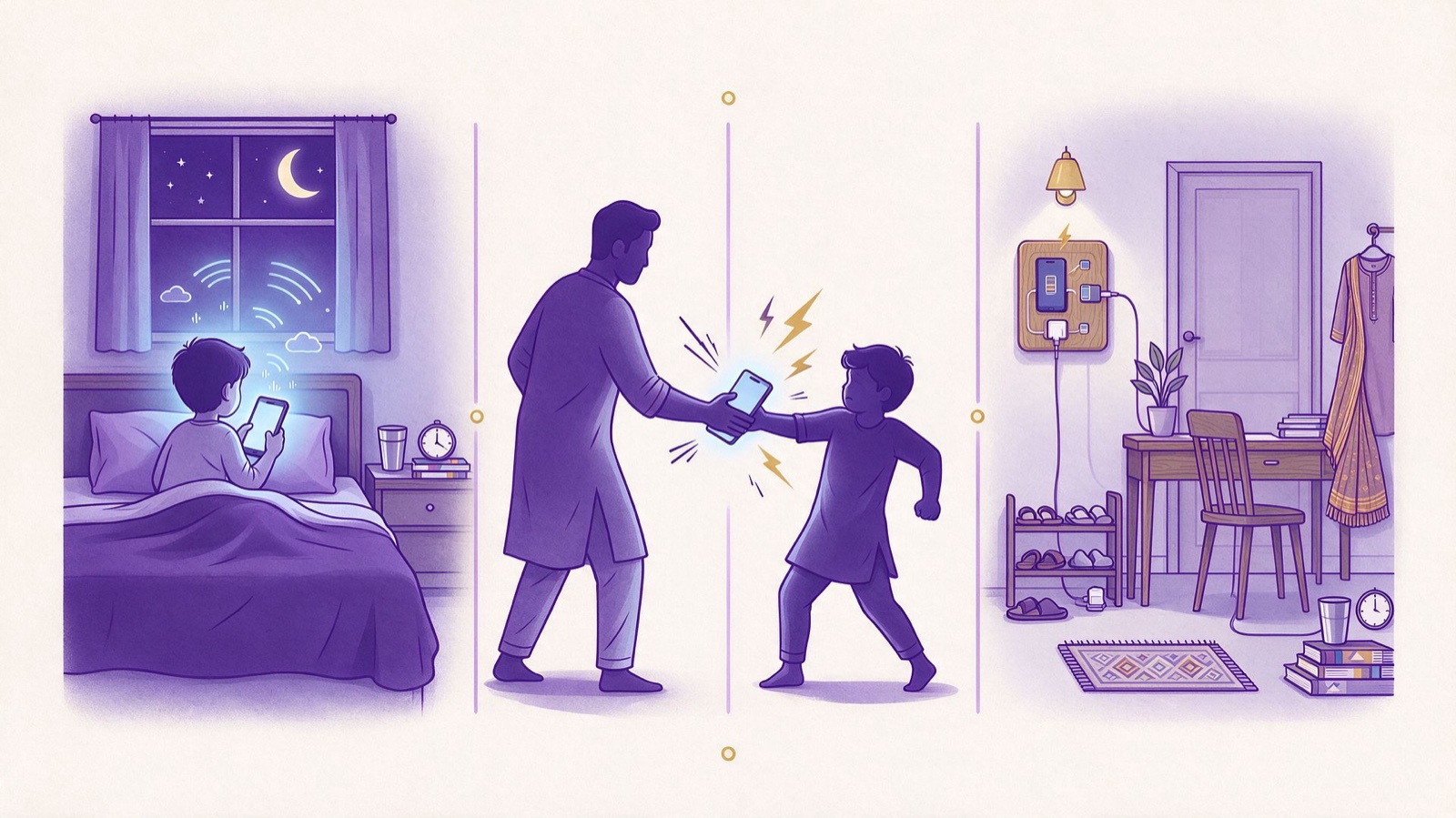
Short videos, games, and messages can make it easy to keep using a phone longer than planned. A teenager may use a screen to talk with friends, relax, or avoid a difficult task; that alone does not tell you whether there is a serious problem. Late-night use can also make a steady bedtime routine harder. Ask what is getting in the way, then agree on a practical plan for the whole household.
Natural Instincts That Accidentally Make It Worse
Every caring parent falls into these traps out of love, fear, or exhaustion. Here is what happens inside their nervous system and how to shift:
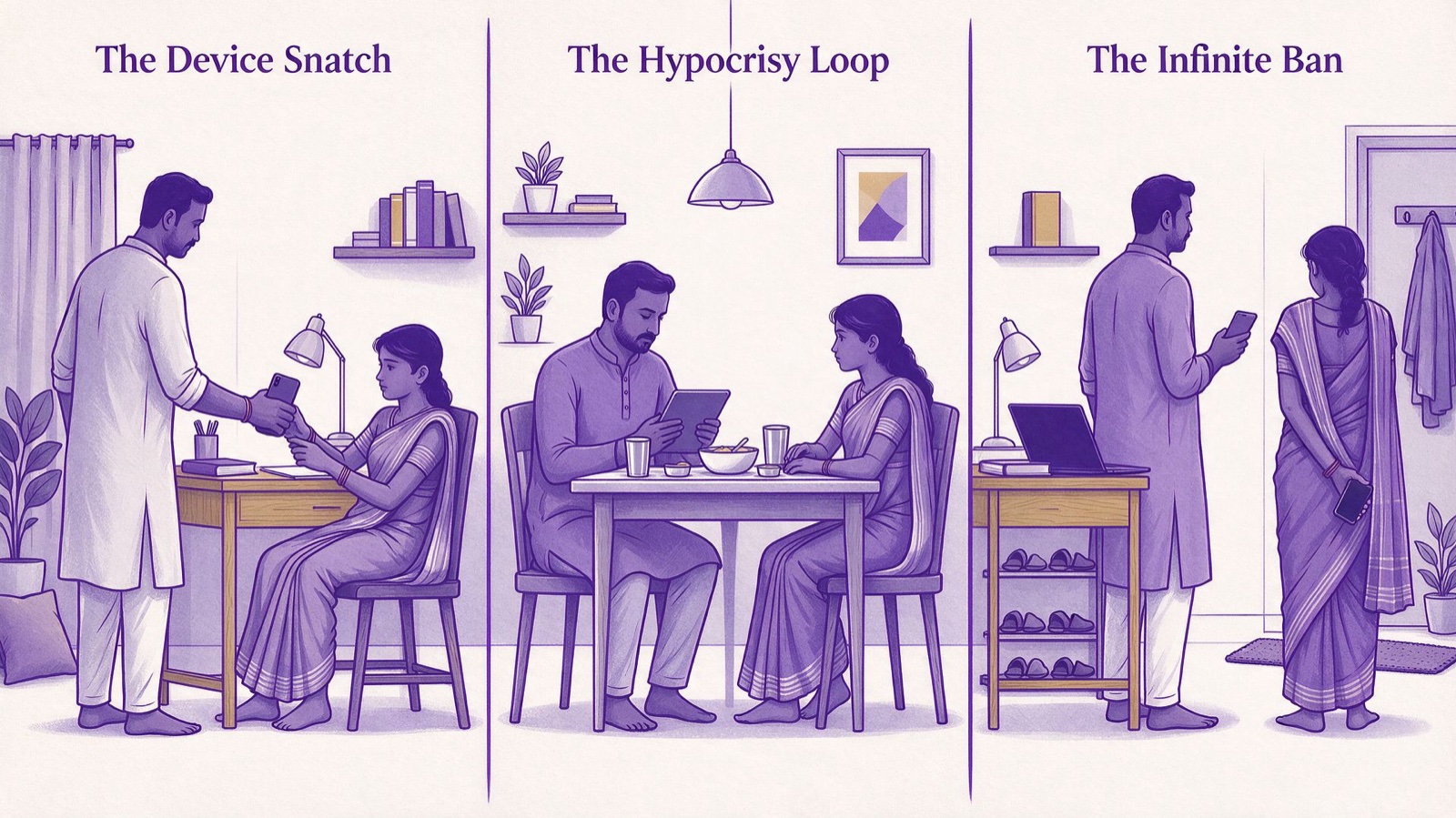
Unexpected limits during an argument
Taking the phone or switching off Wi-Fi while both of you are angry.
A surprise limit can turn a conversation about sleep or safety into a larger argument.
Discuss the concern and set a clear, predictable limit when everyone is calm.
Rules that are too broad
Banning every screen for a long period after one disagreement.
A broad rule can be hard to follow and may also block schoolwork or ordinary contact with friends.
Make the boundary specific, such as keeping phones away during meals or charging them outside bedrooms at night.
Rules that apply to only one person
Asking your teen to put a phone away while adults keep using theirs at meals or bedtime.
If adults do not follow the same shared routine, a teen may see the rule as unfair.
Choose a routine the adults in the home are willing to follow too.
A family phone routine
Four steps to agree on phone limits while keeping connection and trust in view.
Give a calm reminder
A reminder can make it easier to finish a conversation or task before stopping.
- Avoid starting the conversation by grabbing the phone.
- Agree on a reminder ahead of time, such as: 'Bedtime is in ten minutes. Please finish what you are doing and put the phone on charge.'
Agree where phones charge at night
A shared charging place may help everyone follow the bedtime routine.
- If late-night phone use is affecting sleep, discuss charging phones outside bedrooms and using a separate alarm clock.
- Choose a time and charging place that fits your family, and agree whether the same routine applies to adults.
Make the routine easier to follow
Small changes to phone settings can support an agreed routine.
- Consider Do Not Disturb or app limits at the time you agreed on. Check together that important calls can still get through.
- When studying, agree which apps or notifications can wait until a break.
Plan a few offline options
Offer options for connection, rest, and activities away from a screen.
- Ask what your teen values about being online and what they might enjoy doing away from a screen.
- Offer choices such as a walk, cooking together, music, or a few minutes to talk without trying to solve everything.
What to Say Tonight: Word-for-Word Scripts
Save these to your phone or keep them in mind for your next interaction.
"'I know stopping can be hard, especially when you are talking with friends. I am worried about sleep. Can we agree on a time to put our phones away and try the same routine together for a week?'"
Calm, curious, and ready to listen.
Names the concern and invites a specific shared plan.
"'I hear that privacy matters to you. I want us to agree on clear limits for bedtime and online safety without reading your private messages.'"
Steady, respectful, and open to questions.
Recognizes the concern and explains the limit without threatening to inspect private conversations.
"'Bedtime is in ten minutes. Please finish your conversation and put the phone on charge at the time we agreed.'"
Casual, collaborative reminder as you walk past.
Gives your teen time to finish a conversation and follow the shared plan.
Agree on a calm, consistent routine and review it together.
Calm, curious, and ready to listen
"Let us agree on a time to put our phones away tonight and try the same routine together."
Understanding the situation
Start with curiosity
Agree on a routine
If the first plan is not working, discuss what is getting in the way and adjust it. Keep the conversation respectful. Consider seeking professional support if screen use is causing ongoing distress, sleep problems, or disruption to school and family life.
All Situations in Midnight Gaming, Phones & Sleep Battles
When Screen Time Leads to Arguments
Agree on phone use, bedtime, and clear limits without turning every evening into a power struggle.
Midnight Gaming & Academic Freeze
Playing Discord and PC games until 2 AM while board exam syllabus lies untouched (protective apathy).
The 3 AM Sleep Shift & Morning Hell
Physically unable to sleep before 2 AM, impossible to wake up, and chronic morning screaming matches.
The Family Phone & Digital Agreement
Phone rules designed once, enforced forever — without spyware, ambushes, or nightly renegotiation.
You do not have to solve everything tonight
Choose one practical action that feels manageable for your family.
The Family Screen-Time Contract (Printable)
A worksheet to discuss phone use, bedtime, and clear limits together.
Talk with someone about what is happening at home
If the same conflict keeps coming back or feels difficult to manage, book a conversation to discuss the support that may fit your family.
Cross-Chapter Recommended Guides
The Silent Teen: How to Open the Door When You Only Get One-Word Answers
When your teenager retreats behind closed doors and responds in grunts, interrogating them only pushes them further away. Understand the Sensory Sanctuary driver and the exact side-by-side script that breaks the silence.
The Unmotivated Son: Why Teenage Boys Freeze Under Academic Pressure & Retreat into Gaming
When teenage boys face mounting board exam pressure and future uncertainty, they don't ask for help—they freeze, feign apathy, and play video games for 8 hours. Understand the Future Dread driver and how to rebuild his agency.
The Defiant Teen: De-escalating Explosive Arguments Without Power Struggles
When your teenager detonates over simple household requests, engaging in a screaming match guarantees defeat. Discover the Autonomy driver, the Drop-the-Rope technique, and verbatim de-escalation scripts.