
Midnight Gaming, Phones & Sleep Battles
The Family Phone & Digital Agreement: One Document That Ends the Nightly renegotiation
Screen rules improvised at 10:30 PM lose every time. Design the household's digital constitution once — dock times, zones, privacy lines, and family-level symmetry — so the rule does the law's job and you retire from the enforcement career.
The Overnight Confiscation Regime
One dramatic seizure teaches nothing except grey-market routing — evasion respected as a skill.
"Written once, enforced forever — every phone docks at the same hour, household included."
"It's 10:50 PM. Third time you've asked for the phone. First time you asked nicely. Second time with a sigh. This third one has edge in it."
"He says: 'Five more minutes' — the sixth of the evening. You grab. He yanks back. The tug-of-war leaves a phone on the floor and a family at war before Tuesday even arrives."
"You promised yourself you'd never be this parent. And yet here you are, night after night, negotiating rules that change every evening — because they were never written down."

Improvised rules lose because they were never rules in the first place — they were moods. A written agreement converts nightly negotiation into a signed document — boring, predictable, and symmetrically binding on every family member including you. It outlives moods, exams, and even full-moon weekends.

What may be going on
These are possibilities to consider, not a diagnosis or certainty. Ask your teen what fits.
"'It's MY phone, you can't take it!' (While seating at the dinner table)"
One possibility: It cost me my savings, my status, my identity. When you grab it, you're not parenting me — you're confiscating my social life.
"'You're on YOUR phone the whole evening too!'"
One possibility: I measure fairness constantly. If your rules apply to me but not you, every negotiation begins from a position of hypocrisy that I can exploit forever.
"'Okay FINE, whatever,' surrender-phone — while privately using the spare, the brother's, the school-friend's spare"
One possibility: Outlawed phones create grey markets. I don't need MY phone to be online; I need A phone. Confiscation is a tactic, not a solution — I'll simply route around it.
Screens Run on Variable Reward — Structure Beats Willpower
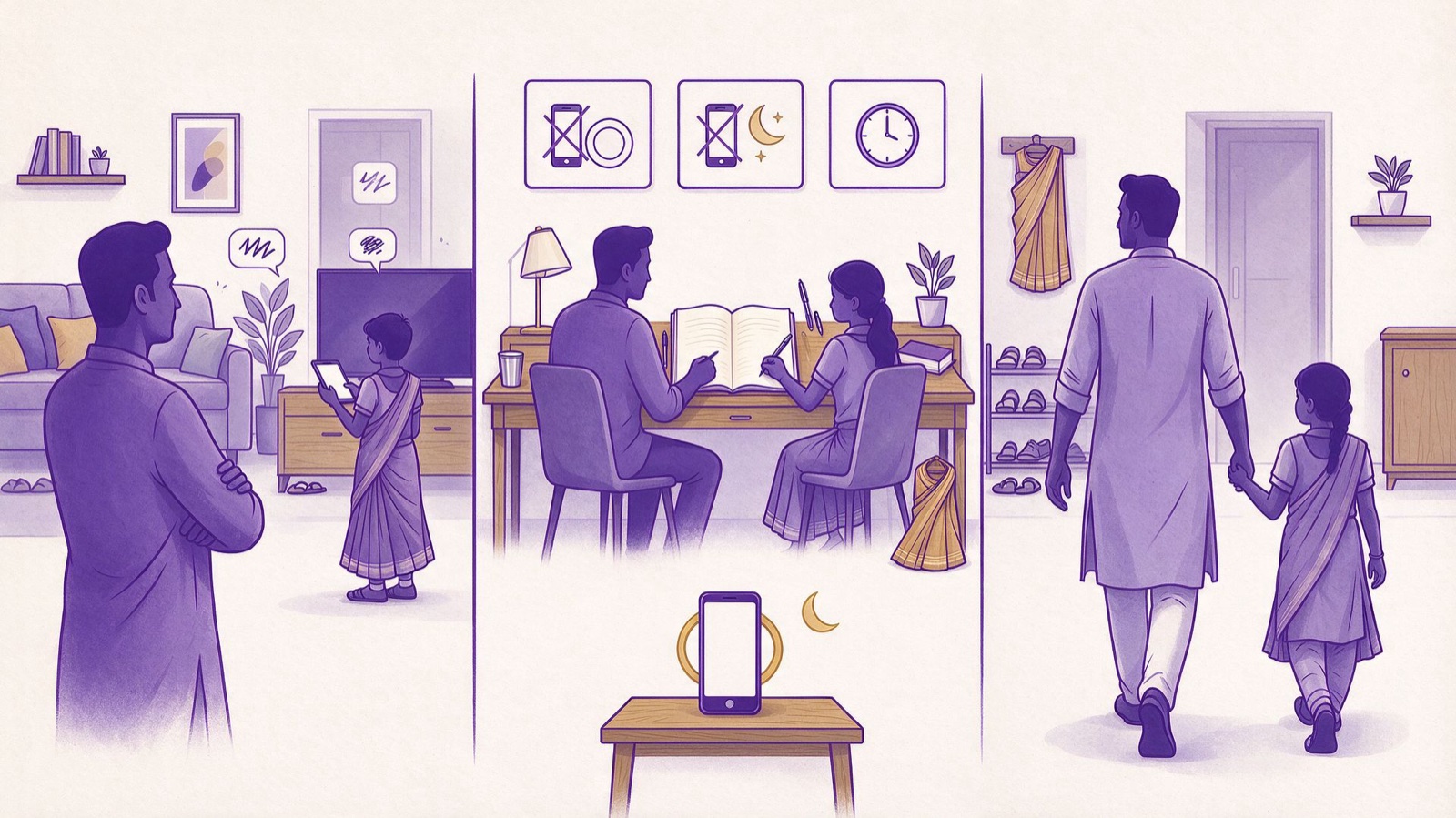
Phones are variable-reward machines: every scroll could deliver dopamine, and the unpredictability is the hook. The adolescent prefrontal cortex (the brakes system) is still under construction, while the reward system is at lifetime peak — which makes raw willpower a biologically unfair contest. The only proven control layer is external structure: fixed dock times, device-free zones, and consistency over severity. Screen-time research keeps finding the same thing — parental mediation (talking, rules, co-viewing) outperforms restriction (confiscation, bans) in both behavioural and wellbeing outcomes, because restriction teaches evasion while structure teaches self-regulation. The agreement wins because it converts willpower laboratories into boring, predictable, almost invisible habits.
Natural Instincts That Accidentally Make It Worse
Every caring parent falls into these traps out of love, fear, or exhaustion. Here is what happens inside their nervous system and how to shift:
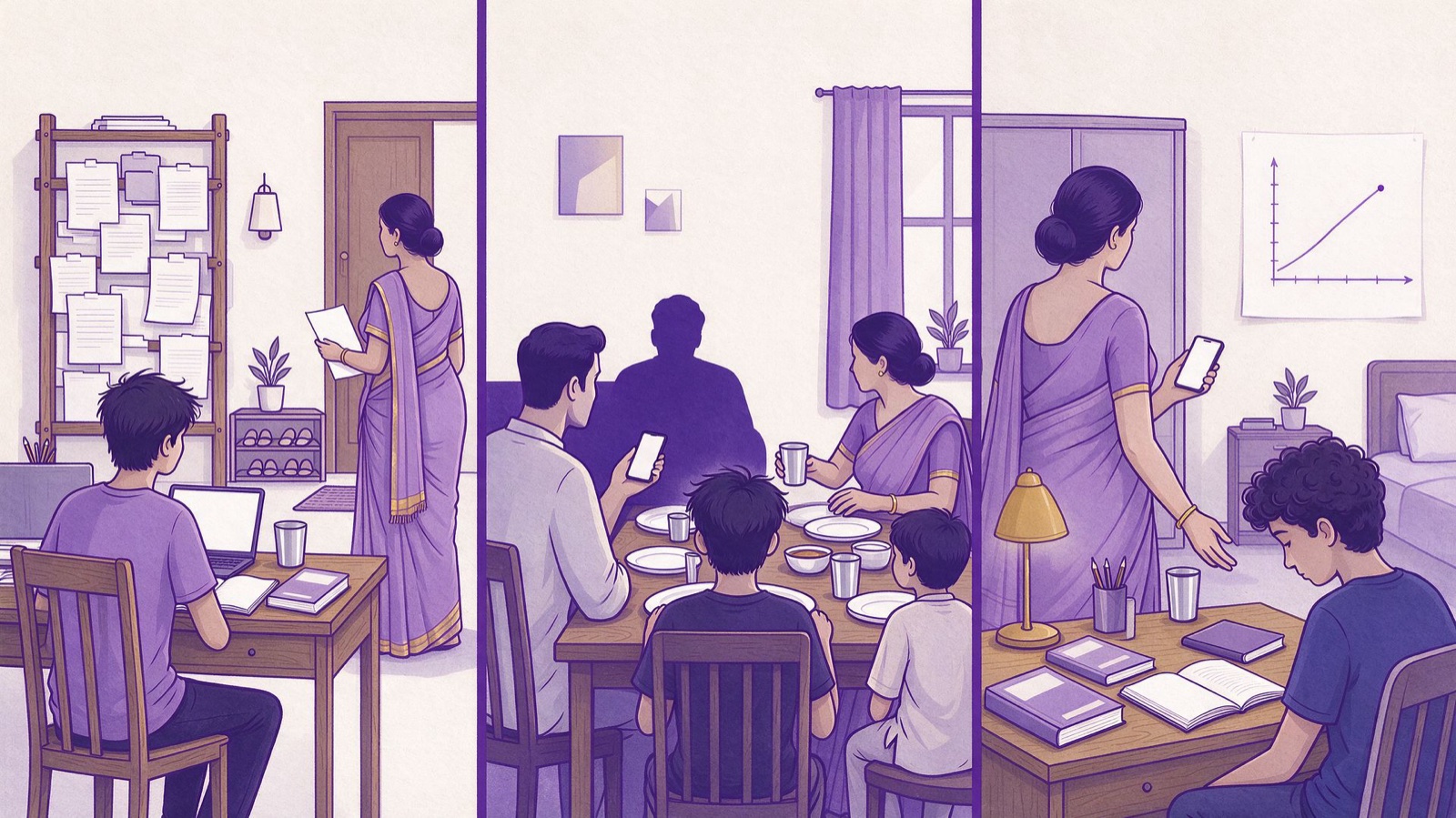
The Overnight Confiscation Regime
'Done. Phone's mine till boards. You need discipline.'
Destroys the working equilibrium, triggers revenge evasion, and proves authority is arbitrary force. The grey market opens inside a week.
Graduated structure: dock times, zones, hundreds of small predictable boundaries — not one dramatic amputation.
The Selective Enforcement Swipe
Rules bend when he's sweet, exam week arrives, or the cousin visits.
Teaches precisevede that rules are decorative — they flex exactly when most needed, and your authority erodes further every exception.
Consistency over drama: same dock time at 10 PM whether he's 97% or 58%, whether guests are over or not.
The Security-Enabled Parent
Spying apps, message reading, location luggage without consent.
Gives your teen a surveillance template they'll resent forever — and worse, teaches them that relationships run on covert watch rather than trust. It also fails: second accounts arise within weeks.
Visible tracking only if agreed in writing as part of the safety contract — never covert. Build trust floors, not hidden cameras.
The Digital Constitution (Design Once, Enforce Forever)
One 20-minute family meeting rep laces every phone rule you'll ever need.
Call the Constitutional Convention
One 20-minute meeting repairs a decade of improvised rules.
- Frame it as repair, not crackdown: 'We've been making up rules nightly and it's exhausting everyone. Tonight we write them once.'
- Every member gets a say on every rule — grandma too, if she owns a phone. Participation buys compliance.
- Write it on one page. Print. Fridge. Photograph into each phone. The document is the referee; you're just a signatory.
The Five Constitutional Clauses
Keep it to five — one-liners, zero legalese.
- Dock time: phone 'sleeps' at X, charges in public spot, every family member. Wake: phone stays docked till breakfast done — conversation before stimulation.
- Zones: no meals, no bedrooms after 9:30, no bathroom scrolling (skin & brain hygiene both).
- Money: all in-app purchases above ₹X need a family meeting vote — protects both sides from impulse fees.
- New apps: shared openly, used on family wifi. Transparency over surveillance — the app list is visible, content review is by trust.
- Enforcement: every family cell has a rule and every rule has a price. Small, predictable, boring — the way real laws work.
Model It or Lose It (Parent Symmetry)
The single highest-leverage clause: parents are held too.
- Your phone docks at the same hour. Add a clause: 'Mum's phone sleeps in the kitchen.' Your compliance is a public spectacle — respect it.
- Never break a rule even 'once' for a 'good reason' — the teen brain prices exceptions as valuable and escalates accordingly next fight.
- If you slip, confess like you'd want them to: 'Slipped tonight, my fine is ₹100 in the family pot.' Humble modelling is the cheapest authority multiplier available.
The Monthly Review (Retention Ritual)
Amendment culture keeps the document alive.
- Quarterly (not monthly — too naggy), meet 10 minutes: what's working, what feels unfair, new apps, seasonal changes (boards, festivals, travel).
- Amendments need family vote — 2 of 3 or unanimous, you decide. Takes 15 minutes to feel heard and re-cements buy-in.
- Reward the streak: completed month = a family experience (outing, movie, cook-together). The system earns its legitimacy by being worth keeping.
What to Say Tonight: Word-for-Word Scripts
Save these to your phone or keep them in mind for your next interaction.
"'New thing, hear me out. Tonight we're not fighting about phones — ever again. We're writing one agreement, together, that covers everyone — including my phone and Dad's. Rules YOU help write are rules you can live with. Deal? Twenty minutes, then it's done forever.'"
Seated, paper out, genuinely willing to negotiate the clauses you don't care about.
Reframes from enforcement to constitution-writing, offers genuine participation, and includes your own device — the disarmament that buys real compliance.
"'You bought it from your allowance — I agree it's yours, and I'm not taking it. The agreement says where it LIVES at night. Your property, our house rules. Same as your bike lives in the garage, not your bedroom.'"
Level, brief, no lecturing tone.
Concedes ownership honestly so there's no battle to defend, then flips the frame from possession to location — a distinction the teen brain can accept.
"'Caught myself — broke our rule. Slipping fine into the family pot tonight. That's how this works, right? I model it so you can.'"
Light, even playful, without defensiveness.
Symmetry is your strongest card, and self-fining is a masterclass in authority: the rule applies even when inconvenient for you.
Structure beats willpower: rules that bind the whole family bind the teen.
Seated, paper out, genuinely willing to negotiate the clauses you don't care about
"Written once, enforced forever — every phone docks at the same hour, household included."
Understanding the situation
Why Mediation Beats Restriction (Every Time)
The Grey Market Is Real
Screens and Family Connection
All Situations in Midnight Gaming, Phones & Sleep Battles
When Screen Time Leads to Arguments
Agree on phone use, bedtime, and clear limits without turning every evening into a power struggle.
Midnight Gaming & Academic Freeze
Playing Discord and PC games until 2 AM while board exam syllabus lies untouched (protective apathy).
The 3 AM Sleep Shift & Morning Hell
Physically unable to sleep before 2 AM, impossible to wake up, and chronic morning screaming matches.
The Family Phone & Digital Agreement
Phone rules designed once, enforced forever — without spyware, ambushes, or nightly renegotiation.
You do not have to solve everything tonight
Choose one practical action that feels manageable for your family.
The Family Screen-Time Contract (Printable)
A printable family agreement establishing transparent boundaries, dock times, privacy lines, and the enforcement ladder.
Talk with someone about what is happening at home
If the same conflict keeps coming back or feels difficult to manage, book a conversation to discuss the support that may fit your family.
Cross-Chapter Recommended Guides
When Screen Time Leads to Arguments
If phone use is pushing bedtime later or requests to stop lead to arguments, start with a routine you can discuss and keep together.
The 2 AM House: Winning the Sleep War Without a Single Morning Scream
Your teen genuinely cannot sleep early and genuinely cannot wake when you need — adolescent biology shifted her clock and the school bell never heard. Stop fighting the clock; negotiate the morning instead.