
Midnight Gaming, Phones & Sleep Battles
The 2 AM House: Winning the Sleep War Without a Single Morning Scream
Physically unable to sleep before 1 AM, impossible to wake, and the screaming match that opens every single school day. It isn't defiance — it's biology vs the school bell.
The Extraction Raid
Every ambushed morning teaches that mornings are danger and you are the danger — which tonight's dread then feeds.
"Nothing to discuss till breakfast ends. Chai first, light's doing its job."
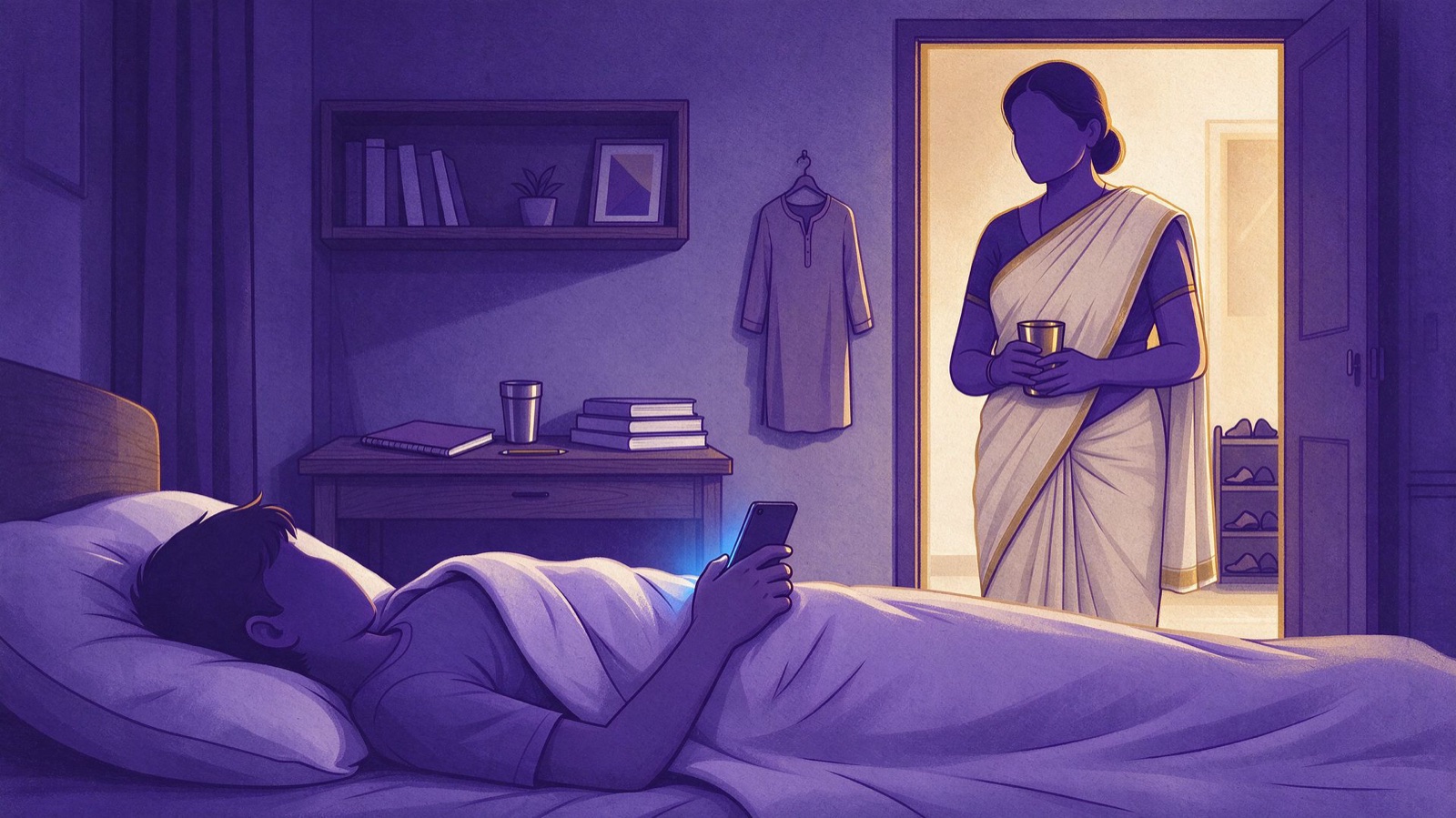
"6:45 AM. Third alarm — the industrial one, the one that rattles the steel tumblers on her desk."
"She surfaces like a diver — gasping, furious, hair matted to one cheek. 'FIVE more minutes,' she growls, and you already know how this movie ends because you've both starred in it 130 times: the yanking of the blanket, the raised voices about school, the slammed bathroom door, and a breakfast eaten in a silence you could spread like butter."
"By 9 PM she'll be bright-eyed, funny, alive — doing homework at midnight with alarming cheer. And you lie awake resenting a body clock you can't scold into submission."
Her night-owl wiring isn't laziness, rebellion, or screen damage alone — the adolescent brain genuinely shifts its sleep gate later by one to three hours, and no amount of 5 AM discipline moves biology. But biology explains; it doesn't run the house. There is a negotiable middle: a sleep protocol that protects her hours AND your mornings — with zero screaming required from either side.
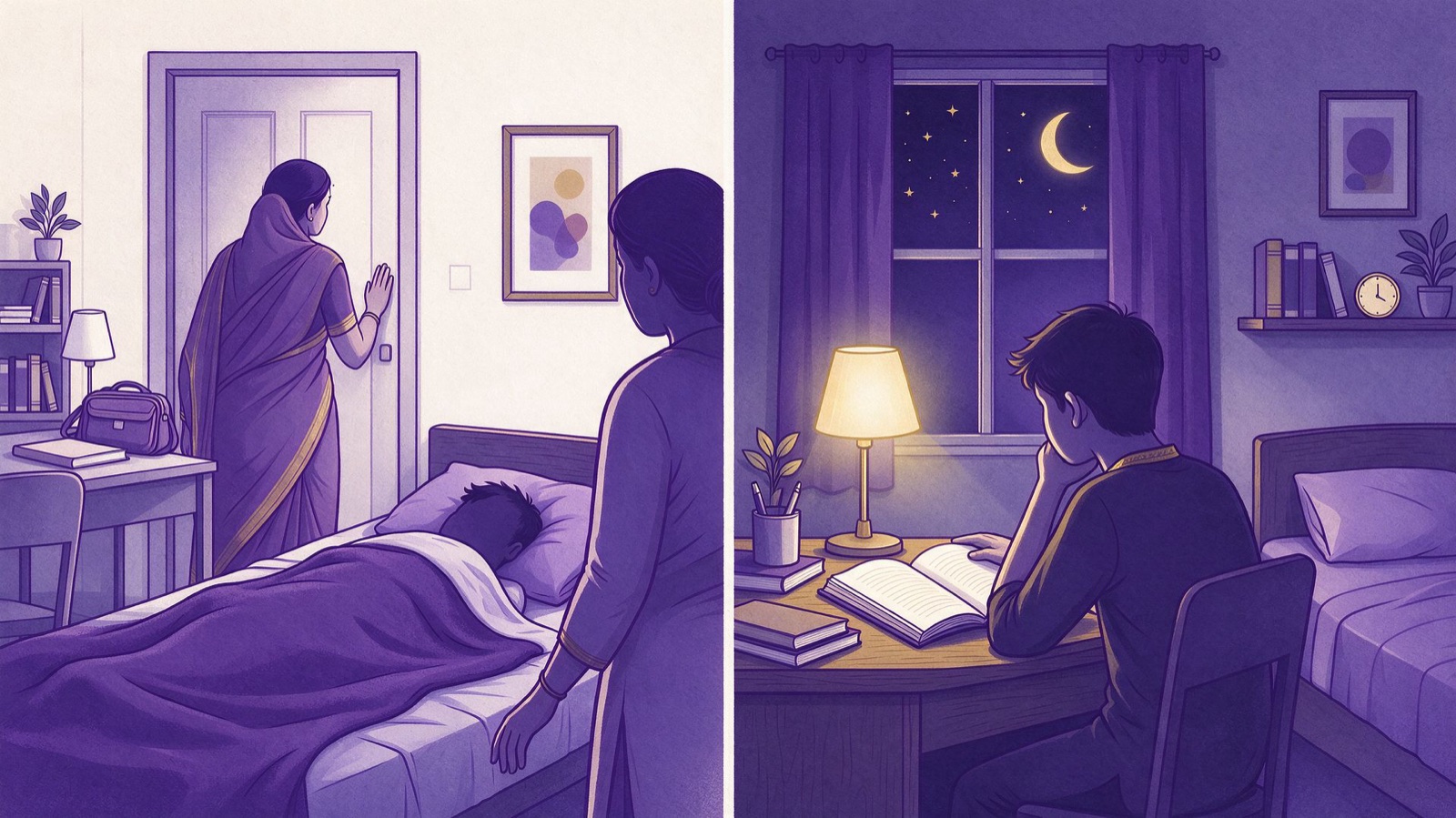
What may be going on
These are possibilities to consider, not a diagnosis or certainty. Ask your teen what fits.
"'I CAN'T sleep. My brain won't switch off.' (Bright-eyed at 11:30 PM, dead at 6:45 AM)"
One possibility: Her melatonin release genuinely starts hours later than yours. At 10 PM her body is chemically at your 7 PM — asking her to sleep is asking you to nap after lunch.
"'FIVE more minutes' growled like a threat, blanket yanked back over her head"
One possibility: Being ripped out of deep sleep mid-cycle is physically disorienting — cortisol flooding before consciousness finishes booting. She's not rude; she's biochemically ambushed.
"Denies the 1 AM scrolling: 'I was just checking the time'"
One possibility: The phone is the only company awake at her natural bedtime. The glow feels like the day's only belonging-hour — surrendering it means surrendering her only free hour.
The Delayed Clock: Melatonin, Blue Light, and the School Bell
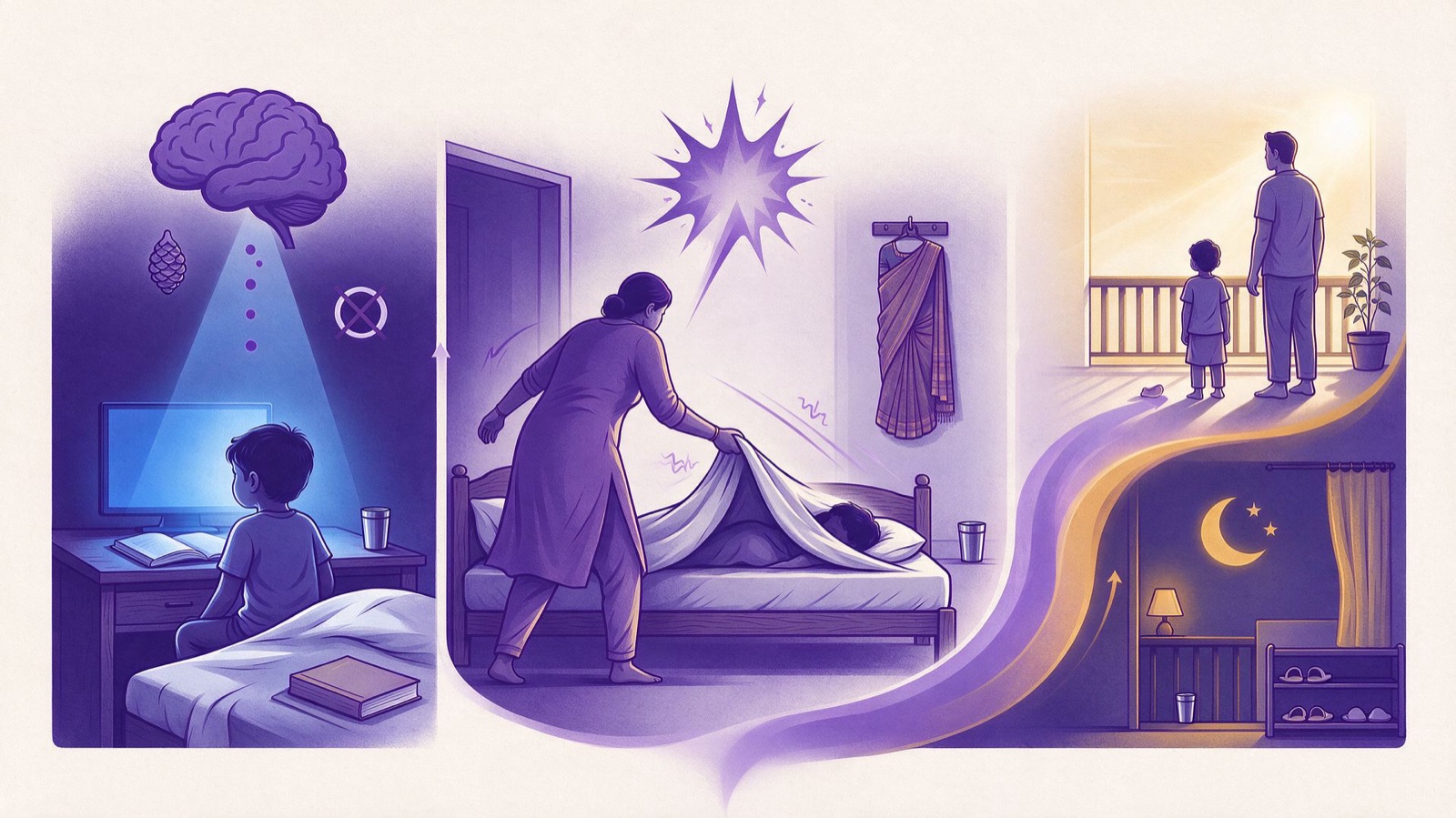
From puberty through the early twenties, the circadian clock shifts: melatonin onset moves one to three hours later. The teen brain reaches its sleep gate near midnight while the adult hits it at nine. Blue-spectrum light — phones, tubelights, study lamps — then delays the gate further, sometimes past 2 AM, by suppressing the very melatonin already running late. Morning alarms then fire into mid-deep-sleep, extracting a half-booted brain. Result: a teen who's genuinely sharp at midnight and genuinely wrecked at seven — not by choice, not by character. The only negotiable levers are light (evening dimming, morning brightness), anchor consistency (same wake time even weekends), and the sleep-wind-down buffer.
Natural Instincts That Accidentally Make It Worse
Every caring parent falls into these traps out of love, fear, or exhaustion. Here is what happens inside their nervous system and how to shift:
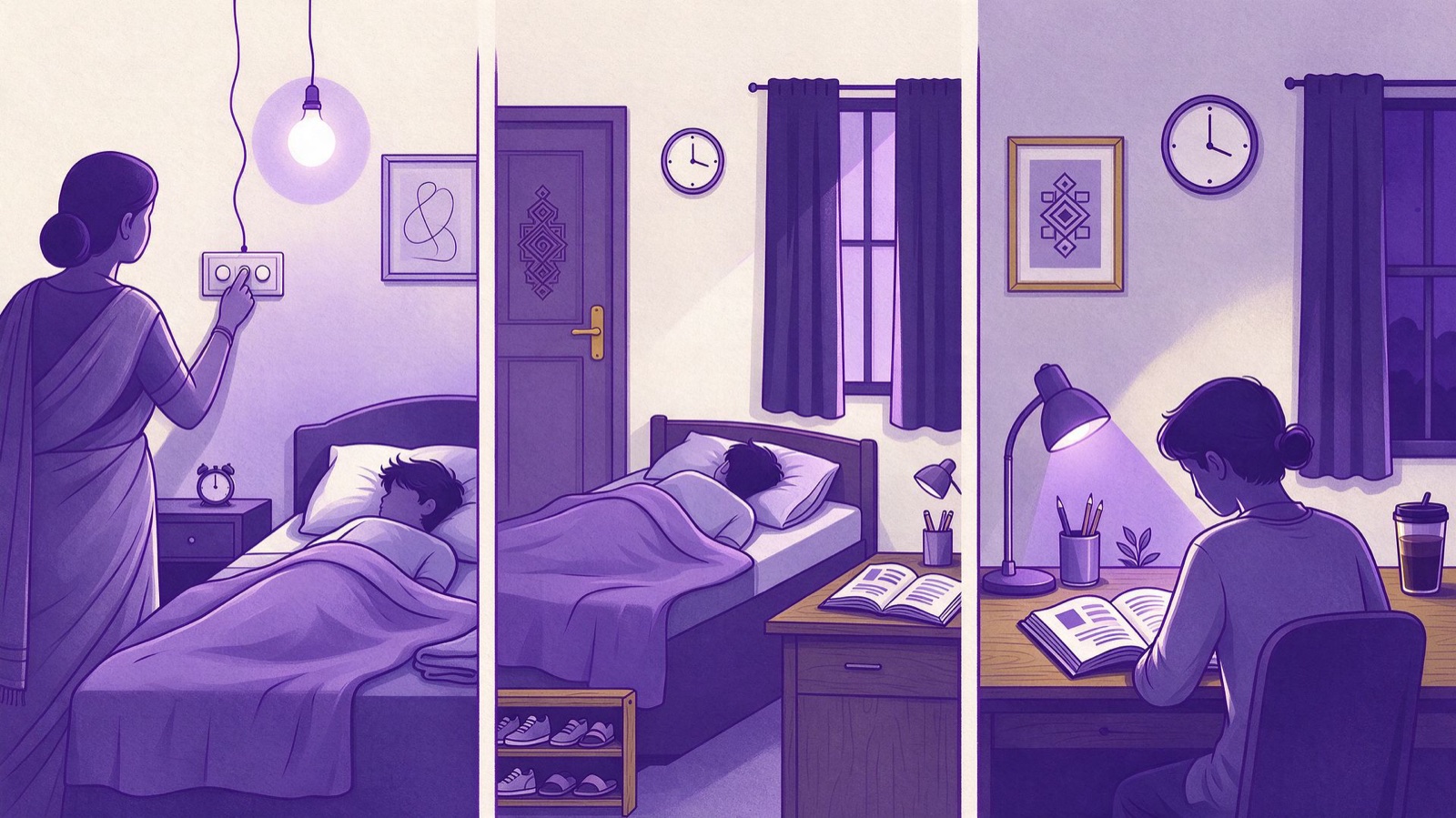
The Extraction Raid
Progressively aggressive wake-ups: louder alarms, blanket yanks, curtain throws, shouted countdowns.
Each ambush floods a half-asleep brain with threat chemistry — she learns mornings ARE danger, which makes tonight's dread of tomorrow part of the sleep problem.
Shift extraction to invitation: a pre-agreed two-stage wake (gentle alarm + your 10-minute-later knock with chai on the table), light on before voice.
The Total Screen Confiscation
'Hand over the phone at 10 PM — no discussion. That's why you can't sleep.'
Removes her only awake-hour company while failing to replace it with sleep — bed becomes a cage of boredom, insomnia hardens, and the phone war poisons everything.
Trade surrender for a dock routine: phone sleeps in the hallway dock (whole family, including parents), replaced by wind-down tools — audiobook, music, reading — that don't emit wake-light.
The Weekend Lie-In Reward
Letting her sleep till noon on Sundays as compensation for a brutal week.
Each 4-hour weekend shift resets the already-late clock later — Monday's extraction is then genuinely violent, and the week starts with cortisol debt.
One anchor rule: wake time varies by at most one hour across the week — including weekends. The single highest-leverage sleep rule there is.
The Clock-Negotiation Protocol
Stop commanding sleep; start contracting it — dim one end, anchor the other, protect the middle.
Fix the Anchor Wake Time (Even Weekends)
One wake time, ±1 hour maximum, seven days a week.
- Negotiate it with her, not at her: 'The one non-negotiable is the wake anchor. You choose it with me — 6:45 or 7:15? Everything else flexes.'
- The anchor retrains the clock within 2–3 weeks only if weekends hold. One-hour weekend grace is the compromise that keeps it human.
- Track it on the fridge for three weeks — tick what holds, renegotiate what collapses.
Engineer the Evening Descent
Dim light and demand in the 90 minutes before her target bedtime.
- Last hour: tubelights off, warm lamp only; screens docked in the hallway (all family phones, visibly, including yours).
- Replace the phone with wind-down tools that don't emit wake-light: audiobooks, music playlists, paperback reading, sketching.
- Wind-down buffer is scheduled, not suggested: '10:45 dock, 11:15 light out' — the dock is the doorway.
Redesign the Morning Extraction
Two stages, light before voice, zero screaming.
- Stage one: self-alarm 10 minutes before target, same time daily. Stage two: your knock with warm chai waiting on the table — arrival announced, never ambushed.
- Light before voice: curtains open or lamp on first, words second. A lit room completes the boot-up the shouting never does.
- First 15 minutes of the day are argument-free by treaty: nothing about marks, phones, or chores until breakfast ends.
Hold the Treaty for Three Weeks
Clock shifts are slow; protect the runway.
- Weeks one–two will be rough — the old clock fights back. Measure: wake-time adherence, not mood. Mood follows week three.
- Review the treaty together each Sunday, five minutes: what held, what broke, one tweak. Both parties may propose tweaks.
- If 2 AM scrolling persists past a disciplined month, check with a doctor about delayed sleep phase — rarely, the shift needs clinical support.
What to Say Tonight: Word-for-Word Scripts
Save these to your phone or keep them in mind for your next interaction.
"'Reset. I'm pausing the morning, not you. Chai's on the table in five — I'll open your curtains and come back when the light's done its job. Nothing to discuss till breakfast ends.'"
Half-volume, slow hands, leaving the room while speaking.
Interrupts the extraction escalation, delegates waking to light and chai, and puts marks/phones off-limits until the brain finishes booting.
"'Your body clock runs two hours later than the school bell's — that's real, not laziness, and I'd rather negotiate with it than against it. Here's the deal I'm offering: you pick the wake anchor — 6:45 or 7:15 — it holds on weekends within an hour, and Sundays stop being war zones. In exchange, the mornings go silent. Deal?'"
Sitting together, pen in hand, drawing up the treaty like colleagues.
Validates biology (not character), trades choices for concessions, and frames the morning silence as the prize of compliance.
"'A clock can't scroll back, and two hours of company beats a docking rule that leaves you alone in the dark. Phones sleep outside — all of ours, mine included, you can check my dock. Your replacement is the audiobook shelf — pick tonight's one before lights out.'"
Matter-of-fact, hands doing the docking alongside her first night.
Acknowledges the loneliness under the scrolling, models the rule symmetrically, and hands a genuine replacement instead of a vacuum.
Anchor the wake, dim the evening, never extract mid-cycle.
Half-volume, slow hands, leaving the room while speaking
"Nothing to discuss till breakfast ends. Chai first, light's doing its job."
Understanding the situation
The Biology You're Up Against
Schools start at 7–8 AM because institutions optimise for adult staffing and buses, not teen neurology. The chronic result is social jetlag: a two-to-five-hour daily mismatch between biological and institutional time. Research treats this as partially what drives adolescent mood dips, mark collapses, and morning hostility — it's a systemic cruelty, not a parenting failure.
Why Ambush Mornings Are the Worst Lever
The One-Percenters That Compound
All Situations in Midnight Gaming, Phones & Sleep Battles
When Screen Time Leads to Arguments
Agree on phone use, bedtime, and clear limits without turning every evening into a power struggle.
Midnight Gaming & Academic Freeze
Playing Discord and PC games until 2 AM while board exam syllabus lies untouched (protective apathy).
The 3 AM Sleep Shift & Morning Hell
Physically unable to sleep before 2 AM, impossible to wake up, and chronic morning screaming matches.
The Family Phone & Digital Agreement
Phone rules designed once, enforced forever — without spyware, ambushes, or nightly renegotiation.
You do not have to solve everything tonight
Choose one practical action that feels manageable for your family.
The Family Sleep Contract (Printable)
A 1-page anchor-and-dock treaty — negotiated wake time, hallway dock routine, and the argument-free morning clause.
Talk with someone about what is happening at home
If the same conflict keeps coming back or feels difficult to manage, book a conversation to discuss the support that may fit your family.
Cross-Chapter Recommended Guides
When Screen Time Leads to Arguments
If phone use is pushing bedtime later or requests to stop lead to arguments, start with a routine you can discuss and keep together.
The Unmotivated Son: Why Teenage Boys Freeze Under Academic Pressure & Retreat into Gaming
When teenage boys face mounting board exam pressure and future uncertainty, they don't ask for help—they freeze, feign apathy, and play video games for 8 hours. Understand the Future Dread driver and how to rebuild his agency.