
Family Shifts, Gender & Sensitive Realities
Mirrors, Meals, and Reels: When Your Daughter Starts Hating How She Looks
Skipped meals, deleted photos, 'I'm so ugly' said flatly at 14 — and a thousand filtered faces telling her she's right. How to be the voice that outlasts the algorithm.
The Beauty Rebuttal
Arguing the verdict proves the court is real; she files your compliments as parental blindness.
"The game is rigged and home is unranked — on anything, ever."
"She deletes the family Diwali photo twenty minutes after it's posted. Not because she looks bad in it — she looks radiant — but because her jawline, in her words, 'looks weird from this angle.'"
"Meals have become negotiations. 'I'm not hungry' at lunch; a full thali pushed around at dinner. The bathroom visits after eating have started, and you've started counting them while pretending you aren't."
"Yesterday she said it plainly, brushing her hair: 'I'm just ugly, Ma. It's fine, I've accepted it.' Said the way other kids say the sky is blue. That's the sentence that brought you here."
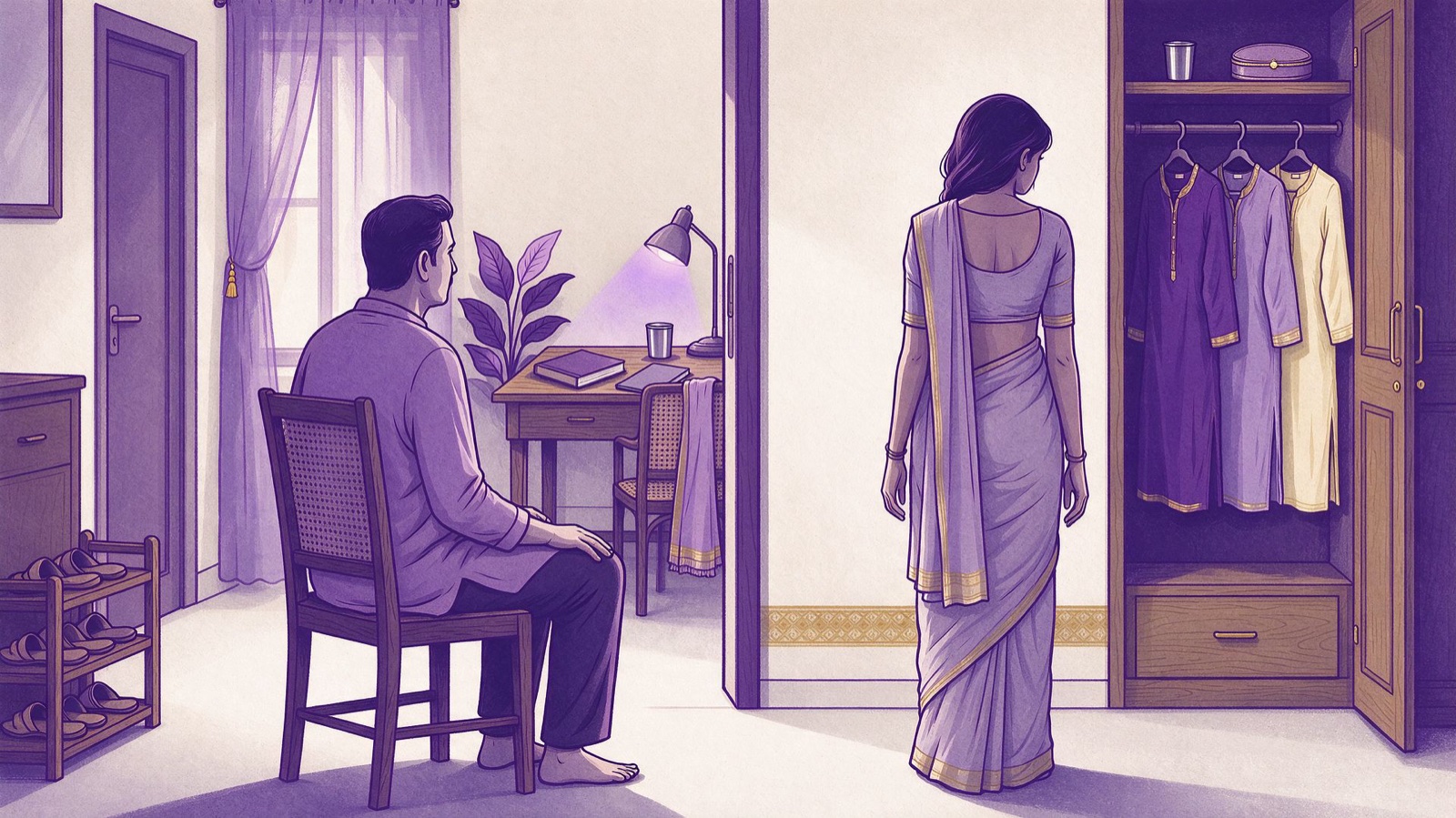
She isn't fishing for compliments and she isn't being dramatic — she's reporting the weather inside a head that's being rained on by ten thousand filtered faces a day. Body image at this age is almost never about the body; it's about rank, belonging, and control. You can't out-compliment an algorithm, but you can do something stronger: become the one voice whose regard never fluctuates with appearance, and teach her to see the machine that's grading her.
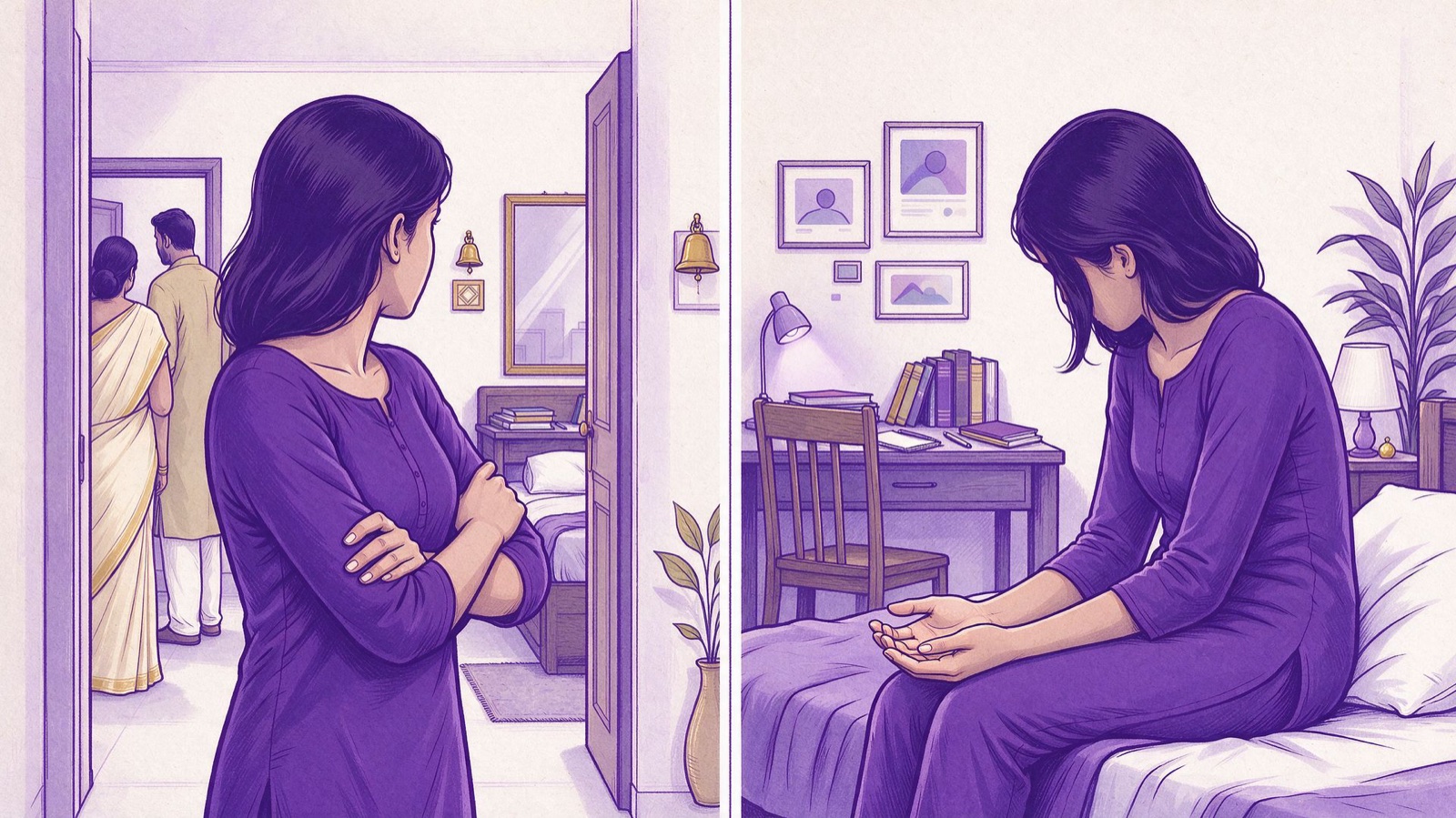
What may be going on
These are possibilities to consider, not a diagnosis or certainty. Ask your teen what fits.
"'I'm just ugly. I've accepted it.' (Flat, factual, no tears)"
One possibility: I've compared ten thousand faces to mine today and lost every round. Stating it flatly is safer than hoping — hope gets crushed daily, facts just sit there.
"Skipping meals, pushing food, bathroom trips after eating, 'I'm not hungry'"
One possibility: Food is the one variable I fully control when looks, likes, and ranks are all uncontrollable. Restriction feels like agency, even as it harms.
"Deleting photos, refusing mirrors, filter-only selfies, comparing aloud to influencers/cousins"
One possibility: Every image is a ranking event and I'm always last. Deleting is damage control; filters are the only version of me allowed in public.
The Comparison Machine: Rank, Filters, and the Unwinnable Game
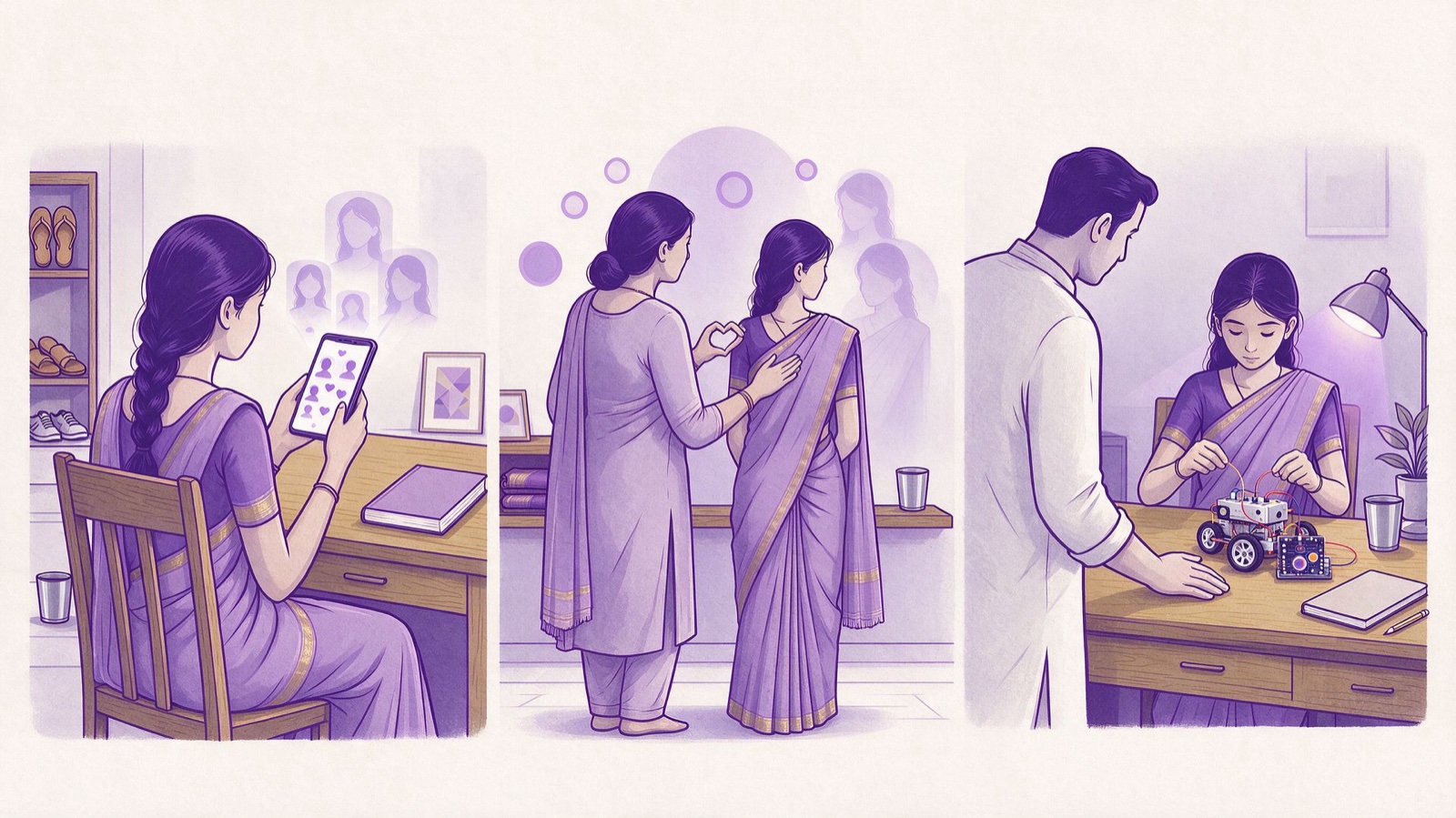
The adolescent brain ranks constantly — it's how tribes sorted belonging for millennia. Social media industrialised the ranking: endless flawless faces, each one a micro-verdict of 'not enough.' Filters add a cruelty previous generations never faced — the 'ideal' isn't even human; it's smoothed, reshaped, lit impossibly. Meanwhile puberty is actively rearranging her actual face and body on its own schedule, so the gap between mirror and ideal widens exactly when rank-sensitivity peaks. Food restriction enters as control infrastructure: when appearance, likes, and development all feel uncontrollable, intake is the one dial she owns. This is why reassurance ('you're beautiful') bounces off — it's the wrong currency for a ranking wound. What's needed: media literacy (seeing the machine) plus unconditional regard (a rank-free zone at home).
Natural Instincts That Accidentally Make It Worse
Every caring parent falls into these traps out of love, fear, or exhaustion. Here is what happens inside their nervous system and how to shift:
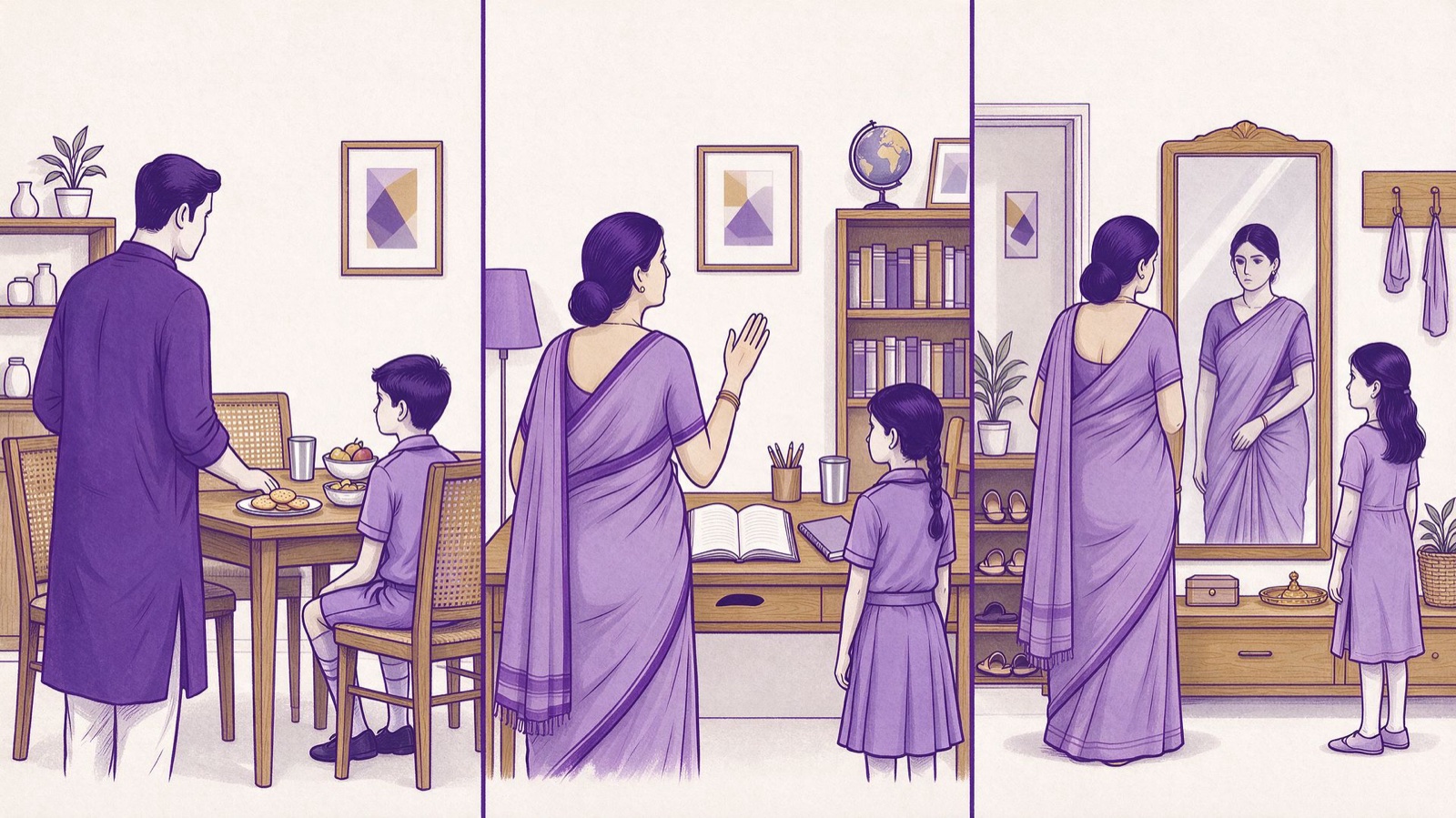
The Beauty Rebuttal
'Are you mad? You're GORGEOUS. Look at you!' plus evidence (photos, compliments from aunties).
Argues the verdict instead of the court. She concludes you can't see clearly (parental blindness) — and the ranking machine remains the only 'honest' judge.
Sidestep beauty entirely: 'I hear how heavy that feels. Can I ask — whose faces have you been comparing with today?' Move from verdict to mechanism.
The Meal Battlefield
Monitoring plates, counting bathroom trips openly, forcing finishes, commenting on portions.
Fuses food with surveillance and shame — the exact cocktail that converts body dissatisfaction into a clinical eating issue. Kitchens become courtrooms.
De-weaponise meals completely: eat together, talk about anything but food, model relaxed eating yourself. Watch privately; act only through professionals if patterns persist.
The Ban-and-Mock Response
Deleting Instagram, mocking filters ('nobody looks like that, duh'), dismissing the whole concern as silly.
Bans drive the behaviour underground (second accounts, friends' phones); mockery teaches the wound is unspeakable at home too.
Co-investigate instead: watch a reel together, spot the filter tells, laugh at the absurdity jointly. You're on her team against the machine — never the machine's defence lawyer.
The Two-Track Response (Literacy + Regard)
Track one exposes the rigged game; track two keeps home permanently unranked. Both, always.
Name the Machine Together (Media Literacy, Weekly)
Make the algorithm visible and therefore beatable.
- Weekly 15-minute reel autopsy: pick three posts, spot the tells (skin smoothing, jaw reshaping, lighting, angles). Score them together, lightly.
- Teach the economics once: 'Their job is keeping your eyes on screen; insecurity is the inventory.' One sentence that reframes every scroll.
- Follow one body-neutral or body-diverse creator together — not as prescription, as shared feed hygiene.
Build the Unranked Home
Zero appearance commentary — positive or negative.
- Full household ban on looks-talk: no 'you look tired/pretty/thin', no food-body linking, no comparing siblings or cousins. Enforced for guests too ('we don't do looks-comments here').
- Compliment transfer: redirect every appearance compliment you'd give into competence/character ones ('that argument was sharp' beats 'you look nice' 10-to-1).
- Model it: no self-criticism aloud about your own body in her hearing. The home's regard must read as structural, not performed.
Keep Meals Sacred and Unwatched
Food stays fuel and family, never evidence.
- Eat together, talk about the day, never the plate. Seconds and skipped courses both pass without comment.
- Monitor privately: patterns over weeks (not meals) are what matter. Skipped-family-meals + bathroom trips + weight change = professional consult, not confrontation.
- If you suspect a clinical pattern, act sideways: paediatrician or counsellor first, presented as health check, never as accusation.
Feed Competence, Starve Comparison
Belonging must come from somewhere real.
- One skill arena where progress is visible and ranked by effort: sport, music, coding, art, volunteering — her pick, your funding and ferrying.
- Celebrate process publicly in the family: 'three months of practice showed tonight' — the anti-ranking currency.
- Friendships over followers: facilitate one real-world connection weekly (the activity in step 4 doubles as tribe-building).
What to Say Tonight: Word-for-Word Scripts
Save these to your phone or keep them in mind for your next interaction.
"'That sounds like a really heavy thing to have decided at fifteen. Can I ask — whose faces did today put next to yours? Because I watch you scroll, and I see a machine feeding you ten thousand perfect faces and calling the result a fact. The machine is rigged, love. And in this house, you're not ranked — on anything, ever.'"
Seated together, unhurried. Curious, not corrective.
Validates the weight without debating the verdict, externalises the enemy (the machine, not her eyes), and states the unranked-home policy as structural fact.
"(Don't police the plate. Later, privately:) 'I've noticed meals have gotten hard lately, and I'm not going to monitor your plate — that's a promise. I just want you to know: if food ever starts feeling like the enemy instead of fuel, that's a thing doctors and counsellors are brilliant at, and we'd go together, no drama, no shame. Deal?'"
Calm, private, brief. Then drop it completely.
Names the observation without surveillance, plants the professional path as normal healthcare (not accusation), and the promise not to monitor keeps the channel open.
"'Let's autopsy that one — pull it up. See the jawline smoothing? The skin has zero pores — that's not a face, that's rendering. She posted twelve versions and kept one. You're comparing your outtakes to her final cut, every single time.'"
Playful, conspiratorial — you two vs the reel.
Turns comparison into a joint game (bonding), teaches filter literacy by demonstration, and the outtakes-vs-final-cut frame sticks for every future scroll.
Literacy exposes the machine; regard keeps the home unranked.
Seated together, unhurried
"The game is rigged and home is unranked — on anything, ever."
Understanding the situation
Why Reassurance Bounces Off
The Clinical Line
Fathers, Brothers, Uncles: The Male Gaze at Home
All Situations in Family Shifts, Gender & Sensitive Realities
When Teenage Sons Push Mothers Away
Why adolescent boys pull away to assert masculine independence, and how moms connect without smothering.
When the 'Daddy's Girl' Goes Silent
Why daughters pull away from their fathers during puberty, and how dads can rebuild quiet trust.
Body Insecurities & Mirror Anxiety
Secretive eating, skipping meals, mirror obsession, and comparing real bodies to curated filters.
Secret Dating, First Crushes & Phone Secrecy
Navigating first romantic attachments, late-night texting, and heartbreak without interrogation.
Teens in Controlling Peer / Dating Relationships
Losing their identity, being manipulated by partners or friends, and helping them step away safely.
Caught in a Lie (Secret Accounts & Broken Trust)
Why teens lie to avoid humiliation or protect privacy, and how to rebuild honesty without turning into police.
Vaping, Smoking & Substance Experimentation
Finding pods, smelling smoke, peer pressure, and holding immovable health boundaries without hysteria.
Self-Harm & Overwhelming Emotional Storms
Cutting, severe emotional distress, and emergency psychological first aid for terrified parents.
Being Bullied & Excluded by Peers
Cyberbullying, exclusion from group chats, school yard cruelty, and rebuilding inner safety.
Divided Households & Co-Parenting Friction
Managing conflicting rules between two homes without putting the teenager in the middle of adult resentment.
What to Do When You Find Pornography on Their Phone
Discovered screenshots, unspeakable questions — respond with calm project-management, not catastrophe.
The Hostel & College Transition Playbook
Packing lists are easy; leaving home isn't — prepare the 18-year-old and yourself for the first real goodbye.
You do not have to solve everything tonight
Choose one practical action that feels manageable for your family.
The Social Anxiety Ladder (Printable)
A 1-page micro-rep ladder for reaching out — story reactions to homework questions to meet-ups, with a debrief box.
Talk with someone about what is happening at home
If the same conflict keeps coming back or feels difficult to manage, book a conversation to discuss the support that may fit your family.
Cross-Chapter Recommended Guides
The Empty Weekend: When Your Teen Has Nowhere to Go and No One to Call
Weekend after weekend at home while classmates' stories scroll past is not a scheduling problem — it is a belonging wound. Learn the bridge protocol: regulate the shame, build one micro-social rep at a time, and never pity-recruit.
The Perfectionist Teen: Ending the Spiral of Self-Doubt and Panic Over 93% Marks
When 93% feels like a failure and a minor mistake brings tears of devastation, your teen isn't being ungrateful — they are trapped in a fragile self-worth loop. Learn how to decouple their dignity from test marks.