
Silence, Grunts & The Closed Door
The Empty Weekend: When Your Teen Has Nowhere to Go and No One to Call
Two full days alone in the room while WhatsApp groups light up without her. Loneliness is the wound nobody names — this is how you be the bridge without becoming the social director.
The Pity Party Rescue
Every arranged hangout is proof she can't make friends herself; dignity is rescued to death.
"Groups calcified early; that is timing, not a verdict. One small message beats one more scrolled story."
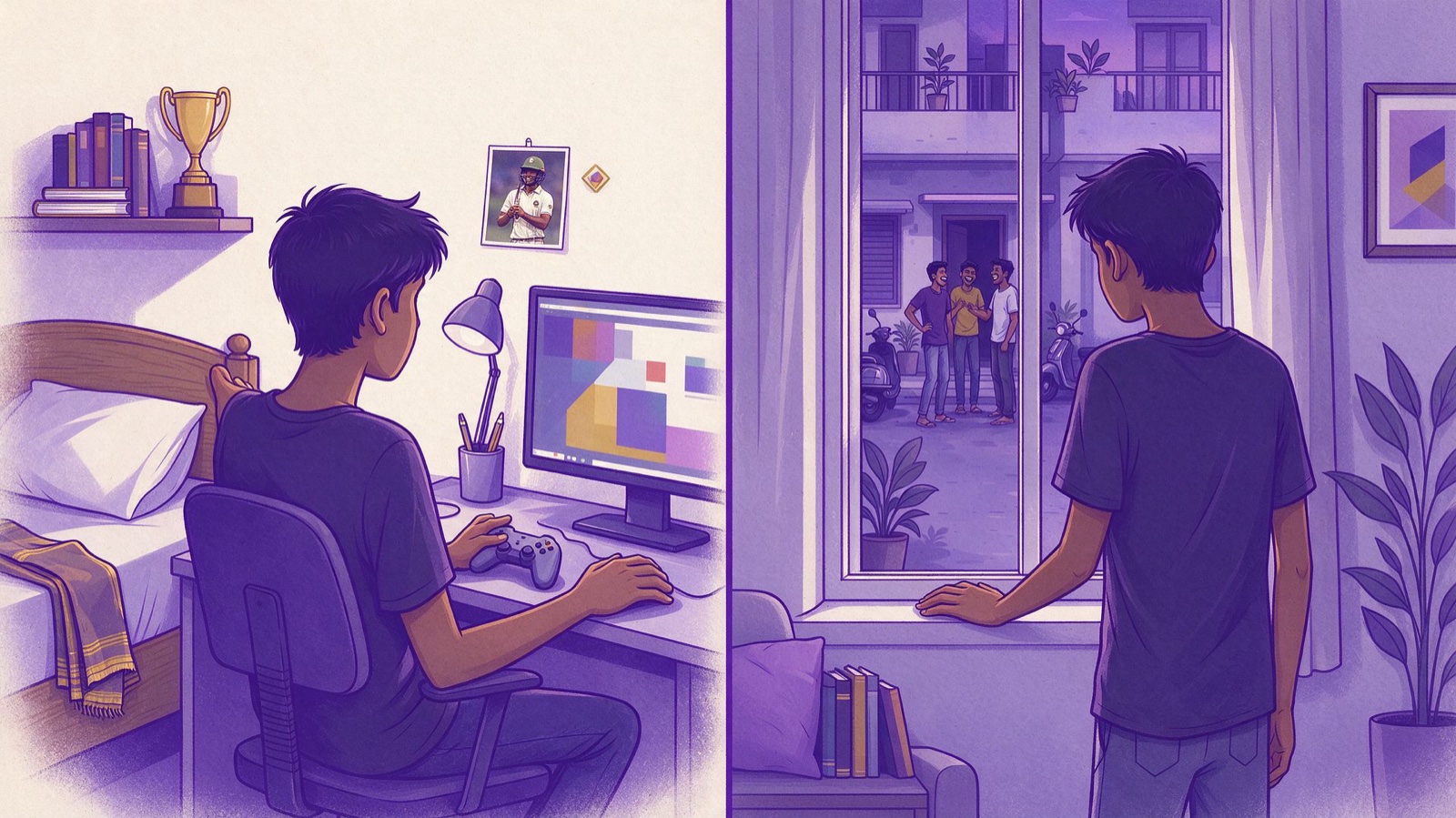
"Saturday, 11 AM. Her classmates' Instagram stories flicker past — a mall outing, a sleepover collage, a group reel with six laughing faces."
"Your daughter is on her bed, phone in hand, double-tapping other people's weekends. 'No plans,' she says when you ask. Not sad-sounding. Flat. You've started manufacturing errands — grocery runs she can join, cousin visits — and both of you know exactly what you're doing, and both of you pretend this is normal."
"Sunday night she says the thing that undoes you: 'It's fine. I'm used to it.' You lie awake hearing that sentence re-run, because 'used to it' at fifteen is the saddest fluency there is."

Loneliness isn't proof she's unlikeable — it's proof her belonging channel is currently on low bandwidth. Friendlessness at 15 is usually a situational freeze (new school, a group fracture, post-fight fallout), and situational freezes thaw with small warm reps, not with pity parties or forced hangouts. You're not her friend. You're her bridge-builder — and bridges are built one plank at a time.
What may be going on
These are possibilities to consider, not a diagnosis or certainty. Ask your teen what fits.
"'It's fine. I'm used to it.' (Rehearsed flatness, no tears, no fight)"
One possibility: I've told this sentence so many times I almost believe it. If I don't perform 'fine', someone will do something embarrassing — call someone's mum, stage a hangout.
"Scrolls through peers' stories for an hour, double-tapping, never commenting or messaging"
One possibility: Watching is the safe version of belonging. Commenting risks being seen-and-ignored, which would update my status from 'unknown' to 'rejected' — measurably worse.
"'Nobody likes me. Everyone already has their group.'"
One possibility: School groups calcified in Class 6 and I was on the wrong side of the fracture. Starting from zero at 15 feels permanently late.
The Belonging Freeze: When the Tribe Door Looks Shut
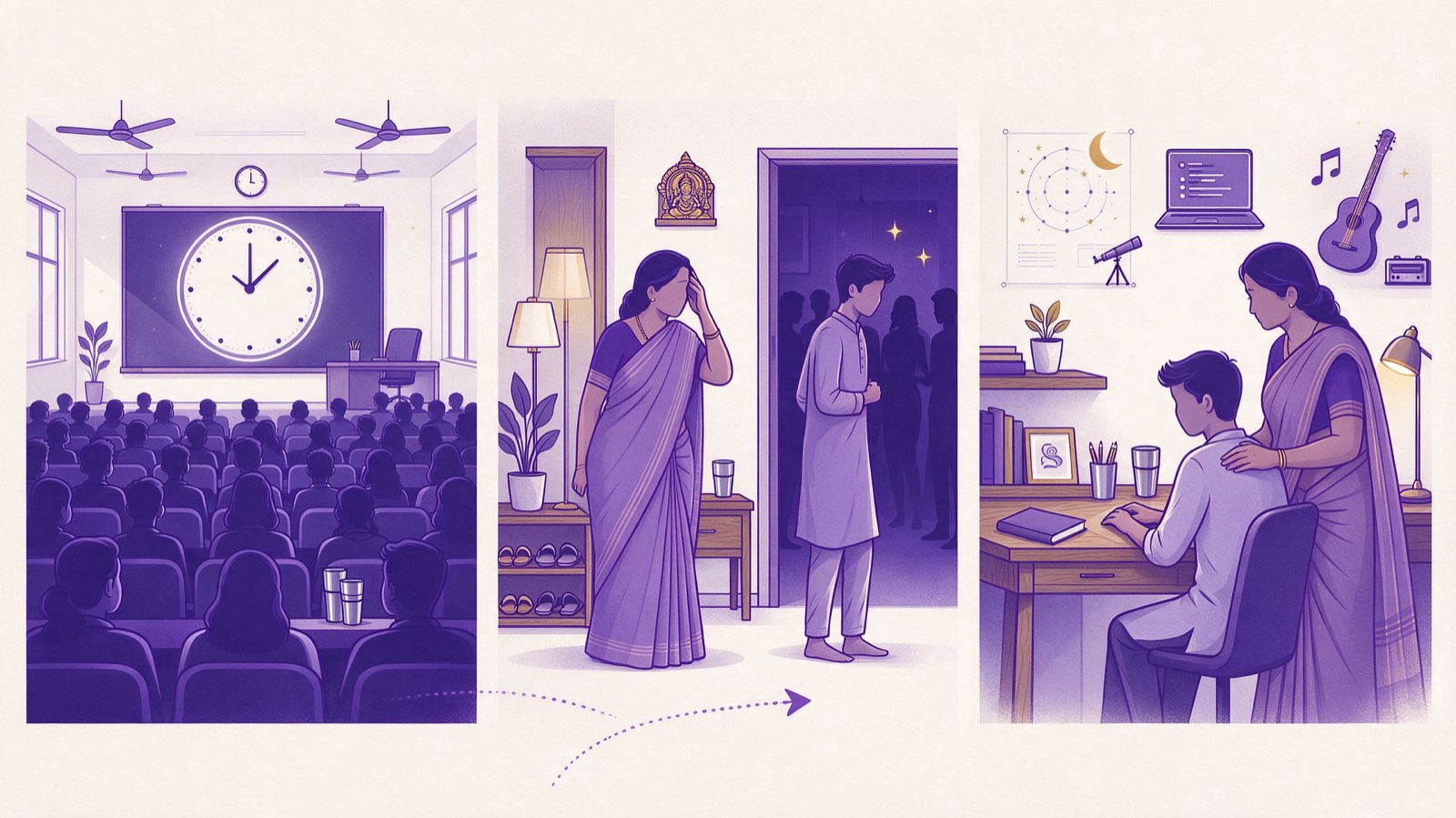
The adolescent social brain treats peer exclusion like physical pain — literally the same neural alarm (dorsal anterior cingulate). Chronic weekend-after-weekend exclusion keeps that alarm simmering, which produces avoidance: don't-message, don't-ask, don't-try. Avoidance feels protective and is corrosive, because each non-attempt confirms the theory 'nobody wants me' while denying the brain any disconfirming data. Meanwhile comparison feeds compound the wound: every story viewed is a tiny exclusion replay. The way out isn't 'more confidence' — it's micro-reps of reaching out so small the alarm doesn't fire, banking one answered message at a time until the tribe door stops looking welded shut.
Natural Instincts That Accidentally Make It Worse
Every caring parent falls into these traps out of love, fear, or exhaustion. Here is what happens inside their nervous system and how to shift:
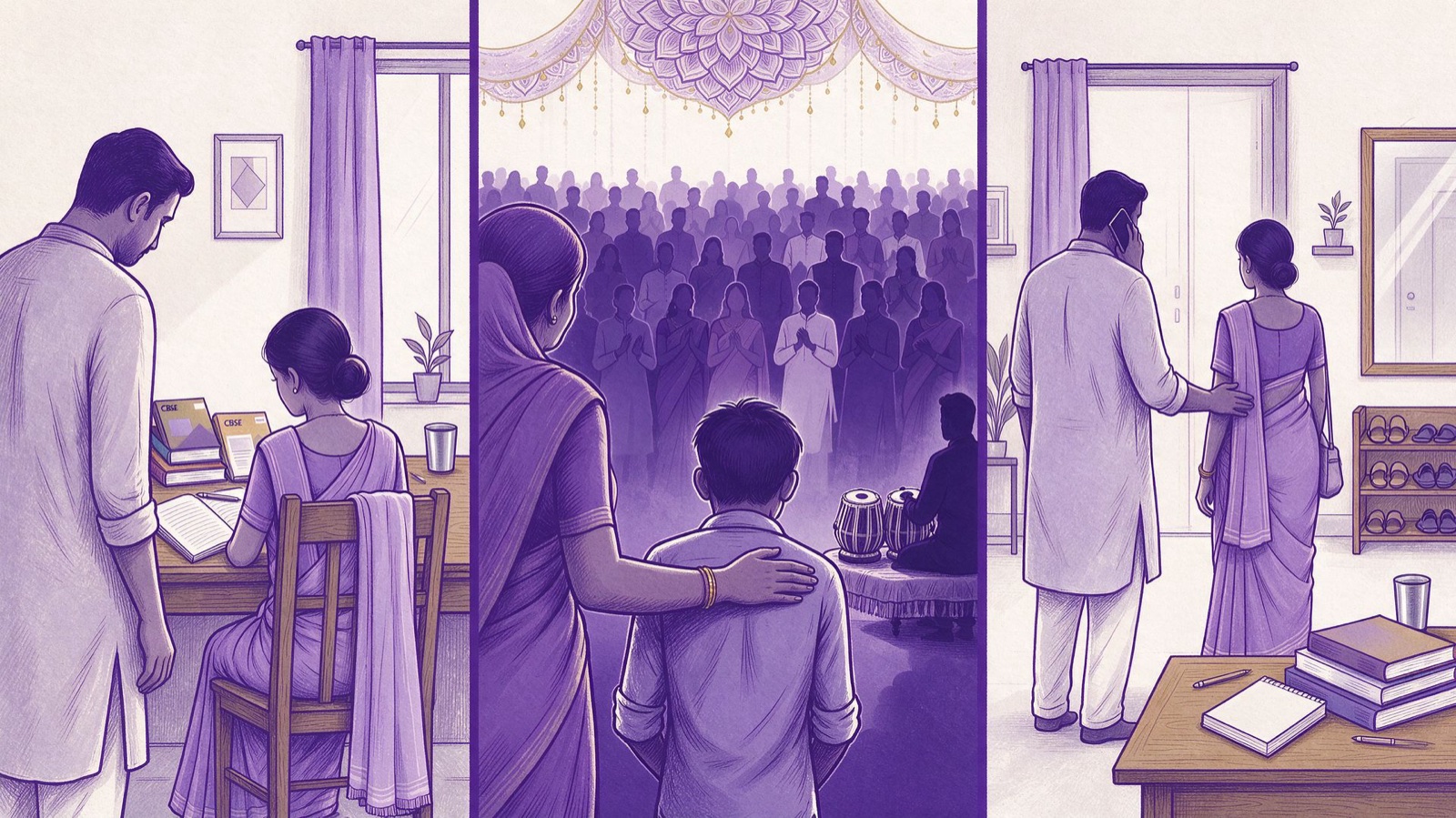
The Pity Party and Rescue Operation
Calling other mothers, staging 'casual' group outings, engineering surprise friend visits.
Teaches her that her social life is a parental production — every arranged hangout is proof she 'can't get friends herself'. Dignity dies by rescue.
Zero orchestrated hangouts. Your job is reps and debriefs, never casting calls.
The 'Just Message Someone' Push
'Text Rahul! What's the worst that could happen? Just do it!'
The worst that could happen, in her nervous system's honest math, is seen-and-ignored — a status confirmation. Pushing the big leap guarantees more freezing.
Micro-rep ladder only: react to a story (lowest stakes), one line about shared homework (medium), meet-up suggestion (summit). She picks the rung.
Comparison Fact-Checking
'Look at your cousin — she made three friends after shifting schools! You're just not trying.'
Turns loneliness into a capability sentence. Shame narrows social behaviour further, and cousin-comparisons teach the algorithm that home is also a ranking ground.
Validate the arithmetic: 'Groups did calcify early, and starting late is genuinely harder. That's not you being unlikeable — that's timing.' Then ladder.
The Bridge Protocol (One Plank at a Time)
Five moves that thaw the freeze without staging a single pity hangout.
Regulate the Shame First
Name it as timing, not verdict, and mean it.
- Say it directly once: 'Weekends alone hurt, and it's not because you're unlikeable. Groups calcified early here — starting late is objectively harder.'
- Ban the pity voice forever: no sad faces when she says no plans, no special outings engineered around her loneliness. Normal weekends, normal faces.
- Let her grieve out loud if she wants to — without fixing: 'Yeah. That sounds really lonely.' Full stop.
One Low-Stakes Rep This Week
The smallest outbound message that disconfirms the theory.
- Rung one is a reaction, not a message: react to one classmate's story. No follow-up owed.
- Rung two is a question with a real answer need: 'hey what did ma'am assign for Thursday?' — homework questions are the socially-legal cold opens of school life.
- Debrief matters more than the send: 'They replied — how did that feel?' Bank the feeling, not the tactic.
Build Belonging Somewhere Wilder Than School
School calcification is real; bypass it with a fresh tribe.
- One out-of-school activity with rotating people: volunteering, theatre backstage, sport-for-fun clubs, community classes — anywhere people cycle and ranks stay soft.
- She picks it (agency is everything here); you only fund and ferry.
- Six-week rule: commit to the full run before judging. Tribes form at week four, not week one.
Teach the Maintenance, Not the Rescue
Friendship is maintenance skills she can rehearse at home.
- Rehearse the exact words: follow-ups ('how did the thing go?'), specific compliments ('your answer in class was good'), and low-cost invitations ('want to sit together at lunch?').
- Role-play one scenario weekly over chai, light and funny, not a class.
- Celebrate the reps, not the results: 'You sent the message — win regardless of reply.'
What to Say Tonight: Word-for-Word Scripts
Save these to your phone or keep them in mind for your next interaction.
"'Fifteen is too young an age to be fluent in being alone. I don't think you're fine with it — I think you're managing it, and managing it alone is exhausting. No rescue plans from me, promise. But if a small experiment ever sounds okay — one message, one club — I'm the operations team.'"
Shoulder to shoulder, both facing the same window. Quiet, almost offhand.
Calls out the fluency myth gently, removes the rescue threat (her actual fear), and positions you as logistics, not production designer.
"(Don't take the phone. Sit down nearby first.) 'Do you know what hour-long scrolling does to anyone? It converts 'they're busy' into 'nobody wants me'. The cure is one outbound thing — a reaction, a homework question — while you're still on the couch. Want to pick one together?'"
Collaborative, almost conspiratorial. Never from the doorway.
Explains the doom-spiral as a mechanism (not a scold), and outsources the fix to one tiny action picked by her.
"'Groups did calcify early, you're right about that arithmetic. Nobody liking you is a different claim, and loneliness is making it feel the same. The late-starter path exists — theatre kids, volunteering crews, sport-for-fun. Different tribes, softer ranks. You get to audition tribes too, just not this one this year.'"
Steady and specific. No fake brightness.
Validates the true half (calcified groups) while splitting it from the false half (permanent unlikeability), then opens a real door instead of arguing the feeling away.
Zero orchestrated hangouts. You're the bridge crew, never the casting director.
Shoulder to shoulder, both facing the same window
"Groups calcified early; that is timing, not a verdict. One small message beats one more scrolled story."
Understanding the situation
Why Groups Calcify (and Why That's Structural, Not Personal)
This is structural bad luck married to a sensitive window. Your daughter's read ('everyone has their group') is substantially accurate; her conclusion ('therefore nobody wants me anywhere') is the loneliness speaking. The correct move is structural too: bypass calcified networks via fresh-entry tribes where ranks are still liquid.
The Avoidance-Confirmation Loop
Parents accidentally tighten the loop with rescue (which proved she can't do it) and pressure (which proved trying is unsafe). The protocol's whole design is loop-breaking from the sides: shame-validation loosens the grip, micro-reps supply the data, fresh tribes supply the liquidity.
When Loneliness Tips Clinical
All Situations in Silence, Grunts & The Closed Door
The Closed Bedroom Door (One-Word Grunts)
Coming home from school, heading straight to their room, and answering only in 'fine' or 'nothing'.
The Sudden Push-Away & Emotional Cold Shoulder
When a once-affectionate teen suddenly pulls away, cringes at hugs, and treats your presence like an intrusion.
The Isolated Teen (No Friends & Weekend Loneliness)
Spending entire weekends alone in their room, excluded by peer groups, and struggling with school dread.
You do not have to solve everything tonight
Choose one practical action that feels manageable for your family.
The Social Anxiety Ladder (Printable)
A 1-page micro-rep ladder for reaching out — story reactions to homework questions to meet-ups, with a debrief box.
Talk with someone about what is happening at home
If the same conflict keeps coming back or feels difficult to manage, book a conversation to discuss the support that may fit your family.
Cross-Chapter Recommended Guides
Connect Before You Direct: The Golden Rule of Adolescent Cooperation
Commands without connection feel like threats to an adolescent's developing autonomy. Discover the 2-minute rapport protocol that ends morning screaming matches and evening homework battles.
The Silent Teen: How to Open the Door When You Only Get One-Word Answers
When your teenager retreats behind closed doors and responds in grunts, interrogating them only pushes them further away. Understand the Sensory Sanctuary driver and the exact side-by-side script that breaks the silence.