
Family Shifts, Gender & Sensitive Realities
Bullied at School, Silent at Home: Helping Your Teen Fight Back Without Fighting
The torn bag, the 'lost' lunch money, the sudden school refusal — bullying thrives on silence, and silence thrives on shame. Break both with the document-escalate-support protocol.
- Physical assault causing injury, sexual harassment or coercion, casteist or communal slurs, extortion, or non-consensual image sharing: go to police/cyber-cell alongside the school process — schools cannot adjudicate crime.
- Any self-harm talk, total school refusal beyond two weeks, or complete withdrawal: counsellor immediately, in parallel with everything else.
- Tell him these lines in advance so escalation never feels like betrayal — protection promised beats protection sprung.
1098 — 24x7, free, for under-18s
1930 — 24x7, free
This guide is educational and does not replace professional care. If your teen is in immediate danger, contact local emergency services now.
The Unannounced March
Surprise visits trigger retaliation labelling, burn the school relationship, and teach that telling causes explosions.
"Document, escalate through channels, rebuild his power base — paper moves institutions, visits move bullies."
"The third torn schoolbag this term. 'Rough games,' he says, not meeting your eyes."
"Then the class teacher calls — not about marks, about absence: three Mondays in a row, stomach aches that vanish by noon. And yesterday you found him deleting a group chat with forty unread messages, thumbs hovering, face blank."
"He won't name anyone. 'It's nothing. Don't go to school, you'll make it worse.' And he's probably right about that last part — which is exactly why you need a better plan than marching in."
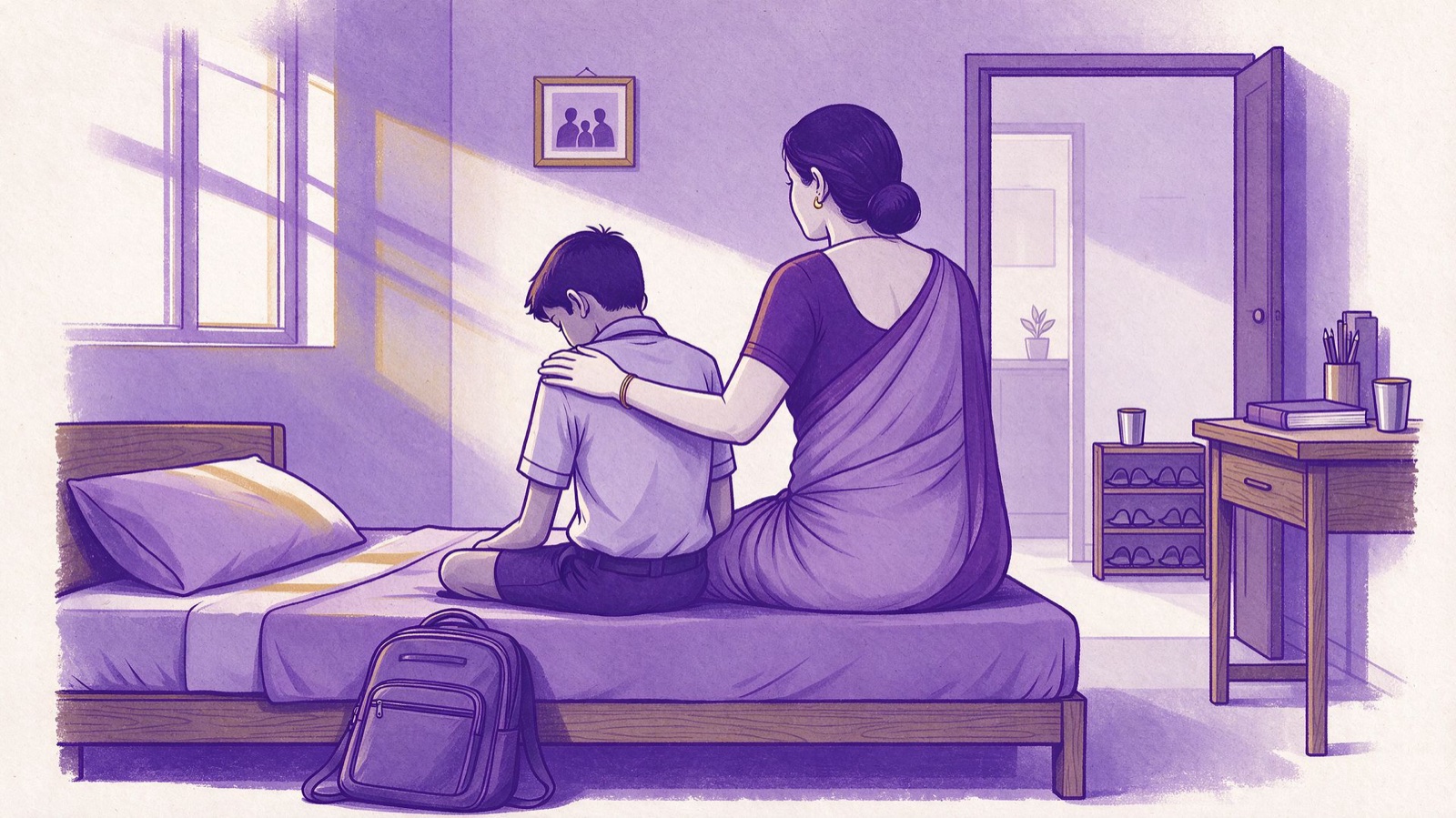
His silence isn't weakness and your fury isn't wrong — but both need directing. Bullying persists where reporting feels more dangerous than enduring, so the entire game is making telling safe and costly to the bully instead of the target. Schools act on documented patterns, not emotional visits. This guide builds the paper trail, the escalation ladder, and the boy who stops looking like an easy target — without a single thrown punch.
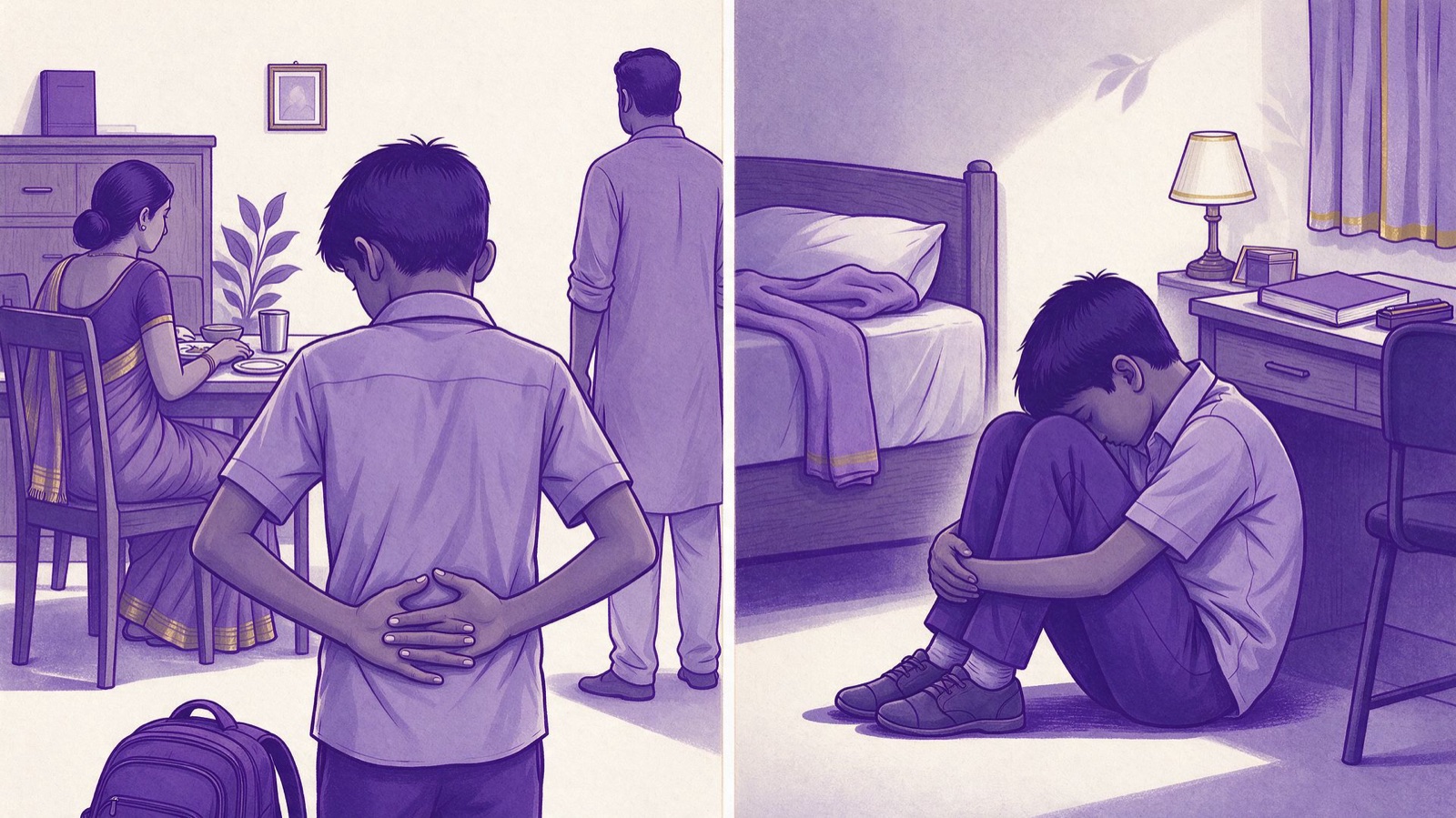
What may be going on
These are possibilities to consider, not a diagnosis or certainty. Ask your teen what fits.
"'Don't go to school, you'll make it worse. I can handle it.'"
One possibility: Retaliation is real and fast — telling makes me a snitch, and snitches get it worse. Handling it alone is the only option that doesn't paint a bigger target.
"Vague physical complaints on school mornings that evaporate by noon"
One possibility: The stomach ache is real — dread lives in the gut. Home is safe; the school gate is where the threat resumes. The body votes with symptoms.
"'They're just joking around. It's fine.' (About behaviour that's clearly not fine)"
One possibility: Admitting it's bullying means admitting I'm a victim — a lower status than even enduring it. Minimising preserves the last shred of rank.
Power Imbalance, Not Conflict: Why Standard Advice Fails
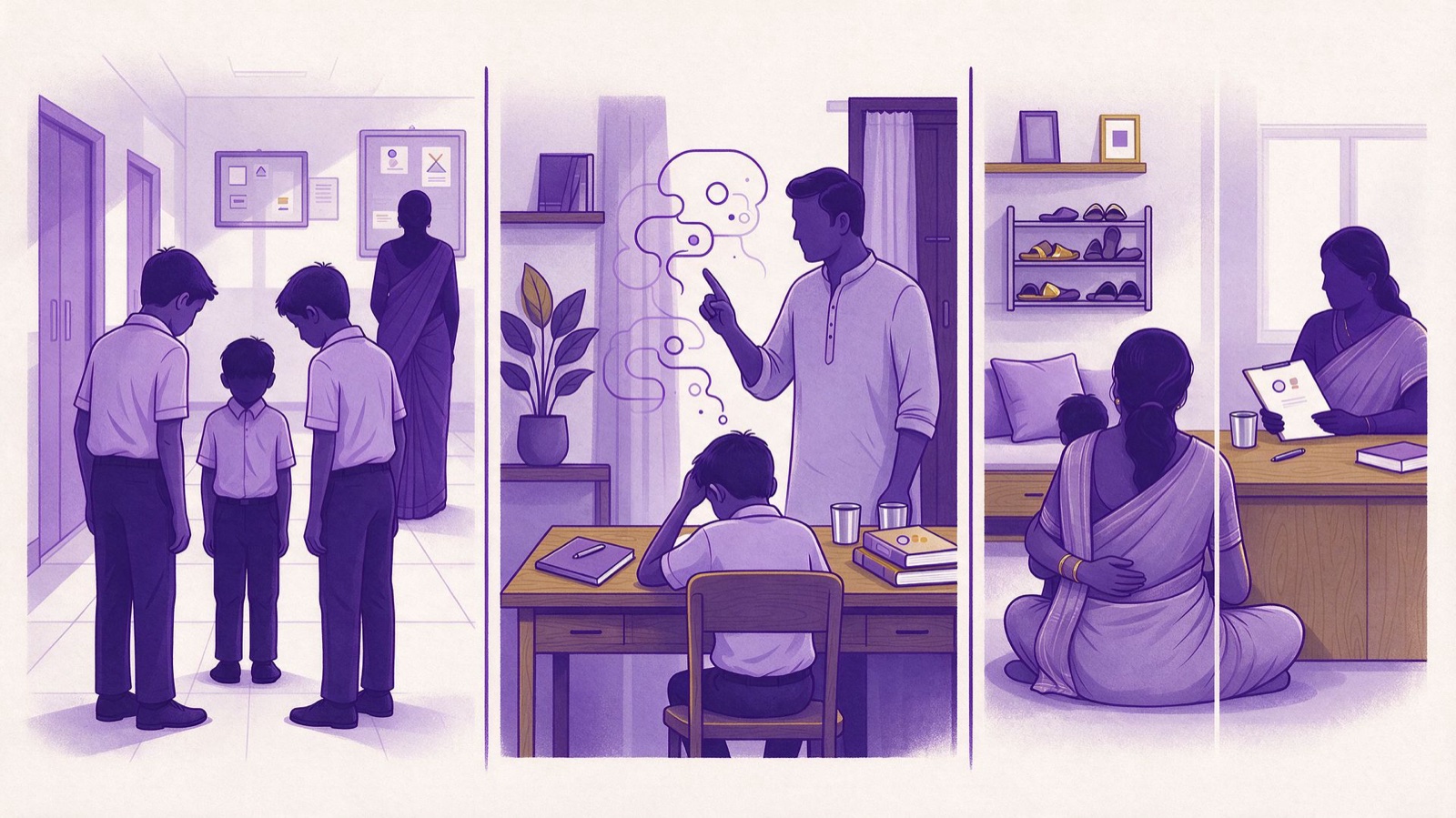
Bullying is defined by power asymmetry — physical, social, or numerical — which is why conflict-resolution advice ('talk it out', 'ignore them', 'hit back') fails structurally: it prescribes peer tools for a non-peer situation. Ignoring signals submission (inviting escalation), fighting back against superior force loses (inviting retaliation), and telling without protection paints targets. The victim's brain learns the accurate lesson: no available move is safe — producing the freeze, the stomach aches, the school refusal. Effective intervention changes the power equation from outside: documented patterns force institutional action (schools respond to paper trails, not visits), allies dilute isolation (bullies avoid witnessed targets), and assertiveness training changes the target profile (predators select for submissive signals). The parent's job is engineering all three — never demanding the child fix an asymmetry alone.
Natural Instincts That Accidentally Make It Worse
Every caring parent falls into these traps out of love, fear, or exhaustion. Here is what happens inside their nervous system and how to shift:
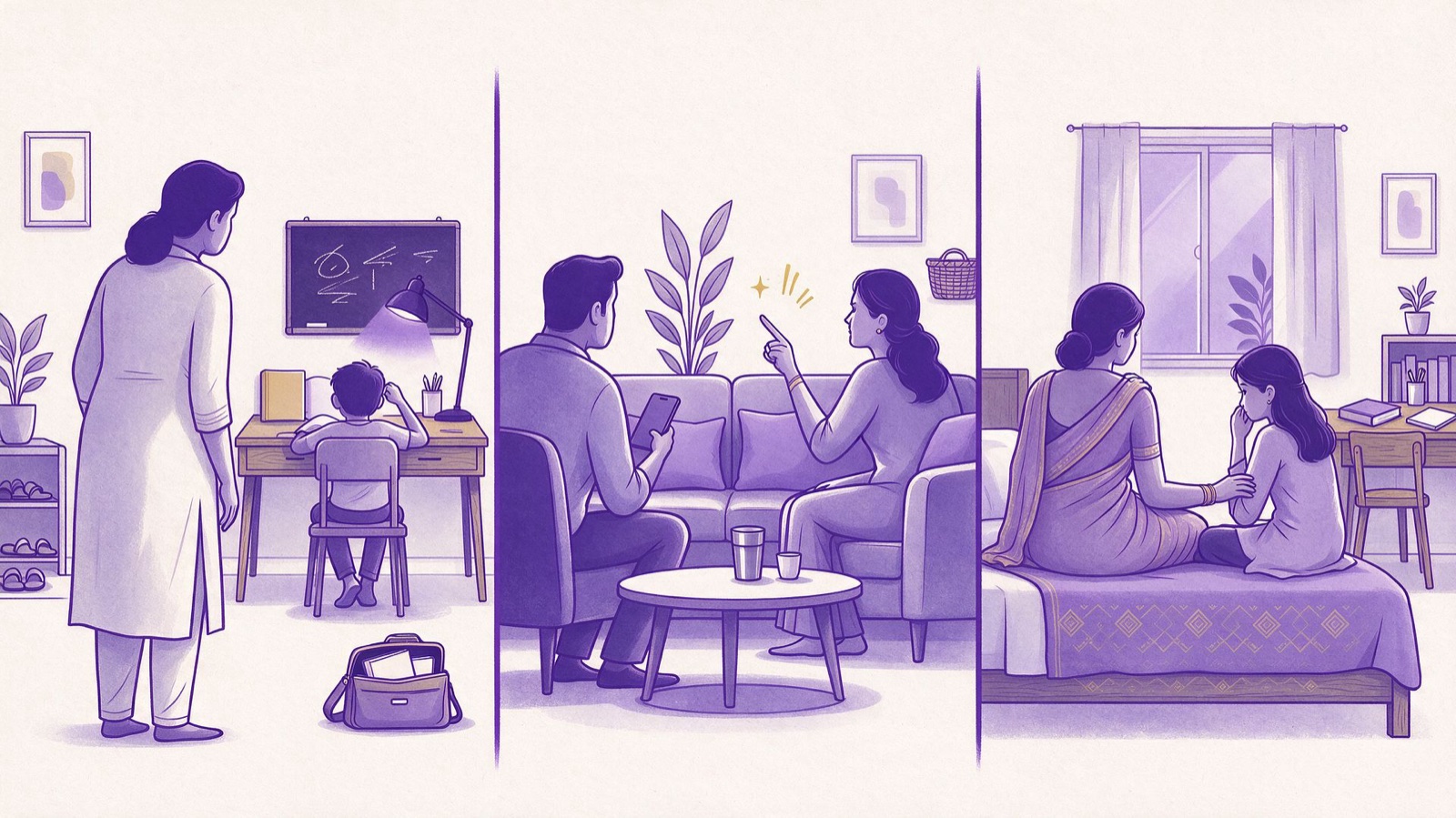
The Unannounced March
Storming into school demanding the principal act, confronting the bully's parents directly.
Triggers retaliation ('snitch' labelling escalates targeting), burns the school relationship you'll need for the formal process, and teaches him that telling causes explosions.
Written complaint first (email, dated, specific incidents), meeting requested through channels, him informed at every step. Paper moves institutions; visits move bullies.
The Toughness Prescription
'Hit back once and they'll stop! Don't be weak! Learn to fight!'
Against superior force, fighting back loses and escalates — and the advice blames the victim for lacking a capacity no child should need. Plus school punishes both sides equally.
Assertiveness, not aggression: loud 'STOP', walking with groups, reporting as a skill. Targets get selected for signals; change the signals.
The Minimisation Collusion
'Kids will be kids, it'll pass, just avoid them.'
Abandons him inside the very isolation the bullying built — and teaches that adults won't act, so future incidents (including serious ones) also stay hidden.
Name it plainly: 'This is bullying, it's wrong, and we're handling it together with the school. Not your fault, not your job alone.'
The Document-Escalate-Support Protocol
Paper first, institution second, power-base always.
Build the Paper Trail (Start Tonight)
Institutions move on documentation, not distress.
- Log every incident with date, place, who, witnesses, what happened, impact (torn bag photo, screenshots of chats — saved, not deleted).
- Ask him to narrate once, gently, for the record — then stop re-asking. The log grows from new events, not repeated testimony.
- Keep a parallel wellbeing log: sleep, appetite, school willingness — patterns here justify escalation urgency later.
Escalate Through Channels (Written, Stepped)
Class teacher → coordinator → principal → management, each in writing.
- Step one is email to the class teacher: facts, dates, specific ask ('supervision at X spot, seating change'). Written = accountable.
- No response in a week → next level up, forwarding the thread. Each step references the previous silence factually, never emotionally.
- Request specific remedies (not 'do something'): seating changes, corridor supervision, counsellor check-ins, anti-bullying committee involvement where schools have one.
Rebuild the Power Base (Parallel Track)
Bullies avoid costly targets — raise his cost.
- Allies: engineer group travel (walk with friends, sit with groups), one solid friendship beats ten acquaintances for deterrence.
- Skills: one assertiveness practice weekly (loud voice drills at home — 'STOP, leave me alone', practised until boring), plus one competence arena (sport/art/coding) for status outside the hierarchy.
- Digital: block/mute/report pipeline for cyberbullying with screenshots preserved; involve school IT/counsellor for platform-level action.
Know the Red Lines (When It Leaves School Hands)
Some bullying is crime, and schools can't adjudicate crime.
- Physical assault causing injury, sexual harassment, casteist/religious slurs, extortion, non-consensual image sharing: these go to police/cyber-cell alongside (not instead of) school process.
- Any self-harm talk, school refusal beyond two weeks, or complete withdrawal → counsellor immediately, parallel to everything else.
- Tell him the red lines in advance so escalation never feels like betrayal: 'If X happens, we go beyond school — that's the deal, and it's to protect you.'
What to Say Tonight: Word-for-Word Scripts
Save these to your phone or keep them in mind for your next interaction.
"'I hear you — telling feels more dangerous than enduring, and I won't do anything that makes it worse. Here's my promise: no surprise visits, ever. We build the record together first, then we go through proper channels with a plan you approve. You get veto on timing, not on whether we act — because adults handle this part, not you alone. Deal?'"
Serious, seated together, promise-weight in the voice.
Honours the retaliation fear as rational (it is), trades surprise action for veto-on-timing (agency preserved), and draws the line that action itself is non-negotiable (adult responsibility).
"(Show him the draft.) 'Here's what I'm sending — dates, what happened, and three specific asks: seating change, corridor supervision at lunch, and a counsellor check-in for you. Anything to add or remove before I send? This goes as email so there's a record — records get action, visits get tea.'"
Collaborative drafting, him as co-author.
Makes him co-author (agency), demonstrates the paper-trail mechanism (education), and the 'records get action' line reframes telling as strategy, not snitching.
"'Ignoring works on equals having a bad day. This is a power thing — bigger, older, or more of them — and ignoring power just confirms it works. We're not ignoring; we're documenting, escalating properly, and building you up so you're a costly target. Different game, different playbook.'"
Plain, respectful, zero alarm.
Names the asymmetry without shaming him for missing it, retires the useless advice with reasoning (not dismissal), and recruits him into the real playbook.
Never send a child to fix a power imbalance alone.
Serious, seated together, promise-weight in the voice
"Document, escalate through channels, rebuild his power base — paper moves institutions, visits move bullies."
Understanding the situation
Why 'Just Ignore Them' Is Structurally Wrong
Teach the distinction explicitly — it also protects him from misapplying the lesson later (ignoring is still right for teasing among equals).
Cyberbullying: Same Protocol, Faster Paper
When School Won't Act
All Situations in Family Shifts, Gender & Sensitive Realities
When Teenage Sons Push Mothers Away
Why adolescent boys pull away to assert masculine independence, and how moms connect without smothering.
When the 'Daddy's Girl' Goes Silent
Why daughters pull away from their fathers during puberty, and how dads can rebuild quiet trust.
Body Insecurities & Mirror Anxiety
Secretive eating, skipping meals, mirror obsession, and comparing real bodies to curated filters.
Secret Dating, First Crushes & Phone Secrecy
Navigating first romantic attachments, late-night texting, and heartbreak without interrogation.
Teens in Controlling Peer / Dating Relationships
Losing their identity, being manipulated by partners or friends, and helping them step away safely.
Caught in a Lie (Secret Accounts & Broken Trust)
Why teens lie to avoid humiliation or protect privacy, and how to rebuild honesty without turning into police.
Vaping, Smoking & Substance Experimentation
Finding pods, smelling smoke, peer pressure, and holding immovable health boundaries without hysteria.
Self-Harm & Overwhelming Emotional Storms
Cutting, severe emotional distress, and emergency psychological first aid for terrified parents.
Being Bullied & Excluded by Peers
Cyberbullying, exclusion from group chats, school yard cruelty, and rebuilding inner safety.
Divided Households & Co-Parenting Friction
Managing conflicting rules between two homes without putting the teenager in the middle of adult resentment.
What to Do When You Find Pornography on Their Phone
Discovered screenshots, unspeakable questions — respond with calm project-management, not catastrophe.
The Hostel & College Transition Playbook
Packing lists are easy; leaving home isn't — prepare the 18-year-old and yourself for the first real goodbye.
You do not have to solve everything tonight
Choose one practical action that feels manageable for your family.
The Incident Log & Escalation Template (Printable)
A 1-page incident log sheet, the teacher-email template, and the four-step escalation ladder.
Talk with someone about what is happening at home
If the same conflict keeps coming back or feels difficult to manage, book a conversation to discuss the support that may fit your family.
Cross-Chapter Recommended Guides
The Empty Weekend: When Your Teen Has Nowhere to Go and No One to Call
Weekend after weekend at home while classmates' stories scroll past is not a scheduling problem — it is a belonging wound. Learn the bridge protocol: regulate the shame, build one micro-social rep at a time, and never pity-recruit.
When You Find the Marks: A Parent's First 48 Hours After Discovering Self-Harm
Finding self-harm marks is every parent's nightmare — and the next 48 hours decide whether your teen gets help or goes deeper underground. No panic, no punishment, no promises you can't keep: the exact protocol.