
Family Shifts, Gender & Sensitive Realities
Two Homes, One Teen: Parenting Through Divorce Without Making Your Child the Messenger
Shuttling bags, split loyalties, and the weaponised weekends — how to keep your teen out of the middle while everything around them splits.
The Messenger Service
Every relayed message drafts him as infrastructure and wounds him twice — once carrying it, once delivering it.
"Nothing adult travels through him. Parents talk to parents — always, boringly, in writing."
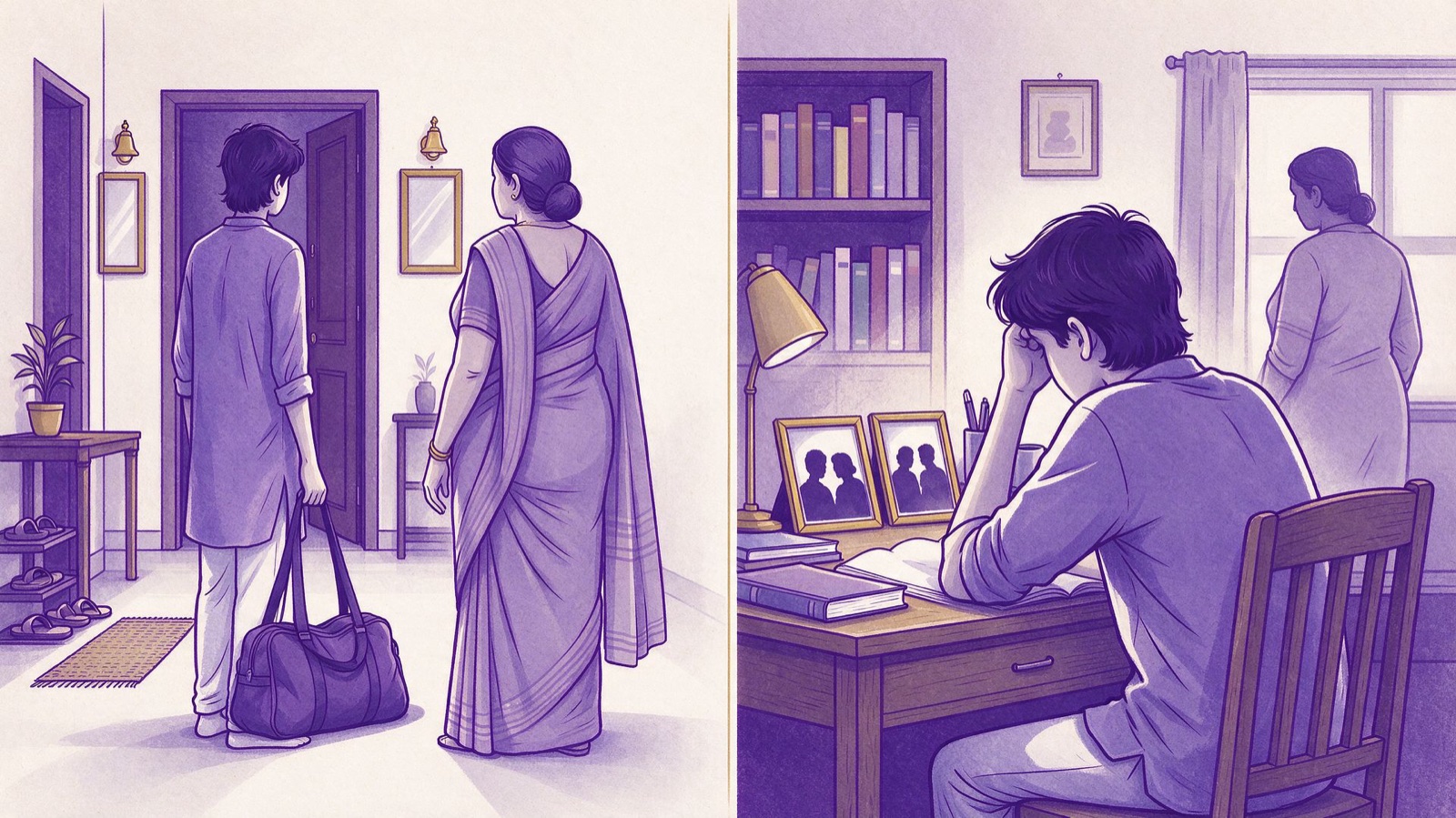
"Sunday 6 PM, the handover. Bag packed, charger forgotten (again), standing in the lobby between the two people who used to live together."
"'Tell your father the fees are due,' you say as he walks to the car. 'And ask him why he missed last Sunday.' He nods — fourteen, fluent now in the diplomacy of people who stopped talking to each other."
"By 9 PM he calls: 'Do I have to choose where to stay for Diwali?' And in his voice you hear the exact question he's really asking: which one of you will I lose if I pick wrong?"

He's not damaged by the divorce — he's exhausted by the diplomacy. Research is stubborn on this: children of divorce do well when parental conflict stays low and both relationships stay warm, regardless of the family structure. The structure split; the job didn't. Your teen doesn't need his parents back together. He needs them to stop needing him as infrastructure.
What may be going on
These are possibilities to consider, not a diagnosis or certainty. Ask your teen what fits.
"'It's fine, I don't care where I stay.' (Flat, over-quick, changes subject)"
One possibility: Caring out loud is dangerous — any preference becomes evidence in a war I never enlisted in. Flatness is the only safe testimony.
"Reports on the other household: what they eat, who visits, what was said about you"
One possibility: I'm running intelligence because both sides reward it — attention, relief, sometimes gifts. I've become a double agent at fourteen and it feels both powerful and sickening.
"Explosions 'out of nowhere' at transitions — fine all week, volcanic Sunday evening"
One possibility: Handovers are grief appointments. Every bag-zip replays the split; the fury is mourning with nowhere to file itself.
Loyalty Binds and the Messenger Burden
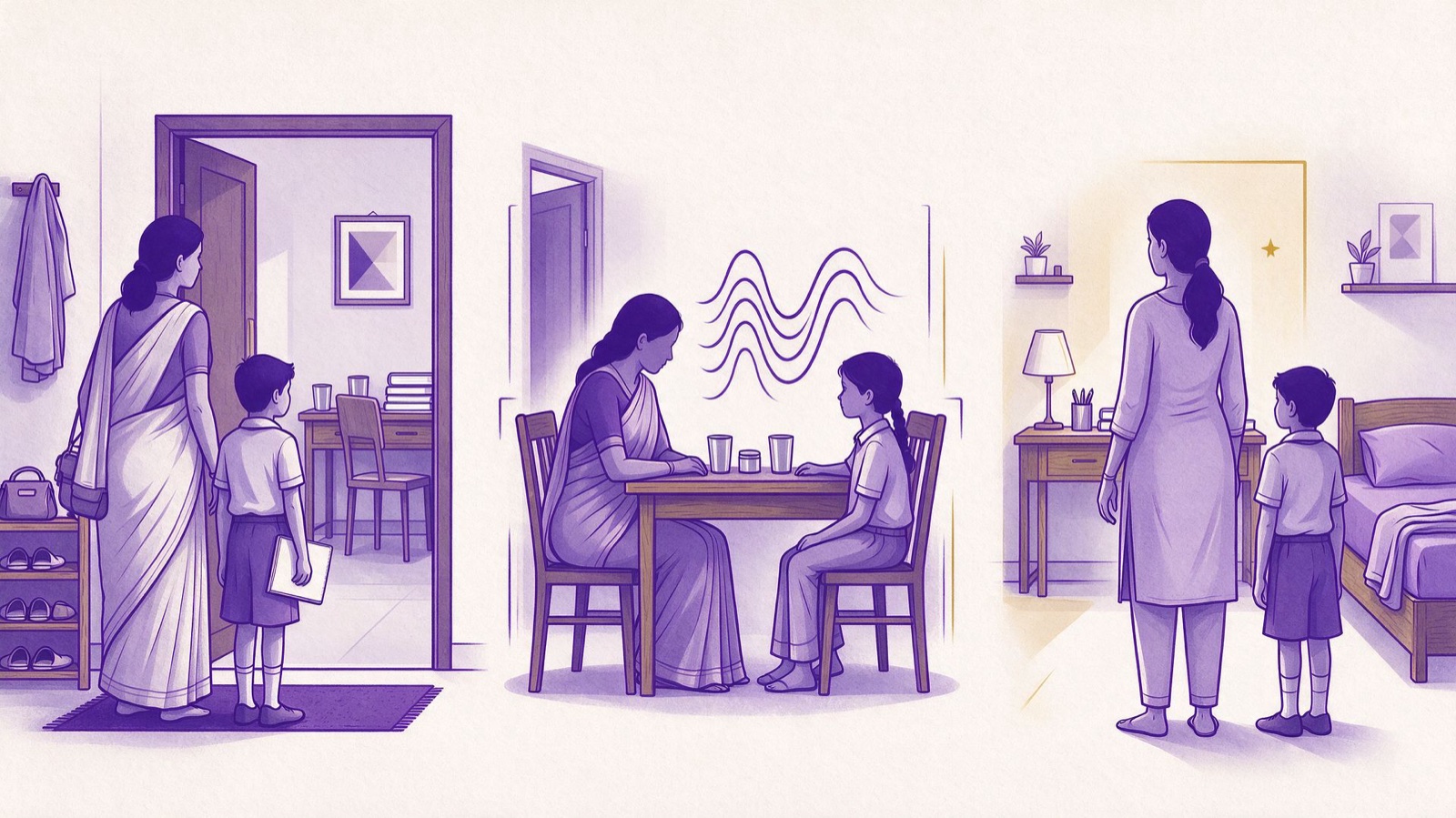
A teen with warring parents lives in a loyalty bind: loving both feels like betraying each. The mind solves it by splitting — idealising one, demonising the other — or by going numb and flat, refusing to feel anything that could be quoted. Both are expensive. Add the messenger role (carrying money talk, schedule talk, grievances), and the teen's nervous system carries adult conflict-load with a child's toolkit: the classic recipe for anxiety, parentified over-functioning, or strategic withdrawal. The antidote is structural, not emotional: zero adult content crossing through the child, ever. When the channel dries up, the spy retires, the judge adjourns, and the flatness thaws — because there's nothing left to be flat about.
Natural Instincts That Accidentally Make It Worse
Every caring parent falls into these traps out of love, fear, or exhaustion. Here is what happens inside their nervous system and how to shift:
The Messenger Service
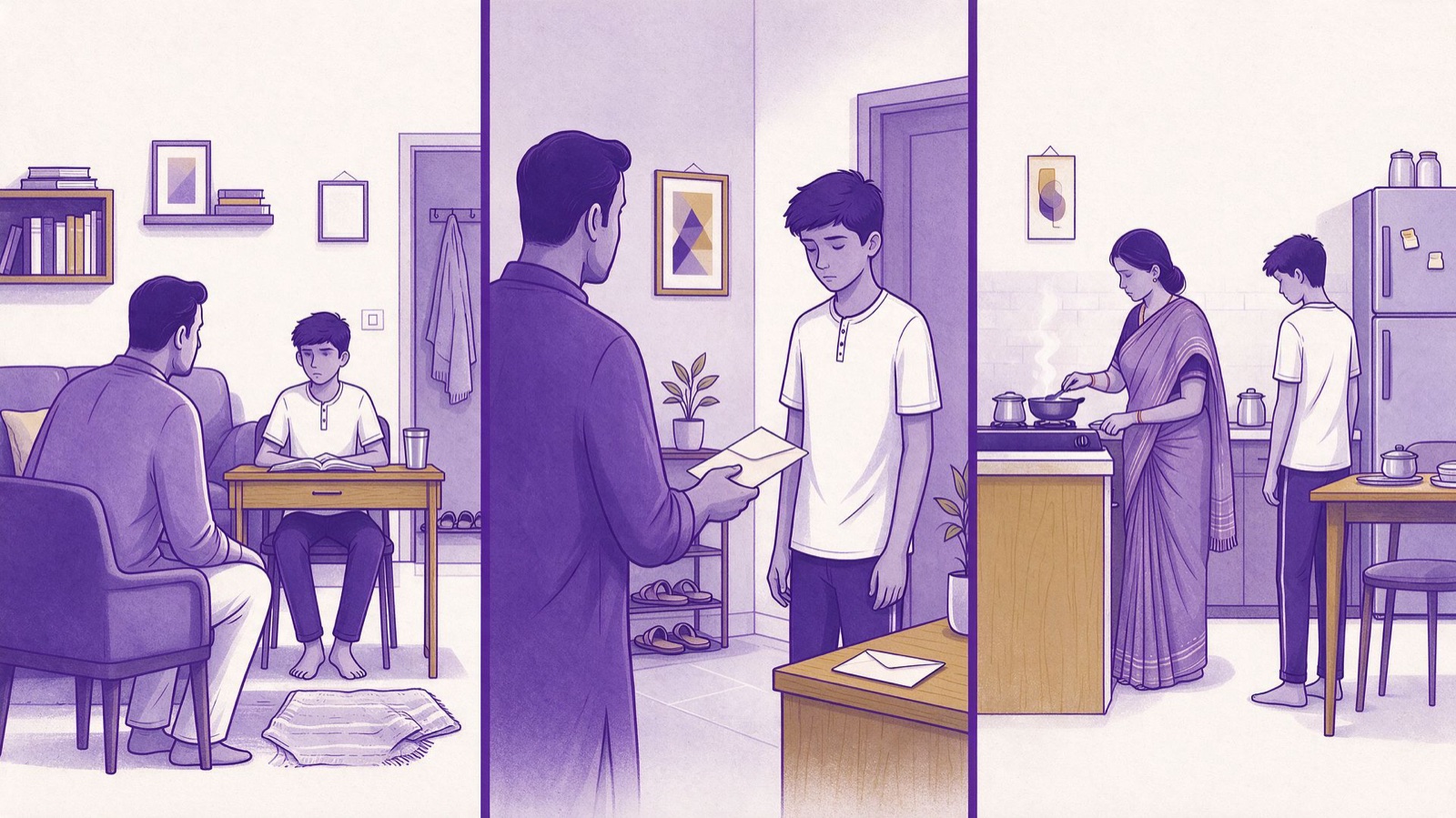
'Tell your father/mother that...' — fees, schedules, complaints, digs.
Drafts the teen as infrastructure between adults. Each delivery teaches that his value in this family is logistical — and each dig he carries wounds him twice.
Write, don't relay: a shared doc, a co-parenting app, one email thread. The rule is absolute — if it's adult business, it never touches his ears.
The Loyalty Audit
'Did you have fun there? What did you do all weekend? Did SHE/HE say anything about me?'
Every debrief is an interrogation wearing curiosity's clothes. He learns to edit, omit, and perform the version each parent rewards — the double-agent curriculum.
Ask about HIS experience only: 'Good weekend? Eat well? Sleep okay?' — then stop. The other household is a sovereign country; no intelligence missions.
Competing With the Other Home
Bigger gifts, looser rules, better outings — winning the teen's preference as proof of better parenting.
Turns love into bidding and the teen into the prize. He learns affection is auctioned — and stops trusting any of it.
Compete on stability, not spectacle: same bedtime both homes, homework before play both homes, warmth always. Boring wins custody of the heart.
The Neutrality Protocol
Four structures that take the teen out of the middle — permanently.
Starve the Messenger Channel
All adult business moves to writing between adults.
- Set up one channel today: shared doc or co-parenting app, updated weekly — fees, schedules, health, school. No exceptions, no 'just this once tell him'.
- Tell him explicitly: 'From now, nothing adult travels through you. If either of us slips, hand it back: that's grown-up mail.'
- When grandparents or new partners relay, shut it the same way — the channel rule covers all adults.
Synchronise the Two Homes
Same skeleton, different skin.
- Agree the non-negotiables across homes: bedtime window, homework-before-screens, school attendance, respect baseline. Different houses, same spine.
- Let the skins differ freely: food, decor, weekend style, affection language. Sameness where it structures; freedom where it colours.
- Review quarterly, not weekly — stability needs fewer summits, not more.
Ritualise Transitions
Handovers stop being grief ambushes when they become boring.
- Same time, same place, same 5-minute window — predictability drains the dread. A checklist (bag, charger, books) kills the forgotten-item fights.
- First 30 minutes post-handover are decompression, not debrief: snack, quiet, zero questions about the other home.
- Name the pattern kindly once: 'Sundays feel big — that's normal, it means both homes matter to you.'
Protect Each Other's Image
Never recruit the teen into your verdict on the other parent.
- The iron rule: no criticism of the other parent in his hearing. Ever. Disagree in therapy, with friends, in journals — never through him or near him.
- When he complains about the other home: listen, validate the feeling, don't prosecute the parent. 'Sounds frustrating' beats 'typical of him/her' every time.
- Model the exit you want him to learn: two adults who ended a marriage without ending respect. That's the actual inheritance.
What to Say Tonight: Word-for-Word Scripts
Save these to your phone or keep them in mind for your next interaction.
"'You don't pick — we rotate, and the rotation decides, not you. This Diwali here, next there. Loving both places isn't betrayal, it's just arithmetic. Neither of us keeps score — and if either of us ever makes you feel scored, tell me, that's on us to fix.'"
Firm, warm, removing the pen from his hand entirely.
Takes the choice (and its guilt) off him structurally, names the loyalty fear out loud, and gives him a reporting line if a parent breaks the treaty.
"'Stop — that's grown-up mail, not yours. I'll text him directly. Your only job today is homework and cricket.'"
Light self-correction, immediate pivot to his world.
Models the channel rule in real time (including your own fallibility), retires him on the spot, and returns him to being fourteen.
"(Don't discipline first.) 'Big Sunday, huh. Bag down, shoes off, maggi in five. No questions about anything till you've landed. I'm here.'"
Low, warm, physically present but undemanding. Food first, always.
Reads the meltdown as grief instead of misbehaviour, provides landing instead of litigation, and the maggi does more regulation work than any lecture.
Starve the channel: same rules both homes, zero adult content, loyalty never needs choosing.
Firm, warm, removing the pen from his hand entirely
"Nothing adult travels through him. Parents talk to parents — always, boringly, in writing."
Understanding the situation
What Actually Harms Children of Divorce
This is genuinely good news: every protective factor is behavioural and entirely within your control. You cannot un-divorce; you can absolutely de-conflict, de-message, and de-spy. The neutrality protocol isn't damage control — it's the whole game.
The Parentified Child
New Partners, New Rules
All Situations in Family Shifts, Gender & Sensitive Realities
When Teenage Sons Push Mothers Away
Why adolescent boys pull away to assert masculine independence, and how moms connect without smothering.
When the 'Daddy's Girl' Goes Silent
Why daughters pull away from their fathers during puberty, and how dads can rebuild quiet trust.
Body Insecurities & Mirror Anxiety
Secretive eating, skipping meals, mirror obsession, and comparing real bodies to curated filters.
Secret Dating, First Crushes & Phone Secrecy
Navigating first romantic attachments, late-night texting, and heartbreak without interrogation.
Teens in Controlling Peer / Dating Relationships
Losing their identity, being manipulated by partners or friends, and helping them step away safely.
Caught in a Lie (Secret Accounts & Broken Trust)
Why teens lie to avoid humiliation or protect privacy, and how to rebuild honesty without turning into police.
Vaping, Smoking & Substance Experimentation
Finding pods, smelling smoke, peer pressure, and holding immovable health boundaries without hysteria.
Self-Harm & Overwhelming Emotional Storms
Cutting, severe emotional distress, and emergency psychological first aid for terrified parents.
Being Bullied & Excluded by Peers
Cyberbullying, exclusion from group chats, school yard cruelty, and rebuilding inner safety.
Divided Households & Co-Parenting Friction
Managing conflicting rules between two homes without putting the teenager in the middle of adult resentment.
What to Do When You Find Pornography on Their Phone
Discovered screenshots, unspeakable questions — respond with calm project-management, not catastrophe.
The Hostel & College Transition Playbook
Packing lists are easy; leaving home isn't — prepare the 18-year-old and yourself for the first real goodbye.
You do not have to solve everything tonight
Choose one practical action that feels manageable for your family.
The Neutrality Pact (Printable)
A 1-page co-parenting pact: the channel rule, the synchronised non-negotiables, and the transition ritual checklist.
Talk with someone about what is happening at home
If the same conflict keeps coming back or feels difficult to manage, book a conversation to discuss the support that may fit your family.
Cross-Chapter Recommended Guides
Ending Good Cop / Bad Cop: When You and Your Spouse Parent From Opposite Trenches
Good cop / bad cop isn't a style difference — it's a structural crack your teen arbitrages daily. Learn the closed-door alignment protocol: disagree in private, present one front, and retire both uniforms.
Connect Before You Direct: The Golden Rule of Adolescent Cooperation
Commands without connection feel like threats to an adolescent's developing autonomy. Discover the 2-minute rapport protocol that ends morning screaming matches and evening homework battles.