
Explosive Anger, Defiance & Sarcasm
The Profanity Fight: Foul Language at Home Without Humiliation on Either Side
The 'BC' that slips out mid-argument, insults aimed at you, and the grandmother overheard horror — where swearing fits in adolescent development, when it crosses the line, and the vault-and-valve protocol.
The Slipper-and-Scripture Response
Moral theatre over vocabulary converts an exhaust valve into contraband and drives the rage underground.
"Vent at the situation all you want. Aimed at a person — never. Mine included."
"The fight is about the hostel trip form you won't sign without speaking to the teachers first."
"Mid-argument, it slips: 'Are you SERIOUS? This is so f***ing unfair!' — voice cracking, hands shaking, the word out before the brain catches up."
"Your mother, visiting from Nagpur, hears everything from the balcony. You can feel three generations of household law land on your shoulders: slippers, scripture, or silence? And your son is standing there mid-rage, watching what you choose next — because whatever you pick becomes his data about how anger works in this house."
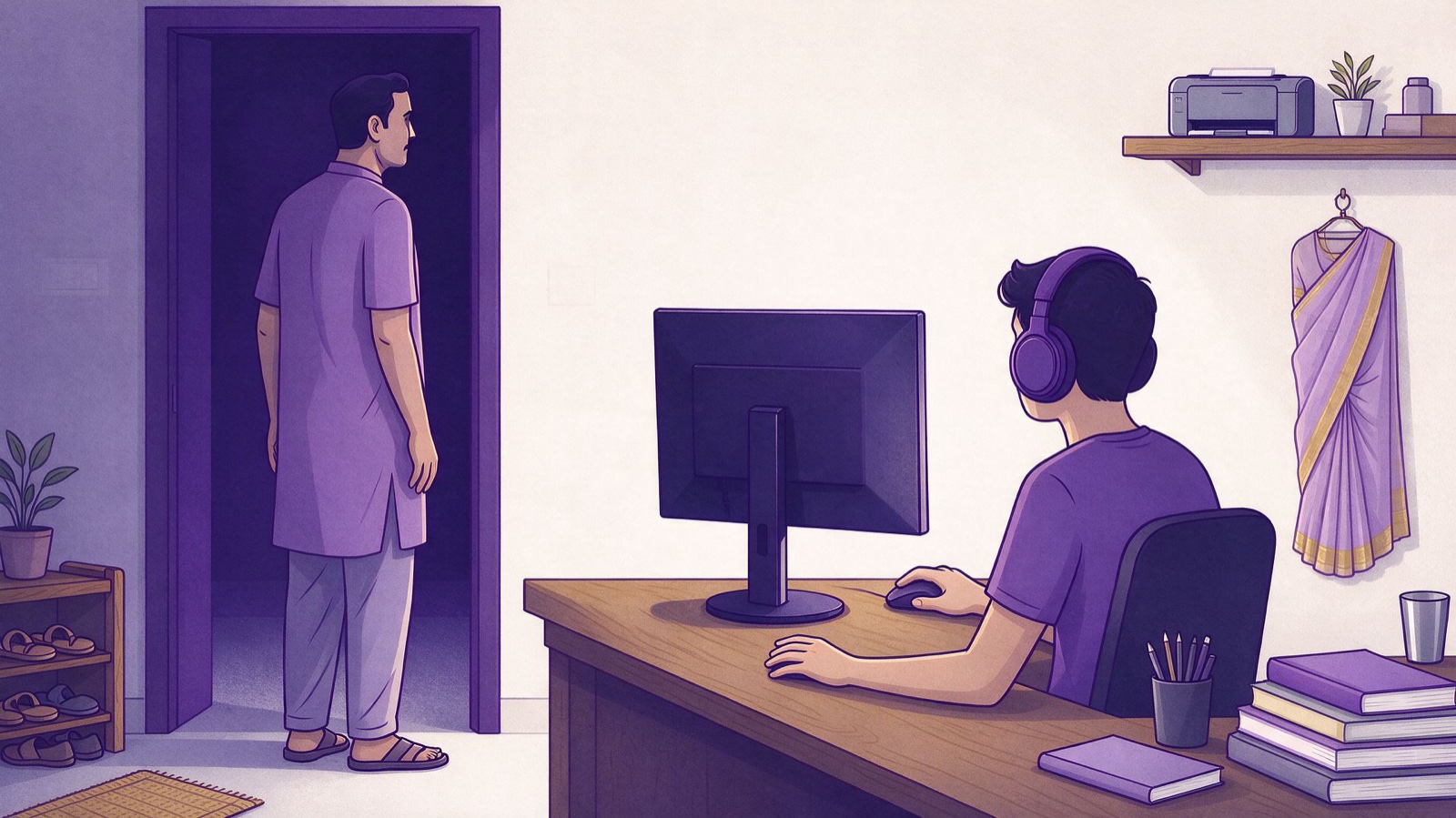
The word stings, and the eavesdropping elder multiplies it into shame. Neither fact makes you a failed parent. Swearing exists in every adolescent's emotional toolkit — it discharges charge faster than any other sound humans have invented. The parenting task is not a swear-free house; it's a targeted-language house: rage all you want at the situation; you don't get to aim it at people.
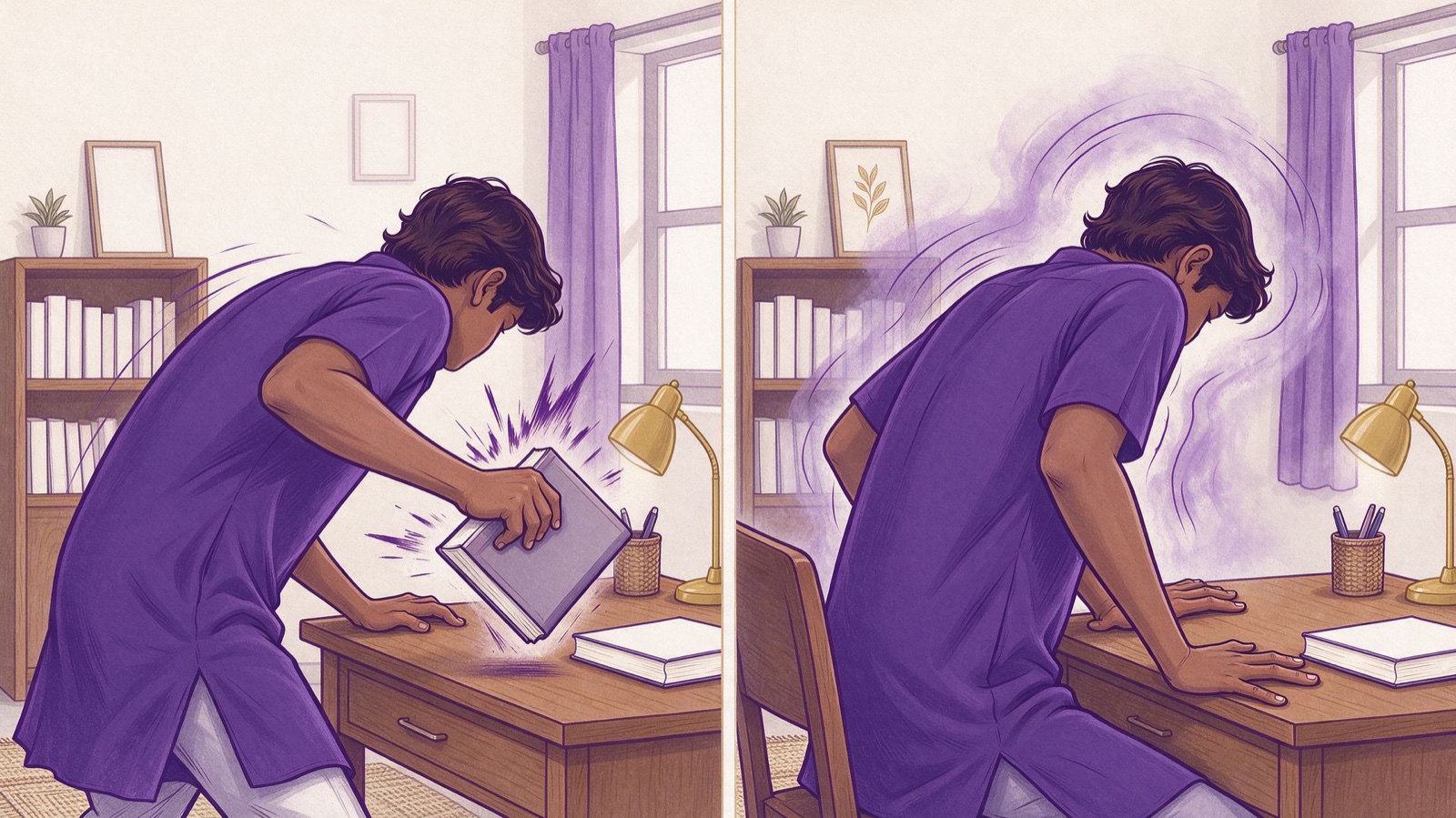
What may be going on
These are possibilities to consider, not a diagnosis or certainty. Ask your teen what fits.
"'This is so f***ing unfair!' (At the RULE, eyes on the rule, body shaking)"
One possibility: My anger physically needs an exhaust. The word is volume, not an insult — it's aimed at the form, the teachers, the world.
"'You're such a f***ing control freak. I hate living with you.' (Aimed AT you)"
One possibility: I've lost the argument, so I'm going after the person. aimed words are how small, losing children seize the last lever of power in the room.
"Swearing casually with friends on the phone, mild bleeps in gaming chat"
One possibility: Among friends, 'saala' is punctuation — peer code, belonging, and zero target. Home language carries a different charge; the two worlds use the same words differently.
Why Swears Exist: Steam, Status, and the Emotional Brain
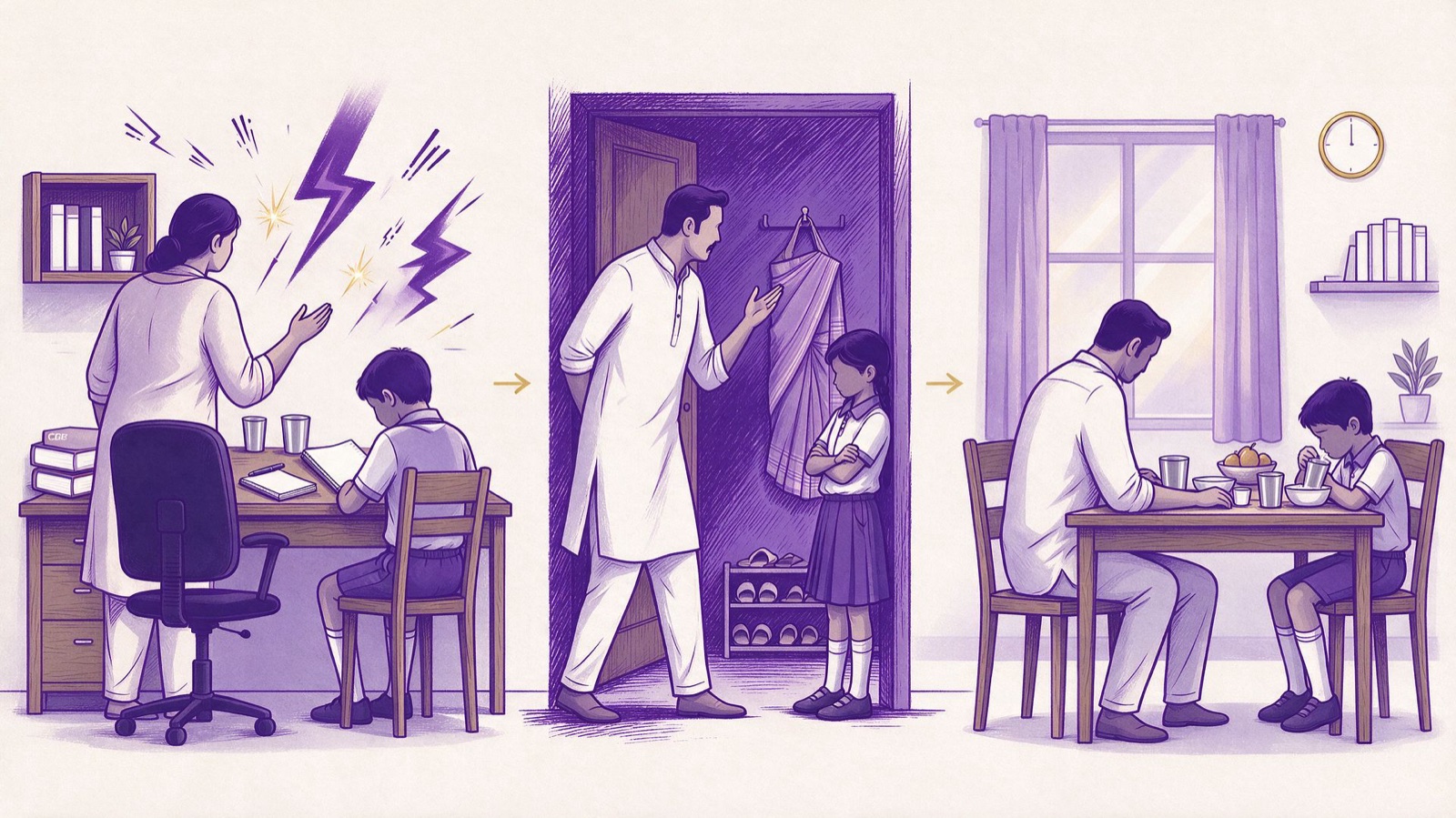
Profanity fires the amygdala fast-track: like a shout, it discharges autonomic arousal inside single syllables — which is why every language on earth keeps its strongest words short, punchable, and rhythm-ready. In adolescence the discharge need peaks exactly when the prefrontal filter (the 'should I say this' radar) is still under construction. Peer cultures then re-code swears as belonging markers: harmless filler among friends, weapons when aimed. That distinction — venting versus targeting — is the actual line, and it's teachable. A blanket ban fails because it bans steam; a targeted rule succeeds because it limits only the aim.
Natural Instincts That Accidentally Make It Worse
Every caring parent falls into these traps out of love, fear, or exhaustion. Here is what happens inside their nervous system and how to shift:
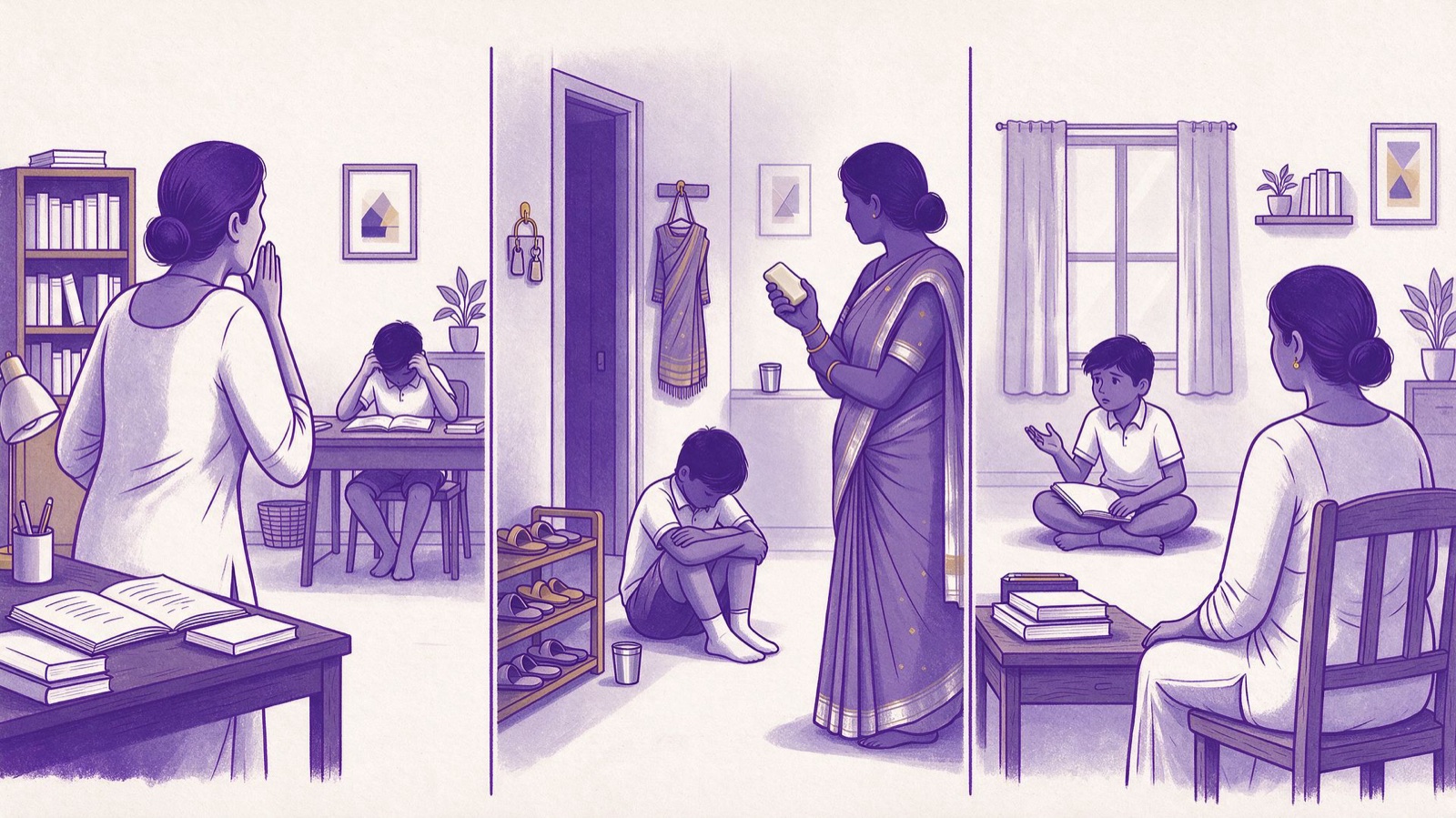
The Slipper-and-Scripture Response
Meeting the f-word with shouting, threats, or a extended lecture on 'izu'culture, elders, and izzat.
Two shames at once — moral and generational — which register as pure status attack. He learns 'strong feelings are criminal here' and routes them underground: subtler insults, lies, silence.
Hold one flat boundary sentence without moral theatre: 'That's aimed-language. It stops right there. The hostel form conversation continues.'
The Mirror Fight
Matching his energy — swearing back, mocking back, out-shouting him until you win the volume contest.
You join the arena you want to close. Now the house standard is 'whoever out-shouts wins', and your words lose authority by symmetry.
Own your register, not his: one quiet sentence, repeated identically if needed. Repetition without escalation beats volume every time.
The Global Vocabulary Ban
'There will be NO bad language in this house — ever, with anyone, in any language.'
Unenforceable, so it collapses at the first exam-night slip — and every slip now carries fugitive shame instead of a chance to learn targeting.
Make the charge the rule: 'Swear at the traffic, the syllabus, the unfair rule if you must. The moment a word is aimed at a person in this house — that's charged language, and it stops.'
The Vault-and-Valve Protocol (Steam Legal, Aim Charged)
One conversation that separates venting from targeting, and one repair ritual when targeting happens anyway.
The Valve Conversation (Calm Day, Not Fight Night)
Set the language law once, on a neutral day, in under ten minutes.
- State the distinction plainly: 'Swearing at situations — exams, traffic, unfair rules — I'll live with it. Words aimed at a person carry a different charge. In this house aimed language is not legal, mine included.'
- Make the symmetry explicit: 'Same rule for me and your father. If we ever aim at you, you're allowed to call it.' This is what makes the rule feel like fairness rather than rank.
- Agree a distress signal for escalation nights: a raised hand or one word ('pause') that means 'we're both too hot — fifteen minutes, then we resume'.
In the Fight: One Line, Same Volume, Repeated
When aimed language flies, the response is boring and unthankable.
- 'Aimed-language. That one stops now.' Then continue the actual topic — the trip form, the curfew — without celebrating the vocabulary.
- If it repeats: three flat repetitions of the same sentence, no escalation, no new arguments about the word itself.
- If it escalates past a line, use the pause signal you agreed: 'Pause. Fifteen minutes.' Leave the room warmly, not dramatically.
The Repair Ritual (Same Evening, Short)
Aimed words draw a small repair — unplanned grovelling, no cancelled dinners.
- Later, side-by-side: 'The 'control freak' jab earlier — that landed. Here's what it implies about me that isn't true... What was actually going on for you?'
- The repair is a redo, not a humiliation: he states one alternative sentence he could have used at the same moment of rage — real language, his words.
- Keep it under five minutes and end warmly. The lesson lands best short, staged, and followed by normal life.
Audit the Home Register (The Part Parents Skip)
Teens calibrate to what they hear more than what they're told.
- What's the actual household vocabulary under stress — road rage, commentary during cricket, arguments between adults? He learned his baseline here.
- If your register runs hot, make one visible change: 'I'm working on my own aimed-language during traffic. Same rule, both of us.'
- Peer dialect stays legal: swears among friends on his own phone, in his own room, are his world's punctuation. Defense of people is the crime; vocabulary is not.
What to Say Tonight: Word-for-Word Scripts
Save these to your phone or keep them in mind for your next interaction.
"'Okay — I hear how unfair this feels, and I'm not policing your vocabulary tonight. That word's aimed at the situation, and the situation is still under discussion. Speak your case on the trip form.'"
Steady, unstartled, sitting or standing level. No flinch, no moral face.
Separates venting from targeting in real time so he learns exactly where the line is — while the actual grievance still gets heard.
"'Aimed-language. That one stops now. You can be angrier than that at this rule — angrier is legal. Aimed at me is not. Now — the hostel form: what exactly do you want me to do differently?'"
Flat, repeated identically if repeated needed. Shoulders level, hands still.
Holds the only hard line with two calm sentences, then re-opens the real topic — if he knows the disagreement channel stays open, he has no reason to fight dirty.
"(Private, one minute) 'Dadi heard the word. That part I'm not making a ceremony of. Your rule with me stays: aimed at people — never. Let's go finish dinner; I've got the hostel form formality sorted after school tomorrow.'"
Low voice, fast, warm hand on shoulder. Zero audience rebukes.
Protects him from generational pile-on while keeping the household law intact — boundaries enforced by parents, not by performing for elders.
You can't drain the steam — teach where the nozzle points.
Steady, unstartled, sitting or standing level
"Vent at the situation all you want. Aimed at a person — never. Mine included."
Understanding the situation
The Science of Why Swearing Feels Better
That's why the global ban never holds: you can't legislate against a pressure valve. You can, however, teach nozzle discipline. 'Vent at situations, never aim at people' gives the steam a legal outlet and the household an enforceable law. Teens adopt nozzle discipline surprisingly fast — provided the adults model the same contract, failures included.
The Two-World Vocabulary Problem
The durable frame separates worlds: what happens on the phone with his friends is his dialect's business; what happens in the kitchen is this household's law. You're not endorsing the peer dialect; you're declining to fight a war you cannot win over territory you don't occupy.
When Swearing Is a Symptom
All Situations in Explosive Anger, Defiance & Sarcasm
The Sudden Detonation (Explosive Shouting & Slams)
0 to 100 in 3 seconds: When a simple household request detonates into screaming, wall-punching, or slammed doors.
Sarcasm, Mocking & Eye-Rolling
Sneering comments, muttering under their breath, and challenging parental authority with contempt.
Swearing & Verbal Boundary Violations
What to do when foul language, insults, and name-calling enter family disagreements.
The 'That's Not My Job' Standoff
Treating home like a free hotel, refusing chores, and leaving messes for parents to clean up.
You do not have to solve everything tonight
Choose one practical action that feels manageable for your family.
The Language Contract & Repair Script (Printable)
A 1-page household language contract — venting vs targeting, the pause signal, and the five-minute repair ritual.
Talk with someone about what is happening at home
If the same conflict keeps coming back or feels difficult to manage, book a conversation to discuss the support that may fit your family.
Cross-Chapter Recommended Guides
The Defiant Teen: De-escalating Explosive Arguments Without Power Struggles
When your teenager detonates over simple household requests, engaging in a screaming match guarantees defeat. Discover the Autonomy driver, the Drop-the-Rope technique, and verbatim de-escalation scripts.
The Sarcasm Avalanche: Mocking, Eye-Rolls, and 'Whatever' at the Dinner Table
The eye-rolls, the mutters, the impressions of your voice — sarcasm is your teen defending status, not declaring war. Learn the redirect that ends the mocking while protecting both your dignity and his.