
Parenting Styles, Boundaries & Spousal Alignment
The 90-Second Fuse: Why You Shout at the People You Love Most (and the Reset That Actually Works)
It's 10 PM, homework's unfinished, and something in your throat catches fire. This isn't a parenting failure — it's an unregulated nervous system meeting an unregulated teen. Fix yours first.
Threat Inflation Mid-Flood
Unkeepable threats teach that your words are weather, not law — then cost authority twice.
"Heat's rising — pause-word, ninety seconds, I'll be back to finish this properly."
"It's 10:40 PM. The maths worksheet is still blank, the phone glows under the pillow, and you've asked — reasonably, twice — for lights out."
"Then the heat starts at the base of your throat. Before you've decided anything, your voice is three volumes up, the words are out ('Do I have to do EVERYTHING in this house?!'), and your child is staring at you like you're a stranger who broke in."
"Ten minutes later you're in the kitchen with the guilt sweating out of you, rehearsing the apology and dreading that this is becoming who you are to them."
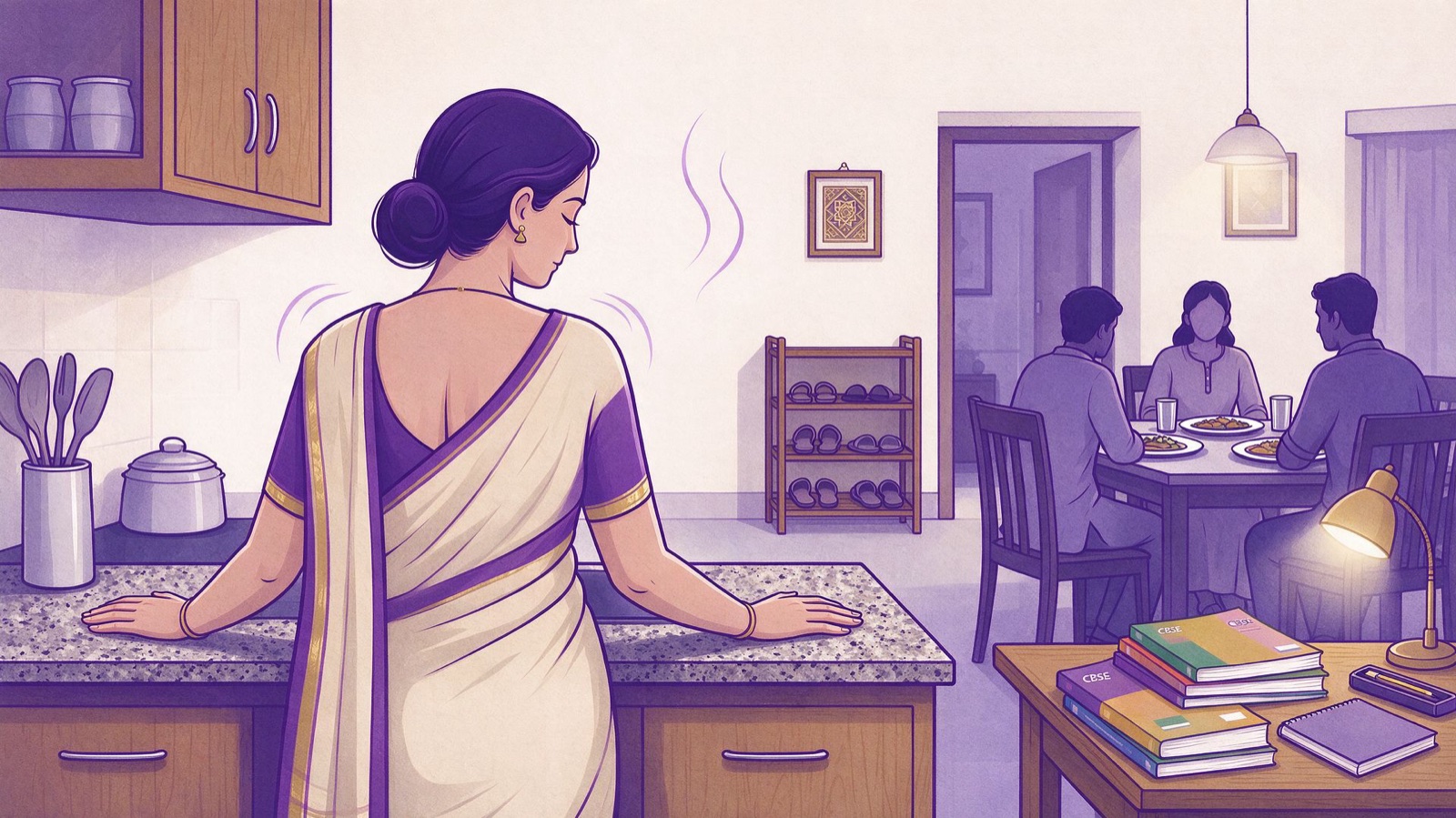
The fuse isn't a character flaw — it's physiology running an old script at new volume: exhaustion plus love plus powerlessness equals detonation. But here's the liberating half: reactivity is the most trainable part of this whole system, and your repair matters more than your perfection. A parent who ruptures and repairs raises a more secure teen than a parent who never ruptures at all.
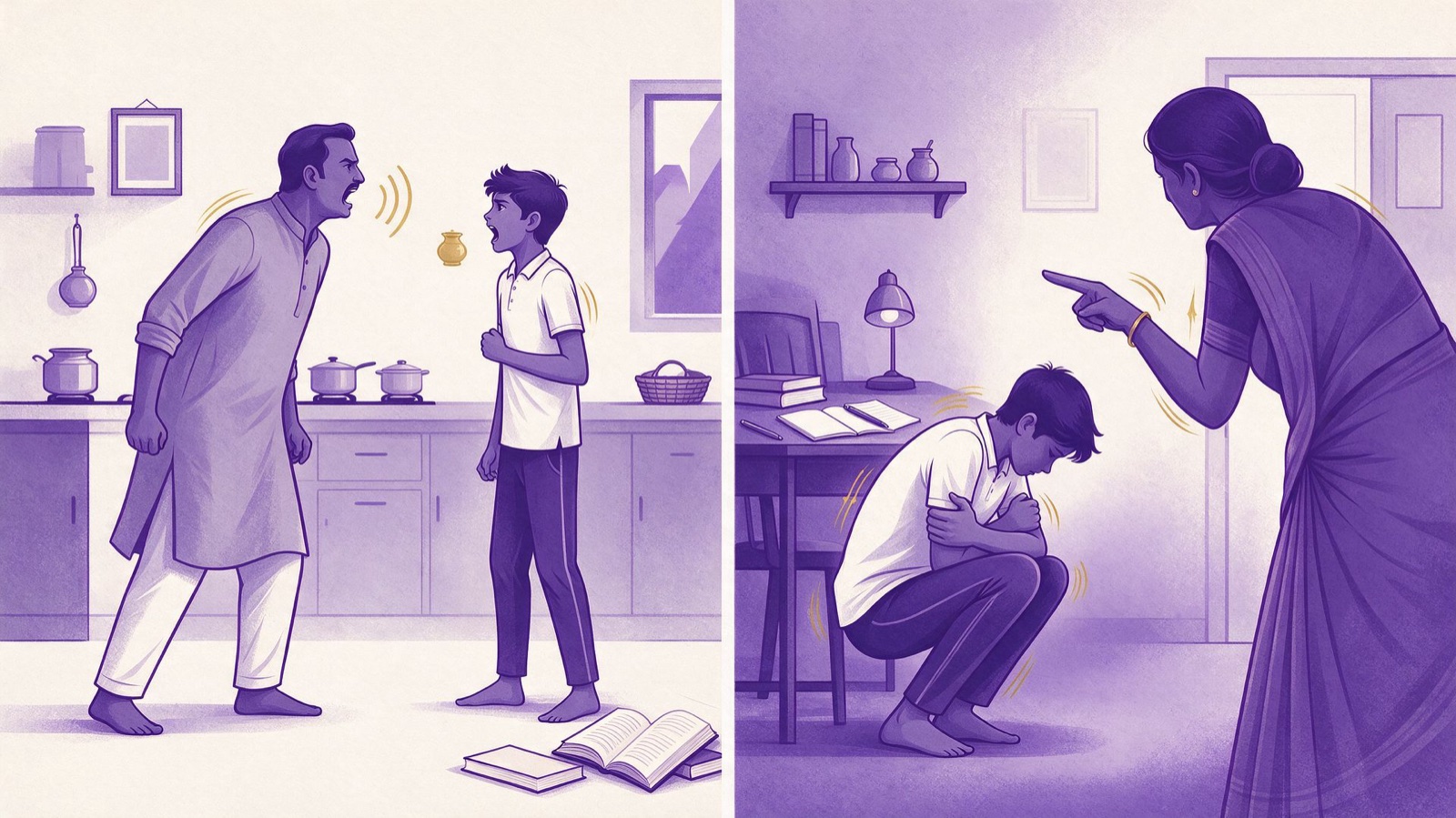
What may be going on
These are possibilities to consider, not a diagnosis or certainty. Ask your teen what fits.
"Your volume triples mid-sentence over a small trigger (unwashed tiffin, slow homework)"
One possibility: The trigger is never the tiffin. It's the 40th micro-disrespect of the week stacked on work stress, sleep debt, and the terror that you're failing them.
"Threats you don't mean: 'Fine, no outing for a month! Give me the phone forever!'"
One possibility: Your prefrontal cortex is offline — threats are your nervous system's attempt to regain control by going bigger than the feeling.
"Immediate guilt-spiral and overcompensation: extra sweets, dropped rules, anxious hovering"
One possibility: Guilt is the repair instinct misfiring as bribery — you're trying to buy back the safety you just spent.
The 90-Second Chemical Storm (and the Prefrontal Comeback)
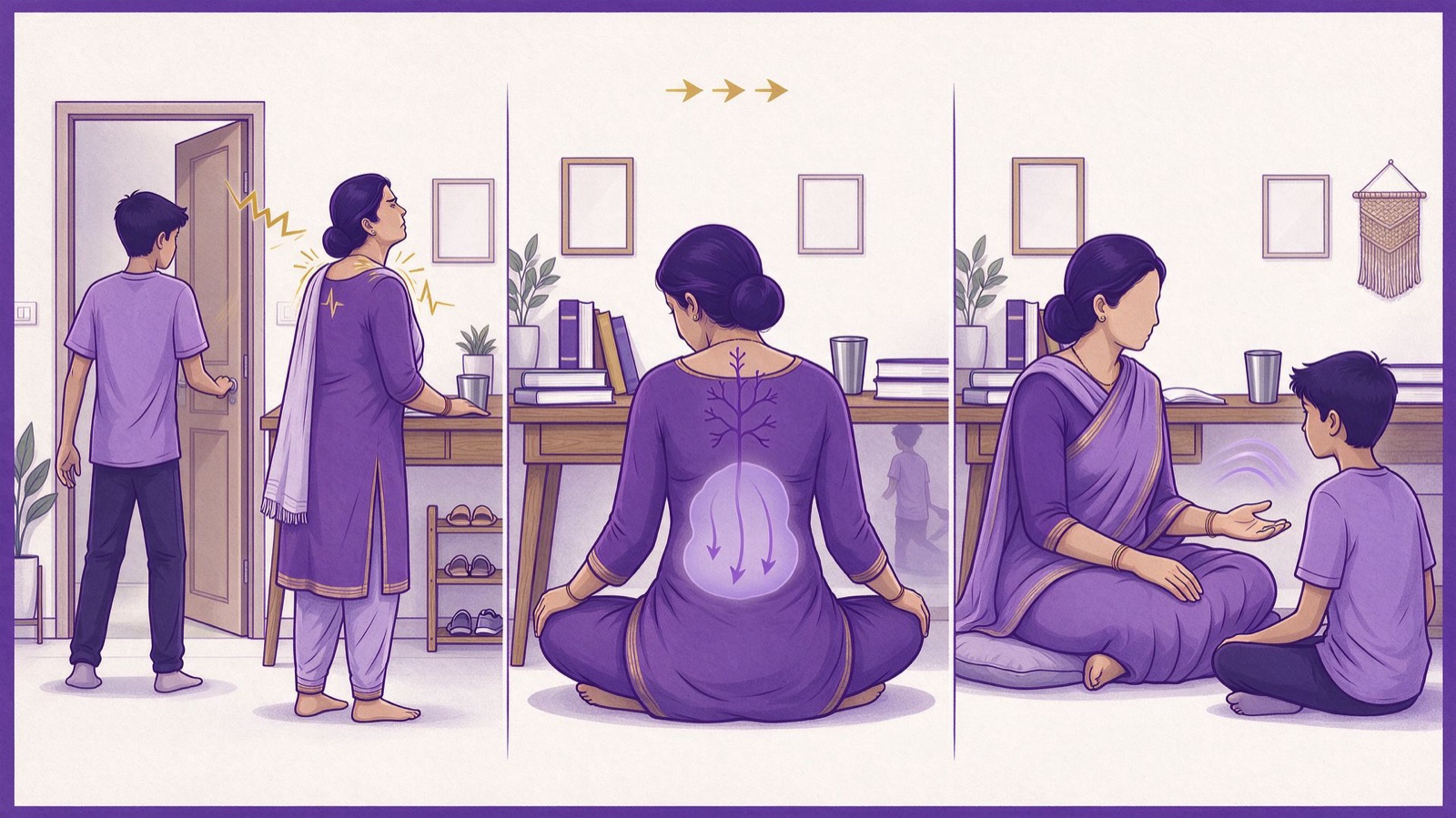
Anger's chemistry has a famously short half-life: the catecholamine surge that hijacks your voice peaks and clears in about ninety seconds — if unfuelled by fresh thoughts. Every re-lit grievance ('and yesterday also…') restarts the clock. Shouting parents aren't angrier people; they're re-fuellers. The prefrontal cortex — your brakes — comes back online the moment the body gets a physiological pattern-interrupt: cold water on the face, paced exhaling, stepping through a doorway. This is why 'count to ten' sometimes fails (counting can re-fuel) and stepping out works (movement metabolises the surge). Co-regulation then runs downward: your settled body is the fastest sedative ever invented for a teen's alarm — faster than any correct words delivered through a clenched jaw.
Natural Instincts That Accidentally Make It Worse
Every caring parent falls into these traps out of love, fear, or exhaustion. Here is what happens inside their nervous system and how to shift:
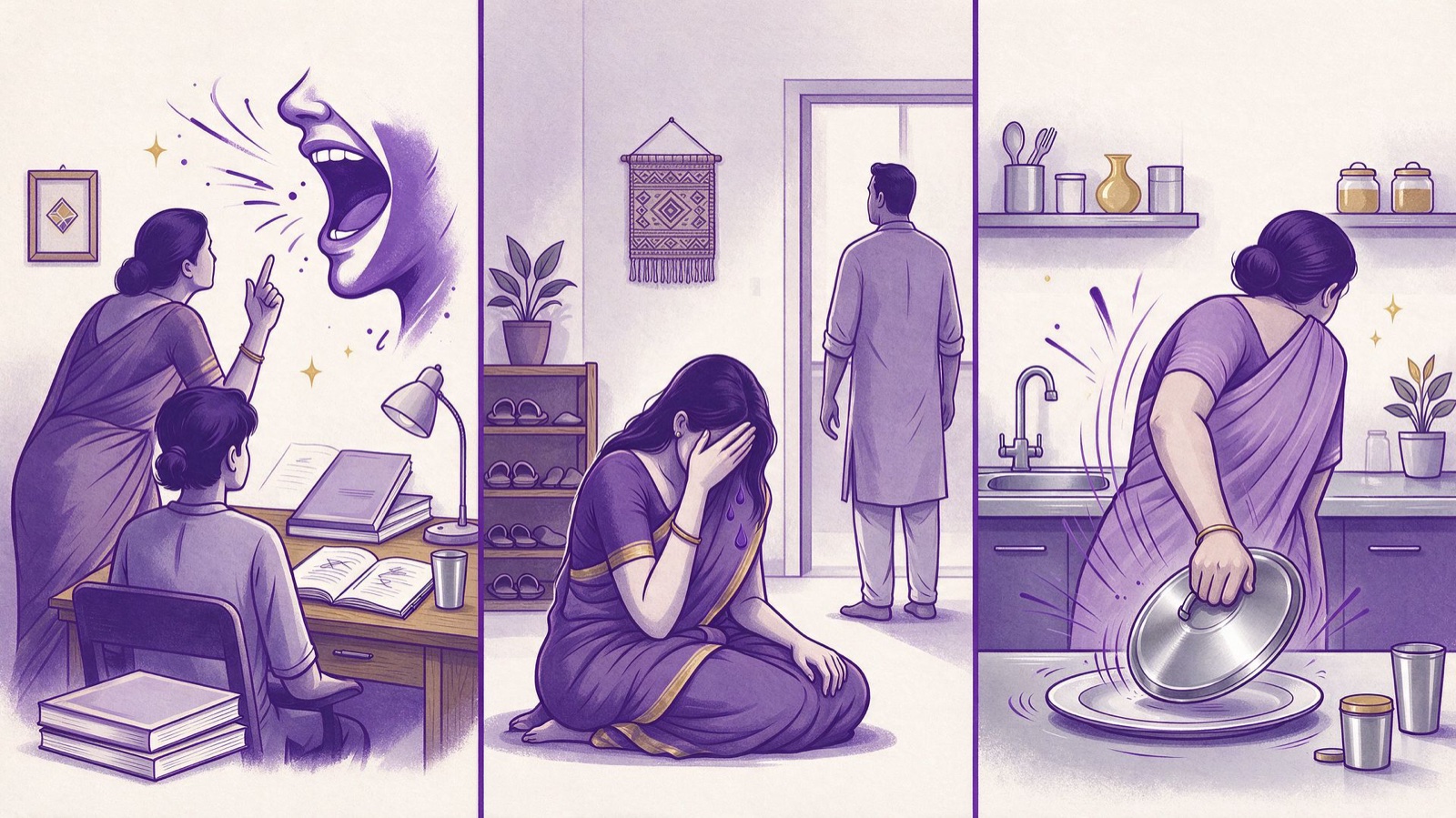
The Lecture Mid-Flood
Explaining, while shouting, exactly why they're wrong and what the consequences are.
A flooded brain records tone, not content — every word is wasted and the volume becomes the lesson. They learn shouting, not the point.
Zero teaching inside the storm. Park it: 'We'll talk at 9. Nothing now.' Then actually talk at 9, calmly, once.
Threat Inflation
'No phone for a MONTH. No outing till boards. I'll tell your father everything!'
Unkeepable threats teach that your words are weather, not law — and force you into humiliating climbdowns that cost more authority than the original trigger.
Threaten small, true, and immediate only: 'Screens off for tonight. We'll reset tomorrow.' Then sleep on bigger consequences.
Guilt-Bribery
Post-explosion sweets, cancelled consequences, anxious extra-kindness to buy back love.
Teaches that explosions purchase treats — perverse incentive structure — and signals that your boundaries were never real.
Repair with words and presence, never purchases: a clean apology plus restored normalcy. Love was never withdrawn, so nothing needs buying back.
The Fuse-to-Repair Protocol
Catch it, cool it, clean it — a complete cycle you can run in under ten minutes.
Spot the Throat Signal (Your Early Warning)
Learn your personal 5-second-ahead tell.
- Map it once, calmly: heat in throat? jaw clench? faster breathing? Everyone's fuse has a physical signature before the voice goes.
- Name it out loud in the moment — naming recruits the prefrontal cortex: 'Heat's rising. Ninety seconds.'
- Tell the family the system in a calm hour: 'When I say pause-word, I'm cooling, not abandoning. I'll be back.'
Execute the Pattern Interrupt
Ninety seconds of physiology, not willpower.
- Leave the room (doorway crossing helps reset), splash cold water on face and wrists, exhale longer than you inhale for six rounds.
- No rehearsing the argument while cooling — that's re-fuelling. Count tiles, name objects, anything neutral.
- Return only when voice is voluntary again. Ninety seconds of absence beats ninety minutes of repair.
Deliver the Clean Repair
Same evening, short, no grovelling, no lecture attached.
- Formula: what I did + impact + what changes. 'I shouted about the tiffin. That must have felt scary. Next time I feel that heat I'll step out instead.'
- No 'but you started it' tail. The repair covers YOUR part only — theirs is a separate conversation, later if ever.
- End warm and ordinary: tea, TV, normal life. Normalcy is the proof the rupture didn't break anything.
Drain the Fuse Weekly (Prevention)
A short fuse is usually just an overloaded parent.
- Audit the load honestly: sleep, work spillover, Fevicol-level expectations of yourself. Explosions track exhaustion, not love.
- One weekly non-negotiable discharge: walk, friend call, journal, workout — scheduled like tuition, defended like tuition.
- Track explosions on the fridge honestly for a month. Watching the count fall is the motivation that sustains the practice.
What to Say Tonight: Word-for-Word Scripts
Save these to your phone or keep them in mind for your next interaction.
"'Pause-word. I'm at my heat — stepping out for two minutes, not abandoning. Timer's on, I'll be back to finish this properly.' (Then leave. Splash. Breathe. Return.)"
Flat announcement, already moving toward the door. No drama in the exit.
Pre-agreed exit removes the shame of leaving, the timer guarantees return (no abandonment fear), and physiology gets its ninety seconds.
"'About earlier — I shouted about the worksheet, and that must have felt scary coming from me. That's on me, not on your marks. Next time the heat comes, I step out instead of shouting in. We're good?'"
Side-by-side, low voice, eye-level. Brief hug only if they move first.
Owns the specific act without global self-flagellation, names their likely feeling, commits to a visible mechanism — and asks, doesn't demand, closure.
"'Strike that — that was the heat talking, and heat makes bad laws. Real consequence: screens off tonight, we reset tomorrow. The month thing isn't real and I take it back.'"
Immediate, matter-of-fact correction. No shame spiral attached.
Models exactly what you want from them (catch, correct, continue), preserves word-as-law credibility, and teaches that retraction is strength.
Catch it, cool it, clean it: ninety seconds out beats ninety minutes of repair.
Flat announcement, already moving toward the door
"Heat's rising — pause-word, ninety seconds, I'll be back to finish this properly."
Understanding the situation
Why Rupture-and-Repair Beats Never-Rupture
A never-shouting parent teaches that anger is unspeakable (it goes underground, then sideways). A shout-and-repair parent teaches the actual life skill: feelings flood, adults catch themselves, damage gets named, trust rebuilds. Your explosions, handled this way, become curriculum.
The Exhaustion Confound
When Reactivity Is the Symptom
All Situations in Parenting Styles, Boundaries & Spousal Alignment
Connect Before You Direct (The Golden Rule)
Why barking commands triggers biological resistance, and how a 2-minute connection ritual unlocks voluntary cooperation.
Anger Isn't the Problem — Reactivity Is
How to harness anger constructively to hold firm boundaries without shouting, sarcasm, or silent treatments.
When Spouses Disagree: Ending Good Cop / Bad Cop
How divided parental rules cause teens to manipulate boundaries, and how to create a unified front behind closed doors.
Natural Consequences vs. Damaging Punishment
Why taking phones away creates hostility, and how to use non-damaging consequences that teach true accountability.
When In-Laws & Extended Family Interfere
Protecting household boundaries from generational guilt, comparisons, and unsolicited parenting advice.
Never Withdraw Love: Why the Silent Treatment Damages Adolescents
Cold wars feel like consequences to you and abandonment to them — stay present during the fight.
You do not have to solve everything tonight
Choose one practical action that feels manageable for your family.
The 90-Second Reset Card (Printable)
A 1-page pocket card: your throat-signal checklist, the pattern-interrupt steps, and the clean-repair formula.
Talk with someone about what is happening at home
If the same conflict keeps coming back or feels difficult to manage, book a conversation to discuss the support that may fit your family.
Cross-Chapter Recommended Guides
Connect Before You Direct: The Golden Rule of Adolescent Cooperation
Commands without connection feel like threats to an adolescent's developing autonomy. Discover the 2-minute rapport protocol that ends morning screaming matches and evening homework battles.
The Defiant Teen: De-escalating Explosive Arguments Without Power Struggles
When your teenager detonates over simple household requests, engaging in a screaming match guarantees defeat. Discover the Autonomy driver, the Drop-the-Rope technique, and verbatim de-escalation scripts.